Consistency Through Change

Over the last year, I’ve had a few discussions about the phrase “It is what it is”. My friend took offense at this phrase because she felt that it’s a shirking of one’s agency to produce change, to drive, to control.

However, we don’t control nearly as much as we think, and ultimately, saying “It is what it is” isn’t passive. That’s because active vs. passive is a false dichotomy. Our actions in life and the situations we are involved in are far more complicated than wrestling things to one’s will or being wrestled into submission.

This is one of my favorite aspects of Taoism and Eastern philosophy more generally. In fact, the strategy of The Art of War fits with this in a lot of ways. The successful general on the battlefield isn’t he who forces his will onto a situation at all costs. That’s simply stubborn and out of touch with reality. That’s a way to get oneself and one’s forces slaughtered. No. It’s about reading the landscape, the opposing forces, the weather, the resources, etc. for what they are and adapting to make the most of the situation. It is what it is. The situation you are in is the one you have to work with. Honestly, this applies very well to my experience in project management as well: to get things done requires adaptation, flexibility, and a kind of poise that works with new problems.

I was recently thrilled to come across a book about Bruce Lee’s philosophy by his daughter, as I was immediately taken with the title: Be Water, My Friend. It reminded me of one of my favorite passages in the Tao Te Ching:

The best are like water
bringing help to all
without competing
choosing what others avoid
they thus approach the Tao
dwelling with earth
thinking with depth
helping with kindness
speaking with honesty
governing with peace
working with skill
and moving with time
and because they don’t compete
they aren’t maligned

Lao Tzu’s Taoteching, Verse 8, Trans. Red Pine

There are several aspects here I could point to in regards to what I’ve said about the poise of adaptation. Water flows; it finds the empty space, follows the path of least resistance, and can even wash things away through erosion or the great weight of a wave. It nurtures, but it doesn’t press an agenda of its own over and against others (“without competing”). Water lacks a particular form but it always reaches its destination. We can see clear affinities here even with some of my favorite parts of Mahayana Buddhism in the “governing with peace, working with skill, and moving with time”. Skillful means and flowing with impermanence are precisely what we should aim for in moving with the ebb and flow of life.

Let’s compare this to the Bruce Lee quote that inspired the title of the book:

Empty your mind.
Be formless, shapeless, like water.
You put water into a cup; it becomes the cup.
You put water into a teapot; it becomes the teapot.
You put it into a bottle; it becomes the bottle.
Now water can flow, or it can crash!
Be water, my friend.

Bruce Lee, in preface to Be Water, My Friend

The emptiness within a form is reminiscent of the importance of emptiness in rooms, bowls, etc. in the Tao Te Ching as well. The emptiness makes the form what it is. The empty space is what informs the use, shape, and function of these objects/spaces. Being able to flow around through emptiness, through the openings in situations, is where formlessness adapts to the surroundings and governs with peace, works with skill, and moves with time, without competing. However, yes, maybe sometimes a situation calls for a crashing wave. Even the stories of the past lives of the Buddha have an adventure where he killed a band of pirates to save the lives and prevent the suffering of others. The problem is that so much of what we are taught is to always be the crashing wave – crashing against rocks without much forward motion, rather than flowing around them, even if that flow is a slow trickle. It is what it is.

I was truly inspired to write about this topic tonight as I read some of the Bruce Lee book, but I also did a reading of the I Ching for myself last night to help find guidance with heartbreak. One of the two hexagrams I drew was #32 Enduring. The book I have spoke to ancient Chinese perspectives on how one endures. It wasn’t the remaining steadfast and refusing to give ground that we might immediately call to mind. Instead, they held another facet of the skillful means and responsiveness in being like water that I’ve been trying to elucidate here:

In the Western tradition things endure because they are unchanging. The Book of Changes [i.e the I Ching] takes a different view. Things endure not because they do not change but because they do change: They grow, they evolve, they respond, and in this way they continue. The symbol of the eternal is not in the unchanging but the cycle, which a process of constant movement and alteration governed by principles of order. In a cycle every beginning results from a previous ending, and every end point is followed by a new beginning. What endures are not the momentary manifestations of physical reality but the basic principles that shape change and give it order and continuity. Analogous principles apply to the world of humanity. Change is inevitable: The secret to endurance is to make the changes in one’s life intelligible through principles that endure; it is to learn to grow continuously with integrity.

To endure means to keep going despite obstacles. Endurance is neither stagnation nor a state of rest. It progresses forward, unlike stagnation, and it keeps moving and growing, unlike rest. What endures renews itself and its effects through continuous activity. What endures does so through change, not in spite of change. Its effects are understood against the experience of change. We see this in the cycle of the seasons that continually renew themselves as the earth moves around the sun. The cycle of the seasons repeats perpetually because its underlying causes continue. Plants and animals grow and change as they endure over time. When they cease to grow, they die, and then they cease to endure.

The Laws of Change: I Ching and the Philosophy of Life, Jack Balkin, p. 351-552.

While this doesn’t speak to the metaphor of water, it follows the same ideas of emptiness and flow that is the adaptation and change to situations. We flow around obstacles; we don’t stop and give up or flail against them to try to break through in the dichotomy of active/passive that we started with at the beginning of this post. No, the skillful way is to flow past them like water, maybe sometimes to crush them through force… Sometimes.

To return to Bruce Lee – his practice was one of being pliable yet ready to respond to the scenario. That’s precisely how one is pliable: responsive to the world, rather than reacting out of one’s egoic position. That’s the key point in all of this. There’s a balance of being soft and pliable yet having the right tension to move forward with the moment. Such is the way of working with skill, moving with time. Such is the way of endurance that progresses forward, moving and growing through change. Bruce Lee is another great example because he endured as a great warrior by training intensely all the time. This is how one harnesses change to continue forward: our bodies break down, so we must maintain them through the change of effort and nurturing. This is both the emptiness of form (Heart Sutra: “Form is emptiness. Emptiness is form.”) and the response needed to live concretely in a world of that principle of emptiness. Ultimately, this pliable tension in a responsive dance with emptiness is wu wei, and such doing without doing is being water, my friend.

If you’re interested in these ideas and want to further consider skillful responsiveness rather than the egoic dichotomy of active/passive, I recommend starting with my post on Verse 63 from the Tao Te Ching and the posts that are linked within.


May this make you think about change, enduring, and skillful responsiveness to the challenges of life.

Gassho!

Tarot – Understanding Yourself Through the Major Arcana: Moon

I’ve been meaning to write about the meaning of particular tarot cards and what they can say about the spiritual and existential journey of life since a deep dive into the classic Japanese RPG Persona 4 Golden last year. Since then, I’ve been reading the tarot off and on, more frequently recently, for guidance through some tough times in life.

I think it would be useful to write about my experience with Major Arcana cards that have shown up strongly and repeatedly in my readings – explaining what they mean/have meant to me as I try to traverse the challenges of my life.

This time, I’ll write about the Moon card which has been a repeat pull in many spreads in the last few months.

The simplest way to summarize the Moon card is that it is a stage of the path that is a journey through darkness. It often is represented as a traversal of water between two pillars which represent some gate to beyond on the other side. The moon hangs above it all as the light through the darkness.

Often when people speak of this card, they focus on dealing with illusions. Picture this: you travel through the darkness with poor lighting. What you experience is skewed from the darkness of the night air. This is where perception is distorted into illusion, where imagination can fill in the gaps of what’s really there.

However, this card represents more than that. It also represents intuition. When you are forced to follow your own path through the darkness without your standard senses as being trustworthy, you have to trust your inner light, your intuition, to guide you. In some senses, this matches up well with the Hermit card.

Finally, the aspect I see discussed least: there is a danger to this journey. Going through the dark is no small task. If there are challenges in walking a trail in daylight (which there are), these are compounded in the darkness, and there are varieties of night creatures who can see and prey on you in the dark.

Ultimately, we could summarize all of these aspects by describing this as a journey that engages with the unconscious terrains of your life (water and moon as symbols) that you generally have covered over or are unaware of: a journey into your internal shadow lands or “Shadow work” as some might call it. In a very real sense, it’s a long dark night of the soul (although I don’t believe in souls). There is a danger of failure, loss, confusion, or a certain kind of self-destruction in traversing the darkness, but there’s also great transformation and wisdom to be gained in the journey and getting to the other side (a gate and threshold to traverse).

I feel that this card has come up for me time and again personally as I’ve had a lot of feelings and experiences thrown into doubt in recent months, and I’m even left questioning my concepts of romantic love and partnership. It’s a deeply existential struggle to truly look at such things and question precisely what they are and how you’ve valued them, possibly reevaluating who you are and who you will be in the world in the process. If defining relationships become a place of doubt and possible illusion, then you’re left with deep questions of what is real and who you are within that reality.

Thinking about this for this post reminded me of a hypothetical scenario in Wittgenstein’s “On Certainty” in which he discusses doubt through a thought experiment where he talks about a simple statement of “I’m living in England” but then imagines a slew of people coming in, telling him he is wrong, and offering proofs that that is not the case (§419-421). If this were thorough enough, your ground conviction in believing something to be the case would fall apart. This is the kind of illusion and doubt that one faces in the trials of the Moon, in my experience: the feelings and perspectives you’ve taken for granted without much analysis suddenly come deeply into question, and you are pushed to explore shadowy, unexplored realms within yourself.

To put it the most dramatically in terms of relationships, I felt resonance with a chunk of dialogue in a favorite show earlier today:

Liv: Why are you doing this?

Major: Doing what?

Liv: Making me doubt the only thing in my life that I was sure was real.

iZombie, S2: E4

This is a stage of journey that takes more resolve and courage than most any other. One of the only other ones that pops to mind is the resolve of patience for the Hanged Man, but this card differs, in that it’s a resolve to keep stepping forward with conviction, courage, and the willingness to face self-destruction for deep truth, unlike the call to resolutely accept and surrender to process with the Hanged Man. Regarding this, I would like to link a post on resolve from my other blog about post-rock. It fits well with the consideration of walking resolutely through the darkness.

Even though everything I’ve said here might have a dour ambience, I find few cards as empowering as the Moon card. There’s the real opportunity here for the fundamental investigation and hero’s journey to come through to great insight and growth. Being called to connect with intuition, face doubts, and throw your self-concept into danger are not things to shy away from. They are some of the greatest opportunities on the spiritual path and represent the greatest courage there is. This is the true vulnerability of the Warrior.


May this help others find their way through their own personal dark times.

Gassho!

Walking along the Dhammapada — Chapter 17: Anger

I’m taking another journey through the Buddha’s lessons on the path of the Dharma (one way you could translate the title Dhammapada). A few years ago, I wrote posts on a handful of chapters, but I didn’t go over every chapter. This time, I’m challenging myself to post on every chapter and share them here.


The key lesson to take away from this chapter that speaks to the greater spiritual path of Buddhism and The Dhammapada is that of self-control vs. reactivity. A wise, awakened one is liberated from the pain of as the Buddha puts it in the Fire Sermon the burning of the senses, passion, aversion, and ignorance. In other words, liberation is the extinguishing of clinging. This allows one to control one’s actions and act skillfully rather than being pulled along by our desirous and aversive reactions. This is the difference that’s listed in early lines:

Give up anger, give up conceit,
Pass beyond every fetter.
There is no suffering for one who possesses nothing,
Who doesn’t cling to body-and-mind.

The one who keeps anger in check as it arises,
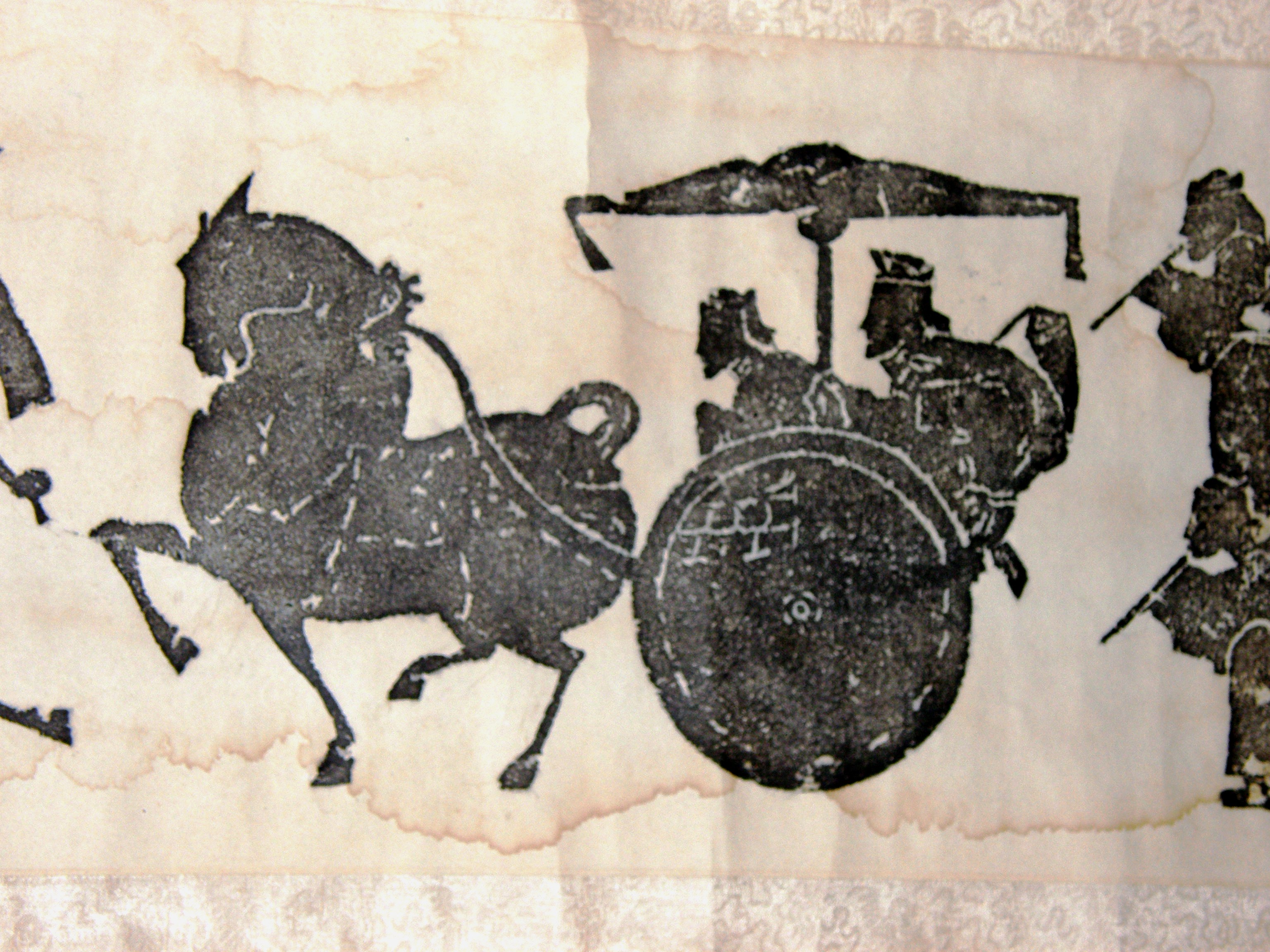
As one would a careening chariot,
I call a charioteer.
Others are merely rein-holders.

The Dhammapada, 221-222, trans. Fronsdal

In other words, you can become liberated by observing yourself through mindfulness, letting go of reactions, acting well, and thereby becoming one who drives the chariot, rather than just being pulled along by the horses.

OLYMPUS DIGITAL CAMERA

This can be summarized in a term that came up in my other translation many times: “well-controlled”. That’s the aim. Ultimately, that control is liberation. It comes from wisdom, insight, and mindful engagement. Otherwise, we are just pulled along reactively by our impressions and reactions.

The only way beyond a reactive, conditioned, samsaric pull is to be ever wakeful, holding anger in check in body, speech, and mind. Liberation is and comes through holding the reactivity of conditioning in mind and then letting it go. It’s a seeing, releasing, and doing differently. Thus does one choose and thereby drive the chariot.


May this inspire effort to gain control of skillful action rather than mindless reaction.

Gassho!

Tarot – Hopeful Guidance in Difficulty

Over the last few months, I’ve struggled a lot in keeping my spirits and resolve high while going through a lot of change and reconsidering my place in life and path forward, especially regarding romantic relationships. Tarot has been a way for me to pause and see myself and my circumstances differently.

I recently found one particular set of cards interesting in a way that I thought worth sharing, and their message was really succinct in a way that’s even more shareable. I was pulling in a spur of the moment, self-created spread — noodling, if you will. With this particular deck, it has worked well sometimes. Beyond that, I was drawing for insight on circumstances and movements above and beyond myself, yet in the midst of it, three cards came out together that were clearly meant as advice for me and how to sit within this greater set of events.

For framing, as said above, I’ve struggled reconsidering my place in life, particularly regarding romantic relationships, so much so that I’ve considered that I may need to give them up altogether and aim at being alone and strong in myself for good. Here is what the cards told me:

Choose love.

Don’t become disillusioned.

Don’t give up hope.

Given the context of the drawing, this advice is vague – not telling me to choose anything in particular or fight for anything. However, it felt like a balm for doubt and greater existential advice in general. It’s so easy to give up heart in the most unclear of personal times, but that’s precisely when it’s most important to recognize that the setbacks and pain of loss, regret, rejection, and failure are temporary and localized. I take it all as meaning the greater spiritual message of not giving up on putting your heart out there and trusting that compassion and kindness towards yourself and others germinates seeds of positive growth in the world, regardless of personal feelings about being jilted. In other words, this may be the greatest opportunity to work on seeing the value of being warm, positive support to others, the work of a bodhisattva, not worrying about the more personal, samsaric doubts and worries of my own personal narrative.

Then again, perhaps it is a more personal thing that will make more sense in months to come. I’m not sure — either way, setbacks shouldn’t stop one from having positive intention (hope not meant as pushing a particular outcome, rather as general positive belief rather than despair about meaninglessness). There is value in just acting warmly, choosing to love life, one’s fate, and those in our lives.

In any case, no matter what I make of it, I think this small, 3 part message is a great motto to keep in mind for anyone reading this.


May this bring you hope that engenders fearlessness.

Gassho!

Walking along the Dhammapada — Chapter 16: The Dear/Affection

I’m taking another journey through the Buddha’s lessons on the path of the Dharma (one way you could translate the title Dhammapada). A few years ago, I wrote posts on a handful of chapters, but I didn’t go over every chapter. This time, I’m challenging myself to post on every chapter and share them here.


I’ll be honest – I find this chapter difficult. It’s difficult precisely because of questions I’m currently wrestling with in my own personal development. They’re also questions related to ongoing queries I have for Buddhism around the life of a householder vs. that of a monk. How does one handle the issue of attachment in the middle of a standard, nonmonastic life? It’s a problem in terms of finding balance and a Middle Way through the tangles of craving and clinging. The best I can come up with is seeing the attachments we have and letting them be without grabbing onto them with clinging and craving, but that is incredibly difficult to do, and that’s precisely why one is pressed to go into the freedom of a monastic life. This chapter has a very strong tone that doesn’t help me with these considerations at all, and like much of the oldest Buddhist teachings, it feels like one is only able to find liberation by leaving the life of the householder behind and severing all attachments.

This may all sound like some kind of philosophical knots over a non-issue, but one description of the founding of the practices of tantra in Buddhism precisely highlighted this issue (and unfortunately, it’s been years, so I can’t remember where I read it now). It was the legend of a king who asked the Buddha for practices to find enlightenment while still holding onto his sensual life, basically (surely a legend because tantra is one of those practices from other Asian spiritual traditions Hinduism/Bön that were fused with Buddhism as it grew and travelled).

In any case, let’s focus on one main passage here. This whole chapter really emphasizes that craving/clinging in its various guises keep one rooted in samsaric suffering. This fits with the Four Noble Truths. There is suffering. Suffering arises from tanha (craving/clinging). One can be liberated from suffering by ceasing the bond of tanha. There then is a path forward to realize this goal. This chapter emphasizes that aspect of tanha – we crave that which we desire. We crave for that which we don’t desire to not happen. In fact, whatever else doesn’t fit the desired or undesired is so separate from our affected awareness, that we just ignore it. These are the three poisons: desire, aversion, and ignorance. We can see in passages like this chapter that clinging/craving drives all three on a continuum of sorts. Think of it like a number line where – craving = aversion, 0 = ignorance, and + craving = desire. It’s worth mentioning here that the titles in my two translations point to this as well: “The Dear” – we cling to that which we hold dear; and “Affection” – affect, our emotional movements that pull us hither and yon in samsara, are driven by the clinging in the 3 poisons. There are several lines that point out these dynamics and then accentuate different versions of affection where it is at play and that such things should be avoided. The overall summary is captured in the final emphasis:

Craving gives rise to grief;
Craving gives rise to fear.
For someone released from craving
There is no grief;
And from where would come fear?

The Dhammapada, 216, trans. Fronsdal

In terms of my own struggles, I’m left thinking of these considerations, and I think the path is truly that of sitting in the midst of the swirl of affection, whatever arises, and seeing how there is the pull of desire and aversion as well as the lack of interest in ignorance. We can watch what comes up within our mind and try to respond skillfully rather than getting hooked into craving and the karma that arises from acting within it. What this means for myself in terms of relationships, my own stories, and an engaged life, is an ongoing investigation.

In relation to that little idea of karma, I love the closing lines in this second translation, where good deeds are presented as analogous to a seeker’s family who celebrate his return home into Nibbana. As such, we have yet again an emphasis on acting well from the stance of nonattachment at the end of this chapter admonishing the seeker to not cling.

When, after a long absence, a man safely returns home from afar, his relatives, friends, and well-wishers welcome him home on arrival.

As relatives welcome a dear one on arrival, even so his own good deeds will welcome the doer of good who has gone from this world to the next.

The Dhammapada, 219-220, trans. Buddharakkhita

May this bring others to recognize the role of clinging in samsara and get them to investigate its role in their lives.

Gassho!

Feeling Negativity, Leaning Into Compassion

Note: I feel that things have progressed since starting this post in ways that highlight some personal misunderstandings on one side and the very need for compassion and an open heart and how healing that is on the other – the message I started writing here last week. As such, I decided to finish the post with that message. So, even though the opening lines don’t feel current now, I still feel like this post should be completed and shared.


When we are rejected and shamed by those we care about, they are some of the hardest moments to be upright in a mindful practice. I’ve spun in this a lot recently. I will readily admit I’ve failed for the most part, rolling hard in my own patterns and stories, looking for a magic solution or reversal rather than calmly adapting to conditions with the equanimity of wisdom.

Although friends and articles on psychology and relationships have helped me, I have found a certain part of The Dhammapada to be crucial to healing. I’ve written here before of key passages in the first chapter of The Dhammapada regarding realization of mortality, hatred, peace, and quarrels (for instance, this post on a previous experience and this passage is still one of my most popular, even a couple years later). This passage has acted like an anchor, allowing me to transform my pain into understanding and empathy, rather than continuing to be pulled along by emotional reaction. I’d like to talk about this passage a bit again.

I recently downloaded a different translation of this by Acharya Buddharakhita that left me pondering this passage again. I’m going to share several lines and then make a small comparison.

“He abused me, he struck me, he overpowered me, he robbed me” — those who harbour such thoughts do not still their hatred.

“He abused me, he struck me, he overpowered me, he robbed me” — those who do not harbour such thoughts still their hatred.

Hatred is never appeased by hatred in this world; by non-hatred alone is hatred appeased. This is an eternal law.

There are those who do not realize one day we all must die. but those who realize this settle their quarrels.

The Dhammapada, Chapter 1: Verses 3-6; Trans. Buddharakkhita

“He abused me, attacked me, defeated me, robbed me!” For those carrying on like this, hatred does not end.

“She abused me, attacked me, defeated me, robbed me!” For those not carrying on like this, hatred ends.

Hatred never ends through hatred. By non-hate alone does it end. This is an ancient truth.

Many do not realize we here must die. For those who realize this, quarrels end.

The Dhammapada, Chapter 1: Verses 3-6; Trans. Fronsdal

First of all, both of these follow the opening of this chapter’s focus on how mind shapes a happy life or a life of suffering. We’re shown an existential depth to this that we should recognize our transience, our mortality, and let go of the poison of animosity — the ultimate toxin of desire, aversion, and ignorance. It’s a colossal mental shift to let go of this kind of victimhood – the drama of our lives – but if we can see the passing nature of things, there’s an opportunity to make that shift and see things from a larger perspective. Second of all, I like the difference in how the end of these two selections are translated. One says “settle their quarrels”, emphasizing that the recognition of mortality is a motivator to take action, actualizing that my mind is not only my personal thoughts but my deeds based on those thoughts and those deeds in relation to others. There’s great wisdom in making a move to show that you hold no hatred for someone else and wish them well (I will return to this below). The other translation has it as “quarrels end” as though the realization of the mark of impermanence leads to an immediate washing away of negativity. I think this focuses on the power of the realization in a way that is incredibly poetic, but it does lack that extra element of action. I think this idea is best highlighted by thinking of both of these translations.

One of the basic forms of meditation in some of the Theraveda traditions is that of metta or “loving-kindness” meditation. I’ve actually read a book focused on this approach that argues it was all the Buddha claimed was needed for Enlightenment, and honestly, given passages like that in The Dhammapada above, I can understand that position, especially because I’ve had some of my strongest feelings of insight and compassion from doing metta meditation (as well as the similar, in my mind at least, Tibetan practice of tonglen).

The practice develops loving-kindness for oneself and expands it, offering it eventually to those who we see as hurtful to us. This, then, is a practice about letting go of the painful reactions to ourselves and others in our lives, and practicing it in earnest really can help open the heart and mind. I’ve linked the book I mentioned above and here again, The Path to Nibbana, and here is a shorter description of how to do the meditation. I’ve been trying to take time to do the meditation myself recently, but beyond that, I’ve been trying to take the intention of it, the version of the mantra of old that I have in my mind from practicing it in the past, and put it out there in the world where I can, even if I don’t sit and meditate today.

May you be happy.

May you be healthy.

May you be at peace.

May you live with ease.

I find when I approach the world with this mindset, I find more understanding for others and more love for myself and my own failures (of which, there are many). Recently, when I’ve felt hurt, I’ve tried my best to develop this mindset, and it has made everything much better, and ultimately, I feel like it may even heal the hearts of others a little — perhaps just that intention has some impact in the world.


May this inspire others to cultivate loving-kindness and compassion, especially when it feels difficult. May this help other see that our lives are short, and quarrels are misguided.

Gassho!

Just Doing in the Midst of Emotional Difficulty

I had an odd yet intense spiritual experience recently. I’ve been meaning to sit and write of it since but find myself feeling both daunted and also maybe a bit too insecure to share due to the personal nature.

However, I feel that it’s for the best to do so. So, I will try to write this in a manner that’s without a flavor of gossip or personal samsaric rumination.

Recently, I was dumped by someone for whom I really cared. I thought that she and I had a future together, and I had been working hard to convince her to work towards that with me. Ultimately, there was some disconnect that could not be bridged, so that path is gone.

That’s just background, though. It’s not the focus.

I was in the middle of knitting a hat for her when she broke up with me via text. I saw this turn as a likelihood, but it didn’t take away the surprise, due to sheer undesirability if nothing else. However, I was left with a quandary: what to do with this knitting project that I was roughly halfway done with? I had sunk in about 30 hours of work, and I knew that I had that much more to go to reach the end. I wouldn’t want to keep it for myself. My roommate tried to claim it, but that felt weird to me as well. I also didn’t want to tear it up and reuse the yarn or throw it away…. So, what?

I decided to finish it and send it to her, knowing that it wouldn’t change anything, just for the pure act of completing a gift I had planned and giving it. Doing this in the miasma of feelings I had, especially spending 10s of hours and 1000s of stitches wading through to the end, was incredibly difficult emotionally. Knitting is soothing, usually. In part, I think I’ve gravitated toward it over the last few months as a sort of mindful, therapeutic practice to help me through one of the most stressful times of my life, but this time, it was mindful in the opposite way. I had to show up and be present for every single stitch. Furthermore, there were a couple points where I overlooked something in the directions and had to “tink” (backtrack/unstitch) a full round or more. Each round was 144 stitches, so those events meant a lot of time reversing just to do those stitches over again.

One of the key takeaways for me in pretty much every version of Buddhism is to sit with whatever arises, without attachment or aversion. It sounds simple, but it is incredibly difficult to actually do. Sitting through an emotionally laden task just to reach the end of it was sitting with whatever arose — the beauty, the despair, the fatigue, the joy. An experience like that really reminds you that we have a variety of emotions that are intertwined in our life. Even darkness has the flickers of stars, the moon, and fireflies. Over the hours, I walked through a lot of darkness, and it was quite the experience — one I feel I’m failing to capture in words here.

By the end, I felt acceptance for whatever arose in my situation as well, as uncomfortable and unwanted as it may be. I was reminded time and again of the Zen saying: “Before enlightenment, chop wood, carry water. After enlightenment, chop wood, carry water.” Sitting and working on the project to the end, merely to give it away as planned, without attachment or clinging to any reactions (as difficult and tiring as that was) felt like this. It felt as being engaged fully in the project, watching my story of ego flit by without it attaching to me or stopping the task. Ego struggled to push, pull, drive an emotional reaction to everything that was happening, especially the symbolism of the 1000s of stitches left in my hand. However, I’m also reminded of another quote that always signifies to me the process of beginning and completion:

a thousand-mile journey
begins with a single step

Tao Te Ching verse 64, trans. Hinton

In every moment, there is just this, just this step. There is just the chopping wood, just the carrying water. We live our lives, already in the midst of nirvana, but as the sages would tell us: we still need to fill our bellies and those of others. Daily life goes on, even after enlightenment. We merely can show up to it without the struggle of attachment, aversion, and ignorance. Our minds, the interpreters that build the five aggregates which lead to an emotional reaction and narrative built on top of our experience of now are challenged to the core to sit and just do, just be. This experience was that. It was a shikantaza of knitting, and I’m grateful to have sat with it.


May this inspire readers to sit with their most difficult experiences and find peace and insight in the process.

Gassho!

The Difficulties of a Spiritual Path and of Writing about It

I just posted again on the Dhammapada. This is a project that I took up about a year and a half ago, planning on fusing a reading project of going through it again with an effort to post more often on this blog, hoping to inspire others into following along and digging into this gem of the world’s wisdom. At the time, I poured my heart into the effort and got about halfway through and then flagged in effort. I was frustrated that many of the posts were getting no views at all. After struggling to write some posts, I just lost focus altogether.

I regret this now. There are other efforts on here that I haven’t completed, but this particular story represents a time to me when I have fallen a bit off of my path and my approaches to life and to sharing them here. It’s been hard to recognize recently that I feel stagnant in my life in many ways, and part of that is that I have had a long pause away from things like reading the Dhammapada, writing about it, and meditating regularly. Unfortunately, I think this is a standard hazard that many fall to, no matter how passionate about the pursuit of wisdom or a more skillful, grateful, compassionate, and awakened life.

It is much easier to fall into the stupor of routines, cover over our hearts and minds, and just hurt deeply in the samsara of attachments (as I just wrote about). In fact, recently, my heart aches greatly from the challenges of job, partnership, and a stable home. It’s a big time of transition, but doing things like writing here, meditating, and reading the Dhammapada, or more helpfully for me of late — about Dogen’s Zen regarding being-time, are crucial for a life of engaged happiness in this moment precisely as it is.

I’m sorry, dear reader, but I hope to do better on writing more often for you in the months and years ahead. You’re also welcome to email me if you ever have any questions or needs for companionship along the way.

May this bring you your own resolve to continue along the way.

Gassho!

Walking along the Dhammapada — Chapter 15: Happiness/Joy

I’m taking another journey through the Buddha’s lessons on the path of the Dharma (one way you could translate the title Dhammapada). A few years ago, I wrote posts on a handful of chapters, but I didn’t go over every chapter. This time, I’m challenging myself to post on every chapter and share them here.


There is one clear message from the myriad examples here of those who are not happy: attachment keeps one from happiness. In a sense, this is one of the simplest ways we could summarize the Eightfold Path that leads us from samsara to Nirvana. The second of the Buddha’s Four Noble Truths is that the cause of dukkha, of samsara, is tanha – a thirst that is never quenched. This is what leads us to cling to all variety of desires, and it’s a thirst that can never be sated — even in the accomplishment of desires, there’s the knowledge that the moment is short-lived and impermanent, another limitation that breeds dukkha. In another sense, we could say this point about attachment is one of the greatest calls in Stoicism as well: the idea of affirming the situation you are in as the providence of fate — everything is just as it should be; we can only act our best within the situation we are in without being upset about that situation, our wins/losses/successes/failures, and even the potential of our death in this very instant. If we can let go of attachment, we can truly be at peace. This is a huge ask, obviously, but it’s just as obviously the end of the path. Nirvana is often described in these early Buddhist scriptures as an extinguishing. Think of the peace we would have if we weren’t burning with the fire of attachment.

Here are a few quotes to illustrate:

Ah, so happily we live,
We who have no attachments.
We shall feast on joy,
As do the Radiant Gods. — (200, trans. Fronsdal)

Victory gives birth to hate;
The defeated sleep in anguish.
Giving up both victory and defeat,
Those who have attained peace sleep happily. — (201, trans. Fronsdal)

Hunger is the foremost illness;
Sankharas the foremost suffering.
For one who knows this as it really is,
Nirvana is the foremost happiness.

Health is the foremost possession,
Contentment, the foremost wealth,
Trust, the foremost kinship,
And Nirvana, the foremost happiness. — (203 & 204, trans. Fronsdal)

There are two things I’d like to mention before closing up with one last key from this section. First, I’d point out that in some analyses I’ve read, the Four Noble Truths are structured as the same as medical diagnostics from ancient India — 1) a problem, 2) cause of problem, 3) prognosis, 4) cure (see here as an example for more detail). Chapters like this one get right in the midst of all these, summing them up in an eloquent way that pushes us directly to the goal of ending tanha and dukkha without discussing the Four Noble Truths directly and in detail. Second, I’m struck by the remark “Trust, the foremost kinship”. I’ve been reading about hermeneutics again in Western philosophy (well, Being and Time). Between that reading and recent conversations, I’m reminded that there are two broad stances towards understanding: a hermeneutics of trust and a hermeneutics of suspicion. This is something I pondered at length for my masters in clinical psychology, but it’s more generally important for us to consider how we approach others, the game of understanding, and our intentions. You can try to find hidden motives and agendas everywhere, or you can trust others to meet you in the middle and do their best of authentically create understanding together. The first can be dismissive, painful, and even toxic when you’re the target of it. The second is the only way to really foster an ongoing relationship of compassion. If your partner in understanding doesn’t warrant said trustful engagement, then there’s not much path forward to be had — there’s no kinship.

This consideration leads me to the last thing I’d point out about this chapter. The end tells us again to find spiritual friends, who have wisdom and exemplify this virtuous behavior. We should follow them forward on the path to peace: “As the moon follows the path of the stars” (208 — trans. Fronsdal). Here again, we’re told to find a good mentor, a guru, or a solid sangha to support us in this Dharma lesson.


May this discussion of the path of dhamma bring you the ability to cultivate peaceful happiness and find those who will walk along the way with you.

Gassho!

A Lotus in the Muddy Water

Recent times have been a struggle for me, as I’m sure they have been for so many. I sit mired in unemployment, and it doesn’t seem that countless job applications are going anywhere. Furthermore, virtually every other aspect of life feels stagnant. There seems no hope any time soon of moving forward out of the muck, despite my best efforts. In my worst moments, I feel the downward pull into those murky depths of depression.

Thankfully, I’ve been trying to really focus on mindfulness and meditation practice again. Thus, in a couple of my worst moments recently, I’ve tried to stop, focus on my breathing, and just let thoughts pass through as I let my attention take in not only them but my body and all the sound and world that is my greater sphere of experience and interdependence, which is so muted and out of focus when the narrative, samsaric mind revs up into full gear. When I’ve done this, I’ve found moments of light kensho where the self seems to just melt away, and everything is just happening, one becoming, rather than “I” and world. I’m not sure what word to use for it. It’s “peaceful” and “compassionate”, but these are both inadequate somehow, as it’s no longer a reaction of me as the observer and judger of what’s happening. It’s just becoming. Afterwards, everything seems more worthy of acceptance and gratitude as it is, and reactions of anger or judgment seem silly — from a misplaced, reactive, and self-protective stance that misses key aspects of how others are wrapped in their own stress and confusion.

I’d remembered the phrase “a lotus in the muddy water” when thinking about these experiences and it struck me as a good metaphor. Our samsaric lives are right in the middle of the chaotic churn of karmic mud. The water can’t help but be muddy. However, in trying to escape, we only rile it up more and more. Yet, there’s beauty in seeing that this isn’t some terrible, profane thing that we must overcome. The chance at peace is right there in the middle of it by taking root and growing in it. Only then can you truly blossom.

May this help others find the ability to pause and open their minds and hearts in their most trying moments.

Gassho!

Previous Older Entries Next Newer Entries