Letting Go and Generosity: Some Tales of Buddhist Ancestors

I’ve recently finished a wonderful book by Lama Surya Das called Letting Go of the Person You Used to Be. Just before the ending of the book, he shares a couple of tales about Buddhist ancestors, letting go, and generosity. I’d like to share this passage. I’ll also write another post related to the closing chapter of the book as it fits well with some of the difficulties of growth and healing that I have been going through recently.


Patrul Rinpoche’s life exemplified generosity; whenever he was given money or offerings, he quickly handed them over to others, giving generously to the poor and the homeless. It is said that there was little that Patrul Rinpoche loved more than being able to give to others. A favorite story my teachers told concerns a man who approached the learned teacher and begged him for some money.
“Oh my poor friend,” Patrul said. “Just say to me, I don’t need any money, and I will give you some.”
The beggar thought that he had been misunderstood, so he repeated his request for money. Once again Patrul answered, “Just say to me, I don’t need any money, and I will give you some.”
Finally the man uttered the sentence Patrul had been requesting. “I don’t need any money,” he said. Patrul in turn rewarded him with a handful of silver coins.
Then Patrul told the beggar the following story about Lord Buddha.
It seems that one day as the Buddha traveled through India, a poor man came up to him and gave the Buddha the only gift he had, a single piece of milk sugar candy. As the Buddha was looking at the candy and wondering what to do with it, another man, known for his greedy inclinations, saw the candy in Buddha’s hand and asked if he could have it. The man, of course, knew that the generous Buddha never said “no” to such a request.
The man was quite surprised when the Buddha did not immediately hand over the candy. Instead the Buddha spoke to the man, saying:
“Just say to me, I don’t need this milk sweet. And then I shall give it to you.”
The man did as the Buddha requested, and he got the candy which he promptly popped into his mouth.
Later the Buddha’s disciples asked the Buddha why he wanted the man to say these words.
“Because,” the Buddha replied, “through hundreds of lifetimes this man has never even once said the words, I don’t need. By saying these few simple words, he may have momentarily experienced the feeling of needing nothing. These words undermine greed and may help plant the seeds of generosity.”

candies-622096_1280

I don’t need any candy…

Padma Sambhava, the great Indian master who introduced Buddhism to Tibet in the eighth century, told his disciples that when asked, they should say, “I don’t know, I don’t want, I don’t need.” I try to remember that.
This is a lesson in nonattachment and acceptance. It is a lesson in learning to love unconditionally without expecting results, rewards, or payments of any kind. It may feel counterintuitive, but acceptance does have a transformative effect. Nonattachment and acceptance have their own magic and can transform anything. Letting go is the ultimate act of generosity and faith. And every good deed is a gift to both giver and recipient.
– pp. 209-210 Letting Go of the Person You Used to Be, Lama Surya Das


Try it yourself. Say: “I don’t need …” and let the attachment slip away. An even better practice: give away some small thing (you can work up to bigger things later) that you feel attached to. Give it to someone who would be happy to have it. This is a very mindful experience of attachment and its hooks. If you can do this and say to yourself I don’t need this, you’ll find the peace of liberation after the pangs of attachment pass.

May this inspire your own ability to let go and to be generous to others.
Gassho!

Snippets of Wisdom from an Old Journal

I recently moved, and when I did, I came across some things that had been buried in boxes and corners. I found an old journal in which I wrote about the beginnings of my spiritual path, roughly a year and a half ago. I’ve strayed a bit and returned since then, but I was impressed to have found these thoughts and feelings at the end (because they are close to where I am now in many ways although I subsequently lost many of them) and thought I would share them here. I also shared another piece from this journal in a previous post: Control and Letting Go.


Reading through my words from the past…

8/15/2013

In any case, I am finding it very difficult to remain compassionate in the interpersonal drama of daily life. I see everyone casting about their plans, goals, and emotional hooks. In so doing, they use others as objects, as though we are all some great game of emotional physics–balls of emotional matter bouncing off one another and taking on each others’ energy. Is it any surprise that everyone else acts in turn when this is the inherently agreed upon name of the game? Some might say this is human nature or the human condition; I would say that the second is possible but only because we all make it so. I know that by the end of the retreat, I was able to step away from this game for the most part with a different perspective, and I understand why monks remove themselves from the attachment of the world now.

8/16/2013
Yesterday, I distinctly had a moment when I felt that the activities and lives of people are like so many ants, scurrying around the face of the planet, myopically thinking that their aspirations are more profound as their self-centered goals damage their very home. Of course, who am I to think I am removed from this, but I don’t think I am; I just think I am able to see it. We each think our own life is special and unique, thinking ourselves separate, and in one way, we are; however, in a larger way, all of the manifestations of separate difference are part of a greater universal whole that holds all difference in its chaotic depths, and we are merely its unfolding sway. This is where my Buddhist experiences from the retreat encounter Deleuzean difference, and I think they work together beautifully. It seems to me that Deleuze offers a metaphysical theory that resonates with the changing nothingness of Buddhist thought.
Another issue I face again and again now is the problem of balance and integration. How do I take my experiences and insights up as an ongoing practice in my life? I think that I’m doing OK with this despite my moments of being drawn into my own drama. Also, how does one balance the truths of separate individual life with that of the greater picture? This is the question I’m left with after Dōgen and after my new-found insight. I don’t know, but I find myself thinking often of ethics and self-growth over and across from trying to be a bodhisattva. This will take much more reading and meditation.

8/22/2013

I ultimately had to take a short walk to the park. Once there, I sat and meditated for a few minutes. I heard the cries of joy from nearby children and felt their lives wash over me as they experienced excitement, pain, happiness, and frustration. I heard cars go by on 33rd Ave. I saw the green of the grass and the blue of the sky as wind blew across my face. I saw people walk by, absorbed in their daily lives. I felt the universe unfolding in all the particularity of that moment, felt it unfolding again into the next and then again in the next–each just as miraculous as the last.
At the same time, I opened my heart chakra and felt that I was part of it all without separation. I was the children, the grass, the cars, the wind, and the universe. Of course, “I” is somewhat inaccurate here, and I’ll return to my placeholder about judgment from earlier. We constantly go through life labeling everything as “good” or “bad”. This is how our minds work–an apparatus for making decisions which is a separation of things into different categories. The unison of things is split apart into qualitatively different entities by the mind. This is not false. It is one aspect of existing as an embodied individual, but it is also not absolutely true as it is also true that everything is one and that the differences of separation are merely an illusion. As such, it is narrow-minded, or rather, missing the greater picture in pursuing “good” moments as special, uplifting moments of existence. Good and bad are just our own cognitive labels. Every moment is just as miraculous as every other.
In any case, my meditation allowed me to return to such a compassionate perspective, and I was able to go through the rest of the day and night with more grace and acceptance.


For more discussion of “good”/”bad” and our labeling of things, see: Love, Rebounds, and Relationships: Part 3 — Love and Metaphysics.

The Practice

We go through
Day by day
Expecting…
More of the same
Routines, comfort
–Both good and bad,
“The same” returns

Yet, Life is full
Of happenings
–Unforeseen,
Unwanted
Chaotic
In a word:
Change

In a moment,
All can turn
That is the Truth
Such is All
The Universe:
Impermanent
Flowing–in flux

buddha-statue-378137_1280

All changes. Practice embraces this.

The Practice:
To accept this
As Truth and Path
Without attachment
To the way things were
Or the way things could be
Find comfort in the
Emptiness
And show up
With Compassion
For it All
Impartial:
Bearer of
Awakened Heart
Fearless and open

Foundations of Buddhism—some notes

This is a great, succinct summary.

Buddhism Now's avatarBuddhism now

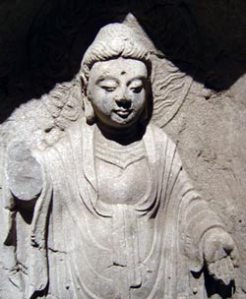
Stone Buddha Photo © David BlancoThe Buddha

Siddhartha Gautama, the Buddha, lived approximately 563-483 bce in the north of India (today Nepal).

The Gotamas were a branch of the Sakya clan. His mother, Maya, gave birth to him in Lumbini Grove. She died seven days later and his aunt, Prajapati, took over as foster mother. The family were of the warrior (khattiya) caste.

As a young man, a prince, he began to contemplate sickness, old age, and death. Are we born just to get old, to get sick, and to die? Isn’t there more to life than this? He decided to leave his comfortable surroundings and to search for the truth of existence. Turning his back on everything, he cut off his hair, exchanged his fine clothes for rags, and set out on a spiritual journey. With great determination he began his new way of life.

For six years he sat at the feet of respected…

View original post 1,700 more words

Flowers Fall

“Therefore, flowers fall even though we love them. Weeds grow even though we dislike them.” – Dōgen Zenji (trans. Okumura)

1866-Pink-Flowers-Fallen-(www.WallpaperMotion.com)

Out of the many pains that we experience in life, the most stinging and most common are losing what we want and getting what we don’t want. This happens on levels both great and small everyday. Beloved flowers fall–beautiful moments end, friends move away, the sun sets, and you eat that last bite of ice cream. Despised weeds grow–you get sick, bills come, cold, grey weather sets in, and you realize the only ice cream the store has is that other, gross flavor.

So, what do we do? The point is not to give up desire completely. Desire is also what drives us to seek enlightenment, to strive to help others, and to get out of bed each day. However, we would do well to let go of attachment to having everything go the way we want: let go of the gratification of those grasping desires. Ask yourself: is that really happiness? To collect a life of fulfilled desires and avoided aversions? Can you find peace and joy with the world as it is and try to help others find that peace and joy as well? Can you pursue that instead of pushing your own agenda first and foremost in the pursuit of happiness even if others burn in your wake? Perhaps happiness is not something you can “get” at all, and such grasping to get all external circumstances just right is a fundamentally deluded idea of what it is to be happy. Pause. Meditate. Connect. Love. Try these things, and you may find within yourself the seed of a true happiness beginning to grow alongside those weeds and fallen flowers.

May this help you find equanimity, non-attachment, and skillful action in the pains of desire.
Gassho

See also: Tao a Day — Verse 26, Inner Virtues for a Taoist take on how to cultivate such internal stability, peace, and joy.

Suffering & Sweetness

Life–
Full of suffering:
A lingering dissatisfaction
And an ongoing attempt
To stack the cards,
To win the game,
To get “my way
Yet
You’ll never get it.
The last perfect scoop of sand
–A beautiful sandcastle
My perfect creation!!!
10 seconds later
The wave washes it away
–A heap of sand


The Buddha taught for over 4 decades. He traveled all around India, spreading the Dharma. He went on foot, had few possessions, and was homeless. Despite years of teaching, traveling, poverty, and old age, he said late in his life that there was great sweetness in the world and he could understand wanting to live for another century. Where do you find such sweetness and warm affirmation? In your things? In your perfectly collected set of entertainment and schemed circumstances–the perfect friends, job, life??? Is it external? Do you have it at all?


One who knows others is intelligent
One who knows himself is enlightened

One who conquers others is strong
One who conquers himself is all-powerful

One who approaches life with force
     surely gets something
One who remains content where he is
     surely gets everything

One who gives himself to his position
     surely lives long
One who gives himself to Tao
     surely lives forever
— Tao Te Ching verse 33, trans. Jonathan Star

Flashes of insight

After having begun a regular practice of meditation, sometimes I have fleeting moments of insight. They aren’t during meditation rather during the day. Suddenly, briefly, I see and understand reality as it is on an experiential rather than a conceptual level.

For instance, I’ve been reading about dream yoga from the Tibetan Buddhist tradition. An important part of the practice is to regularly tell yourself that “All this is just a dream”. This is done for your waking life, not your dreaming one (ultimately, this aims at being able to lucidly recognize dreams as dreams while in them, by cultivating insight during waking life). The point is to recognize the fluctuating impermanence of existence. There is no underlying essence that endures–all changes and is ephemeral, like in a dream. This is easy enough to explain and understand conceptually. It is basically the same as the Buddhist concept of emptiness or shunyata, but this dream yoga manner of touching the concept presents it through a familiar, intimate life experience.

However, this is still conceptual. The practice is meant to be experienced, rather than just thought. Well and good, but it is harder to experience “This is all just a dream” about your waking life than you might think.

Recently, I was struggling with some turbulent emotions. I went to the bathroom mirror, looked myself in the eye and brought a meditative focus to all I was feeling. Then, I said “This is all just a dream”. Instead of understanding this, I felt it. All of the roiling emotions appeared as so many dreamlike images with no underlying substance, glowing and dissolving. The sense of realization was charged and powerful: it was felt, not thought. The experience was deeper than I can express in words. Such moments of lived flashes of insight are opened, I believe, from regular meditation, and I encourage all you readers out there to take up meditation for yourselves.

May this inspire you to seek wisdom and insight through meditation.
Gassho


Study the Self! By Maezumi Roshi

Beautiful! I’ve wanted to post on this particular Dogen zenji quote. At some point, I will, but for the meantime, I will share this beautiful and succinct piece.

Buddhism Now's avatarBuddhism now

Sekizanzen-in's (赤山禅院) Juroku-rakan (十六羅漢 the '16 Arhats')In the Soto school we also appreciate gradual practice and sudden realization. But Soto Zen emphasizes that, because this life is all together one thing, is the Buddha Way itself, you should not expect kensho. As soon as you chase after something, right there you cre­ate separation, so how can you have realization? Many people misunderstand, saying that the Soto school is not concerned with the enlightenment experi­ence — that’s nonsense. Awak­ening is the very core of the Buddha’s teaching, but if we are thinking about awakening we are separating ourselves from it.

View original post 276 more words

The Waking Dream

We grasp
Unrelenting
This cannot go…”
“Please…”

Yet every moment
Comes & Goes
Seasons change
The world turns
Days are born & die
Everything passes

Like a dream,
The substantiality
–an illusion
With focus
This ephemeral emptiness
Shines

Figments of experience
Life = Dreaming dreaming dreaming
(That is: dream dreaming itself)
Ironically
There is nothing to grasp onto
Not even yourself
What security do you seek?
Certainty in the face of death?

Even those
Embracers of “change”
Declaring its greatness
Its wholesomeness
Move on only
To their next set of certainties
Another structure
To cling onto
A shelter in the storm?
There is no storm.
That fear
–just another part of the dream


One line above reminded me of this song:

pablo

Mantra for Presence

One of the experiences that returns again and again in meditation is the flow of various thoughts.  At times, it can be difficult not to get swept away in the current of them all; rather than watching them wash by, rippling up and disappearing again, you can get pulled along and no longer see them as separate and impermanent. Getting carried away by them like this keeps them going and makes them seem solid, permanent things which are part of “me“.

Keeping a mindful presence is the challenge and boon of meditation. Returning the mind to breathing and sitting can save you from the ongoing rush of thoughts by opening some gaps–gaps of simple attentiveness and peaceful presence. One key to this in shamatha or shikantaza is labeling thoughts as “thinking” or more descriptively, “anger”, “lust”, “escapism”, etc. I’ve found that using the label “elsewhere” as a simple reminder that I’m not staying fully present here with my breath and body is effective. However, sometimes, a little more push can help. The other day, I came up with this mantra, repeating it in my mind when struggling with thoughts. It was quite helpful, and I thought it worth sharing:

Be a Buddha

As you think this line, let all of your conceptual resonance for “Buddha” (e.g. mindfulness, equanimity, presence, compassion, images of the easy smile, etc.) pull you back to practice. Try to embody these concepts as inspiration for you to return back to your breath and be present to it. Let yourself adopt that gentle smile. It’s very likely that you’ll find you can’t stop…

If you need further focus, say this as well:

Smile at Mara

Mara is the demon that tried to tempt the Buddha and smite him down in the story of his attainment of Enlightenment. Those difficulties we encounter in life can be greeted with a smile: acceptance and equanimity. This transforms the swords and arrows of Mara into flowers, as in the Buddha’s tale. The swords and arrows of our own mind as well as our own tempting thoughts can be metamorphosed into calm and peace–the basic goodness of mind can be recognized as a lotus opening within the rippling thoughts. In saying this line, realize that you don’t have to master the thoughts. Rather, open yourself to them. Surrender to them. Act through inaction. Smile at them. In letting them be and surrendering to their flow, you’ll find that they aren’t solid at all, and they really aren’t about “me”. Rather, your mind is that calm lotus, and the thoughts flow past, impermanent, fluid, ephemeral.

Be a Buddha
Smile at Mara

May these words bring your mind peace.

Gassho


On the night on which he was to attain enlightenment, the Buddha sat under a tree. While he was sitting there, he was attacked by the forces of Mara. The story goes that they shot swords and arrows at him, and that their weapons turned into flowers.

What does this story mean? My understanding of it is that what we habitually regard as obstacles are not really our enemies, but rather our friends. What we call obstacles are really the way the world and our entire experience teach us where we’re stuck. What may appear to be an arrow or a sword we can actually experience as a flower. Whether we experience what happens to us an obstacle and enemy or as teacher and friend depends entirely on our perception of reality. It depends on our relationship with ourselves.–Pema Chödrön, When Things Fall Apart: Heart Advice for Difficult Times, p. 65

Next Newer Entries