Intricate Interdependence

Thich Nhat Hahn, the renowned Zen teacher, has described the Buddhist ideas of emptiness and interdependence (which he calls “interbeing”) by saying that to examine a flower, you have to see the existence and interconnection with the entire universe, indeed see its history as well:

A flower cannot be by herself alone. A flower has to “inter-be” with everything else that is called non-flower. That is what we call inter-being. You cannot be, you can only inter-be. The word inter-be can reveal more of the reality than the word “to be”. You cannot be by yourself alone, you have to inter-be with everything else. So the true nature of the flower is the nature of inter-being, the nature of no self. The flower is there, beautiful, fragrant, yes, but the flower is empty of a separate self. To be empty is not a negative note. Nagarjuna, of the second century, said that because of emptiness, everything becomes possible.

So a flower is described as empty. But I like to say it differently. A flower is empty only of a separate self, but a flower is full of everything else. The whole cosmos can be seen, can be identified, can be touched, in one flower. So to say that the flower is empty of a separate self also means that the flower is full of the cosmos. It’s the same thing. So you are of the same nature as a flower: you are empty of a separate self, but you are full of the cosmos. You are as wonderful as the cosmos, you are a manifestation of the cosmos. So non-self is another guide that Buddha offers us in order for us to successfully practice looking deeply. What does it mean to look deeply? Looking deeply means to look in such a way that the true nature of impermanence and non-self can reveal themselves to you. Looking into yourself, looking into the flower, you can touch the nature of impermanence and the nature of non-self, and if you can touch the nature of impermanence and non-self deeply, you can also touch the nature of nirvana, which is the Third Dharma Seal.
– Thich Nhat Hahn, The Island of Self; The Three Dharma Seals (retrieved here)

These concepts are so profound and simple yet so difficult to express. I feel like conceptual thought experiments can get us partway there, but to really feel the wonder of it takes some extra insight that is honed through meditation, as the consistent experience of seeing ourselves as separate things in a world of objects separate from ourselves limits and guides our normal, everyday perception. Meditation is needed to shake us out of this frame. In a sense, it takes a slowing of the discursive mind’s analytic thought processes to really just sense things as they are.

An example from my recent life: I came down one morning to make some coffee after having finished a morning meditation session. I picked up a knife from the drawer to scrape the coffee grounds off the sides of the grinder, and as I saw the knife and touched it, I suddenly was aware of its intricacy and the long history of civilization, development, and design behind it. Small bubbles protruded out along the edges of the hilt; these caught my eye, and I thought of the aesthetic design and metallurgy behind these decorations as well as how this wouldn’t have been mass-produced only a few generations ago. My mind exploded even further, thinking of recent books I’ve read about the history of the Earth’s mass extinctions and the epically long oceans of time that are behind the world we live in/on and the species that currently inhabit it, as well as how they’re related to this momentary brilliance of tool-making. These results of eons of evolution are both creator of the tool and the food for which the tool is utilized — neither of which would be without everything that came before. Even just a simple knife in my kitchen drawer implicates the entire history of the creation of knives, of buildings, of drawers, and other cultural conventions/industrial standards around design, metallurgy, and culinary etiquette as well as the entire development of civilization, the evolution of the human race, and all the forgotten biological and cosmic events that led up to now.

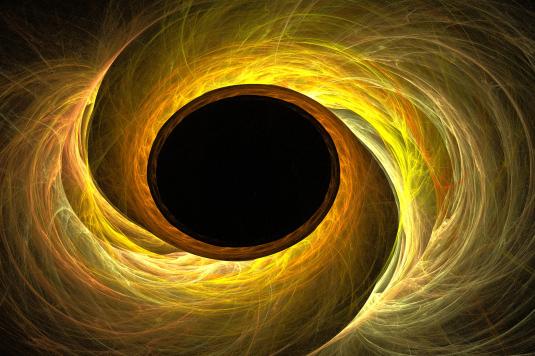
A few years back, I read a book that described the symbolism of the famous calligraphy circle from Zen Buddhism: the enso. The zen monk explained that it isn’t showing a border between inside and outside or a process of completion; rather, it’s supposed to indicate everything. All is buddha-nature. All is included. All is interdependently shown in the circle.
4603505066eb21807dfb045e2f27def1

A fractal enso? Cosmic interdependence?

These concepts go against so much of our standard operating procedure of discernment, but there is great wisdom in the flash of insight that our independent distinctions are cuts between the intertwined chiasm (to borrow the wonderful term from Merleau-Ponty) that is existence (note: the etymological roots of “de-cide” are to cutting off or cutting away. The same applies to the German: “ent-scheiden”).


May this offer a flash of insight into interdependence to all who read it.

Gassho!

Some Musings on Change

I’ve recently been thinking a lot about change — personal change, how one changes over time both by choice and by happenstance. Honestly, this has been something I’ve thought about off and on over the years, as I studied psychology in school, but it has come to the forefront of my mind more in recent years due to my interest in Buddhism and the claims I’ve heard others around me make about how certain activities have changed them.

Actually, the issue came to a head a few years ago when pondering some others’ justifications for travelling. They spoke highly of how it changes you, but I didn’t see anything dramatically different about them. I started thinking on my own travels and my own life experiences with change. After much consideration, I came to the conclusion that we don’t understand well how change comes to be in our lives, and perhaps, that has to do with misperceptions of ourselves and our lives.

Change isn’t something that someone just has thrust upon them in a moment. One doesn’t simply see something, and all is done. I’ve been thinking of a good metaphor for this, and ultimately, the passive infliction of change from without seems akin to a wound that heals into a scar — a mark that’s made from an external force that is more or less permanent.

However, no other changes in life happen like that. We’re not simply some sort of soul/identity that is stained from without. We are bodies, processes, unfoldings — a human becoming, a developing person. An example? My dad died this year. The initial shock of it was sudden, external, and permanent. Certainly, but the deeper change that it’s had in my life has been a process. My brain, heart, and daily life are still processes of adaptation. There are stages to grieving, to making sense of the world again after a huge initial alteration like that. The event itself may be epic, but the change, the real impact is something more gradual. Change is like that — it’s a rebuilding of life, brick by brick, day by day.

3e83485210d724f60e4cb6b8f53dbf3b

This is how our very brains work. If we learn a new skill, it takes 1000s of hours (and apparently, it’s even more complicated than just sheer hours of time) of practice to master it. If one studies neuroplasticity even cursorily, it becomes clear that part of how we adapt as organisms is by building new synaptic connections when we encounter new challenges. These enhance our abilities, our understanding, our skill — but they take time, effort, material resources, and energy. Such is change: it is a new coming to be, a new formation of the universe. Another example? Our cat lost a leg this year due to cancer. We had to amputate it to avoid metastasis. At first, he could barely move and was awkward as hell. We had to bring food to him, but over time, he started meandering around and now is even almost as nimble as he once was. This is due to his brain taking time to rewire many of its sensorimotor connections to adapt to his new situation in life. Like my first example: the brute change is immediate, but the change in the day to day life, the new version of our beloved cat, is a more gradual process, one that he’s still undergoing.

I posit that all change in life, meaningful change that impacts one’s story, one’s existence, is like this. It’s a dynamic new entanglement with different circumstances. It can be one of mastery, where one takes repetitive engagement with something to build a new relationship with it and with life. My own experience with travel is like this: initial experiences impacted me. They expanded my perspectives, but the honing, the real meaning of it, came with living abroad, with spending hours and hours of time with people from other cultures, and with learning another language. Most of the initial experiences have fallen away as hazy memories, just like most others that have not stood the test of time, but the efforts to adapt and master have changed me forever.

Sometimes, the change is more passive. A new job or a new situation carries us along, against maybe our interest or affirmation, but in those cases, we still adapt — living through the banal grind, as it were — and that changes us as well over time. The numerous hours of going through the motions can kill our resolve, make us cynical, one way of thinking about how we change into old age.

“What about trauma?” — you might ask and rightfully so. The event of trauma has an impact, but the ongoing efforts of the mind are where the change of trauma happens: the rehashing of the events over and over in mind, in its particularly intense experience with details that blast beyond any standard memory, or our minds’ ongoing efforts of self-protection through continually pushing the traumatic events out of mind. These adaptive engagements change our relationships with the world, and they change the wiring in our brains. The initial event is only complete in its destruction through the adaptation over time of trying to understand it, to live through it, and to survive beyond it. It presents one of the biggest changes of all — rebuilding meaning and trust in existence after all meaning that we had previously known has been shattered.

My point? Change is always an ongoing dynamic with the lives we’re embedded in. Traveling is just one peak experience among many. We could point to others: music, art, drugs, literature, religious revelation. All of these have their value for opening our eyes to new possibilities, but it’s not the eye-opening that is change, it’s the ongoing investment in (or possibly running away from — ongoing denial) the newly seen alternatives that changes us. It’s the time spent, the long-term relationship with these newfound discoveries, and the growing intimacy with them that is change. Also, what of the open-mindedness we have that leads us to these experiences in the first place? Isn’t that just as important to seeing something as new and exciting as the experience itself? However, ultimately, the way things come to fruition is through that sustained engagement. I can think of many phases I went through in my younger years that didn’t leave much of an impact despite initial enthusiasm. I didn’t engage with them long enough to build that loving or cynical relationship that is change.

Let these words stand, lest we forget that we are organic systems of change. Let us not forget as well how hard change can become due to the strong entanglements in certain ways of being, the ingrained patterns and habits, that we have developed over time. So much of who we “are” are these patterns that have developed: the fruition of change, karma. These are the ties that bind us, not a soul — some inherent personality. The deeper situations we are in, the thoughts we cultivate, we change and solidify into those. Most importantly, let us not forget that we are engines of change — we are not set beings, rather becomings. Confusion on this is our greatest existential balm but also our greatest delusion.


Peak experiences cannot be maintained, and when they pass, the habituated patterns and the underlying sense of separation remain intact.
Peak experiences may open up new possibilities, but they cannot do what a consistent practice or discipline does–instill a deep understanding that expresses itself in life. No quick fix exists. Milarepa, a great Tibetan folk hero who lived in mountain retreats, used to say that to glimpse what is ultimately true is not difficult, but to stabilize that understanding takes years of effort.

— From Wake Up to Your Life by Ken McLeod

Today we understand from scientific research that the human body operates through chemical and molecular processes. By their very nature these processes are in a state of constant, even chaotic change at the cellular level. As mentioned earlier, millions of cells are born and die in each passing second. There’s no solidity at the core. But in our ignorance we live as if the body were solid and unchanging at its core.
The poet W. H. Auden has said, “Our claim to own our bodies and our world / is our catastrophe.” How can we claim ownership of something that’s constantly changing? What does it tell us about the nature of the claim? A deluded mind believes a manifestation to be a thing-in-itself, whereas Buddhist teachings point out that a manifestation is an event. A thing is perceived by the deluded mind to be solid and self-abiding; an event is seen by a mind informed by prajna as a resultant outcome of a certain process. To see oneself truly and authentically, as an event–an ever-changing process–rather than a thing-in-itself is the greatest act of re-imaging.

— From The Heart of the Universe: Exploring the Heart Sutra by Mu Soeng

Priest Daokai of Mount Furong said to the assembly, “The green mountains are always walking; a stone woman gives birth to a child at night.”

Mountains do not lack the characteristics of mountains. Therefore they always abide in ease and always walk. Examine in detail the characteristic of the mountains’ walking.
Mountains’ walking is just like human walking. Accordingly, do not doubt mountains’ walking even though it does not look the same as human walking. The buddha ancestor’s words point to walking. This is fundamental understanding. Penetrate these words.

— From Treasury of the True Dharma Eye by Eihei Dōgen (trans. Kazuaki Tanahashi)


Reiki: The Five Precepts (Gokai – 五 戒) – 4th Precept: Actualization

Just for today:
Don’t hold on to anger
Don’t focus on worry
Honor all those who came before
Work hard on self-improvement
Be kind to all living things
– Reiki Center App, Windows Phone

Now:
Peace
Faith
Gratitude
Actualization
Compassion
– My shortened mantra of the precepts


It’s been a couple years since the last entry in this series. To be honest, this current post daunted me, and at the time, I put it off as I had a lot of other ideas to write. However, my reiki posts have resonated a lot with followers of this site. There are regularly many who read these posts, and for them, I will continue discussing the last two precepts of Usui-sama’s practice. May this help guide them with their own engagement with the path.

The fourth precept is usually translated as something along the lines of “work hard” or “work diligently”. This has always seemed the clunkiest of the precepts to me. The term “work” seems like an earthy, money-driven concept, or one of bodily toil, rather than commitment to spiritual improvement. In this, I merely observe from my own perspective — outlining my own understanding and associated concepts with the term “work”. It may or may not be lighter or heavier of a concept for you, but I have a sense that there are many who would share my hesitance at this translation.

So what do we make of this? An engaged practice is difficult. It is work in that sense. We could think of this then more as: practice diligently. Ane what brings diligence to a Buddhist practice (recall that Usui was a Tendai monk)? Mindfulness, commitment, continuing to try moment by moment throughout the day without judging yourself for when you come up short. Instead, you merely refocus on the task at hand, when your mind or attention wanders. Thus, we could rephrase this as: practice mindfully with engagement and an open heart.

If we add one more piece of understanding to this, we’ll get to what I mean by “actualization” in my shortened form. Buddhism speaks often of upaya — skillful means. It’s an engagement that fits the situation, responding to it with connection and compassion. This responsiveness does not necessarily fit some greater theoretical technique handed down by a master; rather, it’s a pure presence of being one with the situation. I find this to shed light on the related (in my view) idea of wu wei from Taoism. Wu wei is often translated as inaction, non-action, or not doing. However, in delving into Taoism, it becomes clear that it’s better understood as action that conforms with the natural flow of situations; it’s in this sense that we can get closer to being like water, as Lao Tzu counsels us to do in an early chapter.

92aa46a9a77f5d181fe961cbd09c1a8f

“The best are like water” – Lao Tzu (trans. Red Pine)

“Actualization” is a term that I got from a translation of Dōgen’s Shōbōgenzō from the famous passage Genjo-koan . I was struck by an enigmatic passage at the end in which a monk explains the nature of wind being everywhere around the world while fanning himself. This is the true koan aspect of this chapter, and I honestly cannot say that I’m certain I understand it still. However, I take from it that the situation at hand is a hot summer’s day, and though in the abstract, the wind is an ongoing thing of the world that will never end and goes everywhere, in the concrete of this moment, the summer heat and still calls for the engaged action of fanning. If we take this metaphorically, our lives come up with moment after moment for awareness, connection, and compassion, but this requires us being present and mindful within each of those moments, not grasping onto any ideology or conceptual system with our heads in the clouds; rather, here, in this moment, we can be open and responsive instead of active (which I think of as controlling events to meet one’s own ego-driven desires). This is what it takes to actualize, and in actualizing, one responds to each moment — this is that diligent practice above.

May this discussion bring you new understanding of the precepts and how to practice them.

Gassho!

Previous Reiki: The Five Precepts Post – 3rd Precept: Gratitude


For those compelled by that connection with wu wei and water from the Tao Te Ching, here is chapter 8 from Red Pine’s translation. Read this with all the ideas of this post in mind; it resonates well with them all:

The best are like water
bringing help to all
without competing
choosing what others avoid
thus they approach the Tao
dwelling with earth
thinking with depth
helping with kindness
speaking with honesty
governing with peace
working with skill
and moving with time
and because they don’t compete
they aren’t maligned

Kitty Meditation

Yesterday morning, I got out of bed as my alarm went off. I grabbed my phone from the dresser and turned off the relaxed reminder to awaken. I propped up some pillows in bed near the wall and prepared to sit for meditation. As soon as I settled myself in the sattva posture with my back straight, having just clicked another timer on my phone to count off 15 minutes, I heard a meow from behind me, around the corner.

Rei Ray, the gregarious, love-needy cat was excited to see me awake and wanted my attention. I almost sighed, as I knew what would happen next (she’s done this before): she would jump up on the bed, try to snuggle me, and if I didn’t respond, she’d meow at me or try to wake my partner still sleeping on the other side of the bed. For half a second, I pondered gently setting her down on the floor, hoping she’d get the message, but then I realized that my whole meditation practice is about wise and compassionate insight. Where’s the compassion in ignoring and pushing away such a being in need of connection with its family? How is that embodying the paramitas? Rei cannot understand any explanations that I’ll pay attention to her in a few minutes. She needs attention now. Beyond that, it’s not like when she interrupts my sleep or somehow otherwise reaches out in a way that impacts activities when I cannot pay attention to her.

IMG_20170930_121802-COLLAGE

She may not look it, but this Katze can be quite the handful.

I decided that I should sit there in my meditation stance and pet Rei as much as she needed and at the same time keep her from waking my partner. So, I pulled her into my lap, and noticed my breathing as well as the feeling of her fur against my hand. I tried some lojong — breathing in the feelings of anxiety, lack, or whatever the kitty sensation may be that make her so driven for attention at times, breathing out peace, love, connection, and security. I looked into her eyes as she gazed up at me and tried to mentally extend a sense of calm to those inquisitive eyes.

The “kitty meditation” took up the whole 15 minutes, and although I didn’t get as solidly settled into the groove of a shamatha meditation, there was a certain just-sitting with the arising nature of a sentient being in need, and I feel there was more wisdom to be gained from responding to that patiently and open-heartedly than ever could be gained through strongly administering boundaries and standard practices.


May this provide you the insight on how to be flexible enough to be wise and compassionate when the moment calls for it.

Gassho!

The Shadow and Compassion

Recently, my dreams have seemed more erratic and emotionally charged. I think there are a few reasons for this.

  1. I misplaced my dream journal for a while, and even though I don’t write in it that often, it seems to have had an impact on my dream recall. When I found it again, my dreams suddenly were more remembered when I woke again, almost as though my dreaming process appreciated its reappearance.
  2. Last week, I underwent a bout of sickness that renewed my sense of mortality — my awareness of impermanence and gratitude for health are currently sharp.
  3. Recent events have made this summer feel like a charged examination of current cultural and social trends as well as the human condition.
  4. I’ve been reading a lot about The Heart Sutra and, therein, about the prajnaparamita teachings’ deep yet confusing pronouncements regarding emptiness and the view of no view.

Those dreams I mentioned have been all over the place. They’ve ranged from feverish problem-solving of work issues to brutal violence. The most unsettling thing about the violence, to my waking, analytical mind, was that I was perpetrating it, and although purposeful, it was still violence of the most disturbing and vicious sort — carnal murder with a blunt instrument of someone who wasn’t even fighting back.

My analytic, waking mind reacts to memories of this dream by lashing back, saying “I could never do that!” and “How horrible!” However, this judgmental simplicity covers over truths I know from both my academic and self-reflective studies. Furthermore, I recognize this quick reaction to be an attempt to shore up my ego-identity to fit a narrative in which “I” am a permanently righteous being, always wearing the white hat without any aberration.

Here are some truths I know to the contrary of my ego’s simplistic, self-defensive narrative: I know that the greatest finding of social psychology is that people do strange things when in strange situations. Study after study, ranging from Milgram to Zimbardo to Asch challenge our understanding of identity. Beyond that, my studies of Buddhism and existentialism make me question any simplistic appeal to an unchanging thing as the core of who I am. Even the most introductory of Buddhists should know that this is a concept to be cut through with Manjushri’s sword. Another truth: I’ve gone through enough life and have sat with my thoughts for hours in meditation, both leading me to know that I have a great capability for anger. If anything, it may be my greatest personal obstacle to overcoming reactivity for pure, responsive, and compassionate awareness. All of my experience in academics and in personal reflection lead me to know that I have a Shadow (as Jung would call it – but without the intended hard understanding of the term with a Jungian “Unconscious” at play).

080_pe

Knowing the truth of this Shadow takes me beyond the ego’s defense, and I have nothing to do but embrace these darker, incomplete, difficult feelings, for which I have a propensity. Those are all possible ways for me to be and feel, but seeing them, however, embracing their possibility even, doesn’t mean that I have to act out upon them. If anything, it allows me to potentially move beyond them to the compassionate awareness I just mentioned. Recognizing and accepting our feelings without repressing them or enacting them is a way to understand the emptiness of who we are and our connection to all other beings. Recognizing my own dark, destructive impulses allows me a point of connection with even the most pained or hateful of beings, giving some small ounce of understanding to see those current perpetrators in our world and hope to better understand how I can communicate with them to help them get beyond their own darkness.

When I think of this, I inevitably think of the closing section of Hesse’s Siddhartha, in which Siddhartha is shown to share the face of all people in Govinda’s mind — even thieves and murders. If you haven’t read it, I suggest you do, and if you’d like to know more about The Heart Sutra, I recommend Karl Brunhölzl’s The Heart Attack Sutra. If you’re interested in social psychology’s findings regarding identity, I recommend this episode (The Personality Myth) of the wonderful podcast Invisibilia. If you’re interested in a more Buddhist take thereof, check out the Dalai Lama’s How to See Yourself as You Really AreFinally, to read more on dream yoga itself, Dream Yoga by Andrew Holecek is a good all around source.


May this help you see yourself as you really are and help you reach out to the world with compassionate wisdom.

Gassho!


Autopilot

I’ve been milling this one over for some time. It’s kind of hard to nail down.

Mindfulness practice reveals an odd, even potentially unsettling truth about our lives. We don’t live much of it. What do I mean by that? We’re checked out, running on autopilot – far away from many things that we live through every day. Driving to work, all of a sudden we’re there – not remembering sections of the drive. Having conversations, we’re elsewhere, distracted from time to time.

Don’t take this as chiding, however. Mindfulness practice also reveals how difficult it is to attend to the moment. The mind flits about from one thing to the next. Monkey mind jumps from one thought and experience to the next, chittering away. We’re so used to it, that we don’t even notice it — not until one sits and really watches it happen, mindfully attending to thoughts as they arise and subside. Really attending is one of the most difficult things to do, but it’s where the lively quality of seemingly serene practices like Zen reside: really being present is being fully alive in this moment in all of its experience.

Monkey01

The trick? It’s not to wage war on the monkey mind. It’s to gently befriend it, slowly training it to be more present and relaxed. The training in itself is almost a non-training. You don’t whip the monkey into submission; rather, you reach out your hand and invite it to be here, not jumping from tree to tree. Over time, with repetition and dedication, not being daunted by the endless task, the monkey slows a bit, listens a bit more, sits with you with whatever is happening right now. It may only last a moment, but as the Buddha said in the Dhammapada:

Better than one hundred years lived
With an unsettled [mind],
Devoid of insight,
Is one day lived
With insight and absorbed in meditation.
The Dhammapada – line 111 (Trans. Fronsdal)

With that in mind, even a few moments of such attentive absorption and insight are most valuable indeed.


May this inspire you to try spending less time on autopilot.

Gassho!

Musings of an Aspiring Oneironaut: The Difficulty of Waking Up

Intention:
Tonight, I will remember my dreams.
Tonight, I will have many dreams.
Tonight, I will have good dreams.
Tonight, I will wake up within my dreams.
— Modified from Holecek, Dream Yoga

My dreams often go into strange places. A recent one rambled in many ways — across my last breakup, my hometown, home invaders, servants who looked like older versions of me, a daughter of mine (I don’t have any) in her 20s (impossible chronologically), vampire bikers, and an army of zombies and werewolves. Clearly, the familiar is mixed with the impossible, yet the mind skips along with the story, not pausing, not missing a beat. The question: Do we live our waking lives like this as well?

IMG_1947

As I work more on lucid dreaming, dream yoga, being an oneironaut, the more I realize how little of life is really lived, fully awake. Even in our daily lives, we float through our stories from one hazily projected attachment to the next, from one reactive entanglement to the next.

When this mode of existence comes so readily to us and is practiced again and again in our daily lives, is it any wonder how difficult it is to wake up, either in our dreams or in our “waking” life? Mindfully attending to this: just now. Pausing and really sensing. Letting the stories and reactions drop. There’s nothing simpler, but it’s anything but easy.


May this inspire you to explore waking up in your own life.

Gassho!

The Design

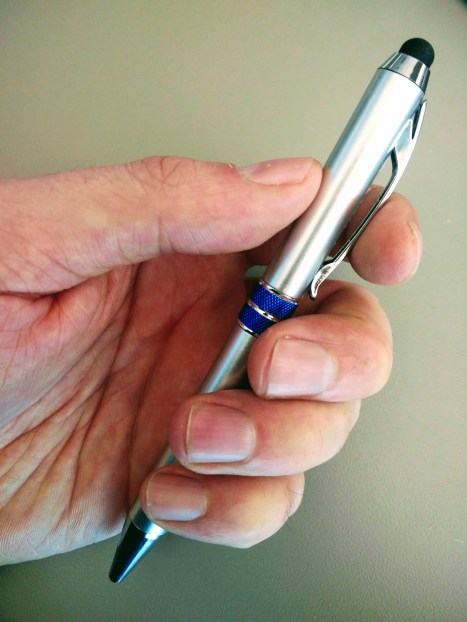
*Click*…
Right into place
The position of rest
Purpose relaxed
Yet poised
One click away
From action

The pen’s form
Serves its purpose
A design
Essence preceding
Existence
We seek the same
Purpose, aim, meaning
In our lives
Yet they remain
Always already
A design in progress
An essence unfolding
Both hidden and familiar
Emptiness coming into…
Emergence
Don’t grasp
*Click*…

IMG_20170411_084706

A View on Life and Death

A while back, I saw that it was a friend’s birthday on Facebook. I had not talked with this friend in years, having lost touch after moving to a different city. I warmly jumped at the occasion to say “Hello,” and reconnect. Flipping to the birthday notification, I typed out a heartfelt message, wishing him well.

A few hours later, I got a message notification from a person I didn’t know. He kindly and regretfully informed me that my friend had been dead for almost a year now. I was shocked. I had no idea. All I could do was thank this informative stranger and think back on my time with my friend, hoping that my message hadn’t caused any undue stress for anyone.

Honestly, I’ve encountered little death in my time. I’ve had pets die and a couple great grandparents, but I’ve had few instances of losing another person. This sudden awareness of the death of a friend I’d fallen out of contact with gave me pause.

Part of me wishes I could picture him in some serene afterlife, but honestly, this thought confuses me. I struggle greatly with the concept of a soul because it seems to be an attempt to assert an unchanging thing behind the ebb and flow of this impermanent universe. Every experience I’ve had, every thing I’ve studied, every fact and figure — all of it, everything points to transience. Suggesting a metaphysical permanence behind it all seems like an existential coping mechanism. Perhaps, there really is some great metaphysical Origin — Mind, Tao, Source, Idea (Eidos). If there is though, I maintain that it is a vastly different thing than is standardly posited with the term “soul” and its rather pastoral associations.

I’m left, instead, with some succor in knowing that whatever happens to us when we die, at least my friend is no longer the body he was here. He had longstanding chronic illness which made his life difficult and painful, leading (I presume) to a young death.

Ironically, isn’t this precisely our fear with death — not knowing who or what we will be when this body dies? As Heidegger puts it, it’s the possibility of one’s impossibility (or rather, of Dasein’s impossibility). Why must we posit an eternal ego to give this life and its experiences worth? As in the case of my friend — meeting with him for a few months in an intense period of my life makes his presence in my life all the more valuable for its rarity. Perhaps, I appreciate him all the more because relationships and the people who participate in them are impermanent — flashes of brilliance, fireworks on a summer’s evening.

file0001223124963

Rather than reach for life affirmation in the hereafter or for a Nietzschean, definingly transcendent moment for Eternal Return (a sublime life experience that grants you the fervor to say yes to this life, even if it were to be repeated infinitely), I think instead of life as something passing and therefore undefinably beautiful, rare, and unique. Much like seeing falling stars in the Perseid meteor shower – they all are similar in a way, but each burns differently, and each is beautiful and is to be savored in its passing, not a tragedy when it ends, rather one flashing, beautiful emergence, which is followed by others. I see no tragedy in living your life as something that will end and in so doing, making it shine while you flicker in the history of the Universe.


I plan to expand further on ideas about how to make one’s lifetime shine in my next post.

May this bring you peace and inspiration in being a timely being.

Gassho!

Musings of an Aspiring Oneironaut: Dream’s Strange Happenings

I recently meant to write this down but forgot and now only vaguely recall an “Aha!” moment. It was something about the nature of being in the Dreaming however and its differences from waking reality. I don’t recall the what of this difference now though

Now, I’m sitting here, trying to recall, and I can only feel the strong disparity between these two realities. In dreams, I undergo all manner of strange things that don’t happen when I’m awake. I talk to people whom remain distant in my real life. For instance, a recent dream involved a long, heartfelt in person conversation with two work colleagues in another state, whom I’ve neither met in real life nor spent much time with in conversation.

Then, there’s the impossible — swapping genders or ages, seeing events from an out-of-body perspective, switches in the narrative, gaps in time, or sudden changes of location. With all of these, I accept the unreal as real without a hitch, yet when I’m awake, I question reality incessantly…

A note:

–Do I feel anything in dreams beyond sight, sound, and raw emotion? I feel like tactile sensations are limited at best, and I don’t recall smelling things in dreams unless some powerful smell is impacting my sleeping body that is then woven into the dream narrative. However, I don’t recall these senses as being part of the dream itself.

file0002132545497

I hope to dig into my journey of dreaming vs. waking. Recently, I’ve taken a turn away from lucid dreaming by changing my approach to reality checks from “Am I dreaming right now?”  to “Am I awake?” This has come from the realization of mindfulness: much of my waking life is on autopilot. Just as I walk along with the flow of dream’s unfolding, I travel similarly in my waking life. Even when I’m “awake”, I’m not actually woken. When asking “Am I awake?”, I take a moment to pause and check that I’m not actually in a dream, but I also take a moment to tune into emptiness’ dance that is waking life. Therefore, this question works on two levels, and the dream yoga practitioner, the true oneironaut, benefits from both.


May this inspire your own explorations of reality, dreams, and wakefulness.

Gassho!

Previous Older Entries Next Newer Entries