Fear & Meditation

Disclaimer: I actually wrote this about 3 months ago, but it was in the middle of a dry-spell for posting, so I didn’t reflexively jump on to add it. Before that, I had thought of this topic and wanted to write about it several times for months but never got together the initiative to set it to paper. Here it is now.


One of the greatest changes that has come from my Buddhist practice in the last year or so is a new relationship with fear. I will have difficulty explaining the depths and nuances of this change, but writing is a dance with the indescribable that comes forth as artistry or a muddled attempt thereof in this case. Please, Buddhas and bodhisattvas, lend me graceful expression and smile with patience when I fumble through.

The best example that comes to mind is how I now experience spiders. For as long as I can remember, I’ve been terrified of spiders. How do you describe a phobia? It’s really difficult — in part, because not everyone has one. I know this because people have tried to logically rationalize me out of my phobia throughout my life. They speak to you as though this experience is based only on false premises, misapprehensions, that merely have to be rectified. Such a therapeutic strategy, while well-intentioned,  clearly does not understand the visceral and fundamental nature of this fear. You can’t just explain that the boogeyman isn’t real with a phobia because this isn’t based on some sort of belief. It hits fast and hard —  disarming thought before it can ever take place. Hence, there’s no chance to ever come to the conclusion that the little spider is tiny and harmless. Nope, its very existence is fear incarnate. There’s not even a gap to reach a judgment; there is merely and fully reaction. Pure reaction.

I remember moments from years ago when I noticed a spider near me in the room, and I either fled as quickly as possible, asking for help from friends and family or stood petrified, unable to escape this object of terror. That’s the part that’s really hard to explain to those who haven’t experienced a phobia. The object of horror is not something that is evaluated. It’s not a rational process in the sense of working through a line of reasoning. It’s more primal, more immediate. With spiders, it’s something about their shape, something about their movement. Their existence itself has been the embodiment of fear for me.

Let’s compare this with a recent experience with spiders after months of meditation and dharma study. About a week ago, I was in my garage. I plugged something into a socket in the wall. As I did so, the cord rustled some cobwebs along the wall below, and I saw a small black shape scurry through them. I looked down, and my immediate reaction was – “SPIDER!” I moved back just a bit, but then, I watched, transfixed. It had such a classic shape, and I leaned to the side to get a better look as it rushed to a small hole in the wood. I thought: “Wait! Is that a black widow?” Then, I paused, uncertain as I looked for the telltale splotch on its thorax. “Maybe, it’s a brown recluse,” I surmised, knowing that they live in this region in such conditions. I decided that I’d better be careful grabbing things off the shelves in the garage, but at the same time, I felt grateful to have seen this rare and beautiful creature as it lived in its dark, cozy corner. I wondered at what fear I must have caused it — invading its space as a giant with bright lights, even if only briefly.

_dsc0940-crop

Notice, there was still a certain amount of reaction but only enough to readjust awareness to the situation at hand, and I still have the caution of knowing that I shouldn’t go grabbing and petting spiders. However, I am not terrified of them any longer. In them, I see the wonder of millions of years of evolution, of the entirety of the universe’s history. They are intricate and beautiful, a natural masterpiece and as wondrous as all of the mysterious unfoldings of existence.

How have I reached such a different perspective? Meditation. I’ve spent hours focusing on my breath, consistently unplugging from my stream of thoughts and reactions. I’ve never directly faced these particular fears in meditation although I’m an admirer of Chöd and would love to cultivate that practice. Instead, I’ve meditated on my mind and on impermanence. This has brought about a gradual dissolution of my reactivity in general. However, it is much harder to let go of anger and perceived slights of ego. That’s something I hope will find its own path of liberation with continued practice.


May this inspire others who have dealt with their own overwhelming fears, even if its merely a sporadically encountered phobia.

Gassho!

Dropping In

Life – constant busyness
Or – constant business?
Always already
Right in the thick of it
Achieve! Do! React!
Experience! Imbibe! Consume!
Or:
Stop! Deny! Dream!
We run through
– Breakneck
Or we hide
– Head in sand
In stressed out moments,
Or spaced out interludes,
We always have another choice
The entire universe is right now
There is no other
When we wake up,
Dropping in,
All we rush past
Or look away from
Becomes real
– Not frightening
Or a task
And it’s far more miraculous
Than we ever imagined

blind-yeo-and-moor_0027


May this help you find the pause of focusing on the here and now, allowing you to drop into the moment – whatever arises.

Gassho!

Reactivity

Careening –
Toward, against
Retreating –
Away, behind
Reactivity
On course?
No, bound

Locked, empty, and confused
Seeking to wrest control
From the jaws
Of existential angst
– A threat to overcome
A life overrun

Where is there to be found
A freedom from endless rounds?
– In letting go
In just this

meditation-2


When you encounter difficulties, the feelings and stories that arise in reaction are just that, feelings and stories. They are whirlwinds of confusion, based not in what is happening now but in deeply held beliefs about you and your relationship to the world. Let them swirl — leaves in the wind. Sometimes you fall back into them and lose touch with the present, but a moment of recognition always comes. Right then, come back to your body, come back to your breath, and rest. The confusion, the stories and the feelings are still there. They continue to swirl, but you are not lost in them.

Just rest. Do not try to control your feelings. Open to all the stories and feelings as much as you can without being consumed by them. You will experience shock, disorientation, anger and self-blaming — reactive mechanisms that protect you from the full impact of what has happened. Sit patiently and let your system sort itself out.

As you rest in the confusion, bit by bit, you separate your confusion from the challenge you are facing. Still the impulse is to oppose. Ask yourself, “What am I opposing?” Then, “Do I need to oppose this?” And, finally, “Is opposing called for at all?”

When you no longer oppose what is happening in you, you are able to rest and see more clearly. What do you see? Look in the resting. Rest in the looking. In doing this, you are mixing awareness with what you experience and what you experience with awareness. Keep coming back to the clarity without losing the stability. Keep coming back to the stability without losing the clarity.

Learn to trust that clarity. Over time it enables you to act without relying on conceptual thinking or strategizing.

– In “Reflections on Silver River: Tokme Zongpo’s Thirty Seven Practices of a Bodhisattva” by Ken McLeod

May this inspire you to rest in your confusion and find the clarity to act with freedom rather than reacting from your stories.

Gassho!

Life, Death, and Change

Last night, I had a dream in which I went to the doctor and asked him to examine a deep groove in my skull – beneath the hair on the top of my head. It had always been there (in the dream) – a weakness in the shape of my head. He felt it and immediately became concerned. He started telling me that this could have some dire effects, but it was very unclear what kind of prognosis to expect. He sent me home, but on the walk home, I had a group phone call with him and my parents. He explained to all of us the potential medical difficulties that could arise from my particular brand of weak-headedness, and they were potentially sudden and fatal. He started explaining some of the most common and most severe difficulties, but as he started explaining, the phone connection dropped, and I didn’t get to hear any further explanation about what I was facing and what could happen. I felt that I was left hanging – uncertain and confused.

I awoke from this dream feeling pensive about mortality. In the dream, I had my demise placed right before me, but it was wrapped in a ball of “ifs” and “maybes” with no certainty about what would happen or when. The initial revelation of this felt quite shocking and scary, but as the dream went along, it felt much more subdued and distant. The question I awoke with was: “How is this different than day to day life?” I could very well go to the doctor today and be told the same thing – you have this weird condition that could be fatal, but we have no way of knowing. Isn’t that really just a metaphor for all the things that could possibly, maybe go wrong on any given day? Traffic accidents? Food poisoning? Random violence? A sunburn that gives rise to melanoma? The huge earthquake that will devastate the Pacific Northwest? This may sound dramatic, but our demise is always already sitting right in front of us as a potentially sudden and unforeseen event at any time. We can’t really plan for it. However, we go through life mostly unaware that this potential  is always there. We live blithely ignorant of it – fallen.

To extend further – we don’t see that we are always “dying” already. I am not the same person I was a year ago (definitely certain of that!). You might tell yourself that you are, but if you really sit with yourself in this moment and then remember how you felt, said, did things a year ago, five years ago, in your childhood, etc., you’ll find that you are not the “you” that you thought continued through all these. You’re a changing set of conditions and experiences. I find this clearest when I think back to my ideas and projects of childhood. I was obsessed with certain toys and pursuits – building up so much and putting so much effort into some interest. Then a year or two later, it was gone from my mind, almost never thought of again except in this activity of retrospective examination. Where did that passionate engagement go? It moved. It died. It changed into something else. We’re always changing into someone new. From a universal perspective, that’s all the larger death that this post discussed is: “I” cease to be, but my body’s energy/matter goes back into the systems and cycles of the universe’s ceaseless unfolding changes – just as it already is throughout my life, just more thoroughly, completely, and intimately.

IMG_0591

How do we face up to all of this with awareness? How do we be present to the change that happens in this very moment and in all moments? How do we let go of our fear of death so that we can face it, face living, with authenticity?


May this give you new perspective on your relationship with death and change in your life.

Gassho!

A Pause

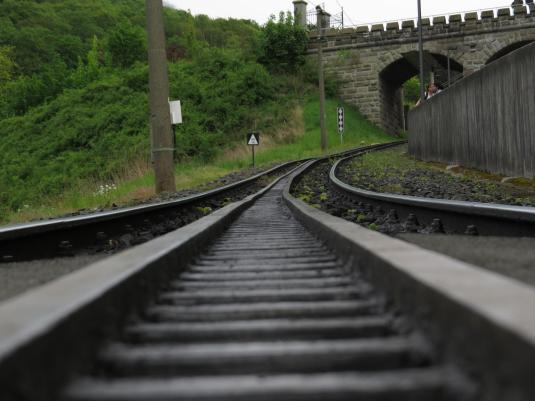
What is it to be alive as a human being? Constantly, we aim forward towards the next achievement, the next escape, the next gratification. “We are always already ahead of ourselves.” At the same time: “We are unknown to ourselves.” We run forward on neverending tracks of light, seeking fulfillment and completion elsewhere, yet we do not see the tracks nor the pattern of our movement. We see not the chase of like and the fleeing from dislike. We ignore it and all else that does not fall into the dualism. The trinity: desire, aversion, and ignorance. Two fuel our journey, and the last keeps us from being aware of anything else but the journey without seeing it for the journey it is…

526d1cdcd0a6af3c35ee8c598ea4bfc4

A moment of pause then, so that we might finally look around — a moment of truly seeing: circumspection and introspection… Stop. Just be present. Your breath. Your heartbeat. The sweat trickling down your arm. Here. Now. This is life unfolding. All of it. Not the nostalgia for the past or your five year plan for the future.

We worry so much about being right — doing and saying the right things, making the right choices, or we constantly judge ourselves as good or bad — a juxtaposition against some idealized or future “self” — how we should have acted, what could have been done better — always found wanting or meeting expectations. However, these just keep us rocketing forward on the twin rails of desire and aversion. What if the only dichotomy that matters for this life, this tiny little heartbeat of universal time, is whether we awaken or remain dazed and confused? What would life be if we were to liberate ourselves of the journey on rails and walk along with the freedom to move otherwise?


“What is freedom? It is nothing more and nothing less, than life lived awake.” -Ken McLeod, “Reflections on Silver River”

May this help you take pause and live a life awake.

Gassho!

Anxiety & Peace

Anxiety
The world – a threat
So many things to do!
So many things that are wrong!
So many dangers that could befall!
Everything must be changed
-Safer, more orderly-
Because “I” am shaken

Is peace truly
A shelter of ego?
An idealized scenario?
Don’t you know–
Everything changes?

Recovery
Finding joy in existence
Whatever arises
Letting go of ego and planning
Just sitting with
And welcoming
–No fear, rather faith–
Compassion & wisdom

Peace is not something to gain
No ordering of the universe
No forcing one’s will
It’s something to lose
The loss of “my” scurrying about

water_01

On Anger – Zen’s “Just Feeling”

For this consideration of anger, I’m sharing a passage from Morning Pages in tandem with some thoughts by a great Zen teacher, Charlotte Joko Beck.


I’ve been thinking a lot of anger recently and how to mindfully experience it. I find that being present for anger does not entail doubling down and Hulking out. In fact, I find that being present for an emotion, really feeling it, is not investing in reactivity. Sitting with lets emotions blossom and change on their own. With anger, being present for it lets that original pricked sensation come and go. It’s only in reacting to the original feeling, spinning it further and strengthening it does that original sense of anger become the larger mood of rage and aggression. If you can stop and sit with anger, you’ll see these reactions dancing around you wanting to take hold…


The point I was unable to reach by the end of the Morning Pages entry is that our experience of anger is something that rises as a roaring bonfire because we add fuel to it. We grab onto it. We spin it. We keep it burning strongly by reacting and ruminating on whatever the slight or initial frustration is. However, if you stop and sit with anger, if you mindfully be with it as it arises without clinging to the thoughts, feelings, and the narrative, you’ll experience the feeling without the feeling defining you in your reaction to it.


I am not implying that there will not be upsets. What I mean is that when we get upset, we don’t hold onto it. If we become angry, we are just angry for a second. Others may not even be aware of it. That is all there is to it. There is no clinging to the anger, no mental spinning with it. I don’t mean that years of practice leave us like a zombie. Quite the opposite. We really have more genuine emotions, more feeling for people. We are not so caught up in our inner states.

IMG_0077 - Copy copy

Free image taken from morguefile.com


The Buddha is nothing but exactly what you are, right now: hearing the cars, feeling the pain in your legs, hearing my voice; that’s the Buddha. You can’t catch hold of it; the minute you try to catch it, it’s changed. Being what we are at each moment means, for example, fully being our anger when we are angry. That kind of anger never hurts anybody because it’s total, complete. We really feel this anger, this knot in our stomach, and we’re not going to hurt anybody with it. The kind of anger that hurts people is when we smile sweetly and underneath we’re seething.

When you sit, don’t expect to be noble. When we give up this spinning mind, even for a few minutes, and just sit with what is, then this presence that we are is like a mirror. We see everything. We see what we are: our efforts to look good, to be first, or to be last. We see our anger, our anxiety, our pomposity, our so-called spirituality. Real spirituality is just being with all that. If we can really be with Buddha, who we are, then it transforms.


Now the child of pride is anger. By anger I mean all kinds of frustration, including irritation, resentment, jealousy. I talk so much about anger and how to work with it because to understand how to practice with anger is to understand how to approach the “gateless gate.”

In daily life we know what it means to stand back from a problem. For example, I’ve watched Laura make a beautiful flower arrangement: she’ll fuss and fiddle with the flowers, then at some point she’ll stand back and look, to see what she has done and how it balances out. If you’re sewing a dress, at first you cut and arrange and sew, but finally you get in front of the mirror to see how it looks. Does it hang on the shoulders? How’s the hem? Is it becoming? Is it a suitable dress? You stand back. Likewise, in order to put our lives into perspective, we stand back and take a look.

Now Zen practice is to do this. It develops the ability to stand back and look. Let’s take a practical example, a quarrel. The overriding quality in any quarrel is pride. Suppose I’m married and I have a quarrel with my husband. He’s done something that I don’t like–perhaps he has spent the family savings on a new car–and I think our present car is fine. And I think–in fact I know–that I am right. I am angry, furious. I want to scream. Now what can I do with my anger? What is the fruitful thing to do? First of all I think it’s a good idea just to back away: to do and say as little as possible. As I retreat for a bit, I can remind myself that what I really want is to be what might be called A Bigger Container. (In other words I must practice my ABCs.) To do this is to step into another dimension–the spiritual dimension, if we must give it a name.

All quotes taken from the Kindle version of Everyday Zen by Charlotte Joko Beck


May this help you find the ability to sit with all your emotions, even the difficult ones, without wrapping yourself in reactive feelings and narratives.

Gassho!


On Memories

Here’s another philosophical entry from Morning Pages. This one jives on both hermeneutics (with some inspiration from my reading of the Tractatus by Wittgenstein as well) and Buddhism (at the end) with a final nod to some of the thoughts I encountered in David Loy’s The World is Made of Stories, a philosophical masterpiece of hermeneutics in its own rights. I hope that you enjoy and ponder your own experiences from this.


(The opening of the entry dealt with thinking back on an event from almost five years ago and memories of it.)

Trips into memory are so strange. I think that we can readily grab onto them too much. A memory is like a painting–an interpretation of a landscape and a moment of time. It’s a perspective–necessarily limited, and like a painting or a picture, the image itself fades with time, and our interaction with it now in the present is another interpretation. We see it from our current understanding, and it’s difficult to know/remember that our nostalgic reliving of a previous experience is an interpretation of an interpretation–not absolute, not complete. This is the beauty of it: our experience is artwork–a tapestry that is woven over and over again.

file0001482310676

Free image found at morguefile.com, like many others on this blog

Although it is a truth (I experience what I do; that is true), it is not the Truth. It’s not a science or an in-depth recording of the “facts” (we might point out here that even these are interpretations, but more methodical, at least). Understanding this can allow us to be more compassionate to ourselves and others. It can allow us the clarity to see our place in the universe… How can we find enlightenment if we are unfamiliar with the nature of our delusion? We can’t if we grasp with certainty and dogma onto the legitimacy of our perspective, our experience, as the Truth. We have to be open to see our story-ing and to try to see beyond it to other perspectives. Sometimes, revisiting a memory gives us just enough of a jolt of our current story in the act of juxtaposition that we are pulled beyond in just a moment… It’s not always the case that we cling to memories without the realization of interpretation; sometimes, they’re a reminder of just that–we are built of stories, all of them interpretations, all the way down…


May this help you see your memories and your experience with insight and wisdom.

Gassho!


Heartbreak Wisdom Journal–Final Entry: Letting Go of Letting Go

I’m closing out the year with this final entry in this series of posts that has both informed my spiritual development of this year and the course of this blog as well. I’m closing this narrative with a long set of connected thoughts about letting go–both my own and some quotes that have inspired me. This year is done, and this chapter in my story comes to a close as well. May this inspire those of you out there who have also gone through heartbreak.


What is the perfection of wisdom? Let’s look at some important elements that are the core of our practice as well as our lives. In face-to-face study, a student expresses agony over a relationship that ended two years ago and asks me how to let go. What is letting go?There is a little toy called a Chinese finger-trap. You put two fingers into it, then try to pull them out. But you can’t extricate your fingers from the trap by pulling: it’s only when you push your fingers further in that the trap releases them. Similarly, we think of letting go as doing something: throwing things away, ending a relationship, getting rid of whatever’s bothering us. But that works no better than pulling our fingers in order to extricate them from the trap. We let go by eliminating the separation between us and what we wish to let go of. We become it.

Do we let go of anger by saying good bye or going away? Of course not! That doesn’t work. The way to let go of anger is to enter the anger, become the anger rather than separate from it. If you even hold on to the notion of having to let go of it, you’re still stuck. In a famous koan, a monk went to Chao-chou Ts’ung-shen and asked, “What shall I do now that I’ve let go of everything?” Chao-chou said, “Let go of that!” The monk said, “What do you mean, let go of that? I’ve let go of everything.” Chao-chou answered, “Okay, then continue carrying it with you.” The monk failed to get the point. Holding on to letting go is not letting go.

We don’t get rid of anger by trying to get rid of it: the same applies to forgetting the self. To forget the self means to become what is, become what we are. How do we let go of a painful relationship? Become the person we wish to let go of, become the pain itself. We think we’re not the person, not the pain, but we are. Eliminate the gap between subject and object and there’s no anger, no loss of relationship, no sorrow, no suffering, no observer sitting back and crying, “Poor me!”

The Chinese finger-trap is solved by going further into the trap, and the same is true of letting go: Go into it. If you avoid the situation, it only gets worse. Totally be it; that’s letting go. Similarly, when we sit, it’s not a question of trying to do something. Don’t sit there saying, “I have to accomplish this. I have to attain that.” Just let go and be what you are, be this very moment. If you are breathing, just be breathing, and you will realize that you’re the whole universe, with nothing outside or external to you. The beautiful mountain–that’s you. Anger, lust, joy, frustration–they’re all you: none are outside. And because there’s no outside, there’s also no inside; altogether, this is you. This is the meaning of Shakyamuni Buddha’s “I alone am!”–Bernie Glass, from Infinite Circle
file4421246702407


I intended to write this post a couple months back around the time of my birthday, but I never got to it, and I can only believe that it wasn’t ripe. I was reading the book quoted above around the same time, but this quote means so much more to me reading it again now. This is my last Heartbreak Wisdom Journal entry. After all the steps in the spiritual path of heartbreak, I’ve finally reached the realization that continuing these narratives is not fully letting go. It’s time to let go of letting go. That’s the step forward on the path of the spiritual heart. That’s the tender vulnerability that was described in the first entry. We come full circle: nothing outside.

Let my birthday journal entry, Morning Pages from a couple months back, serve as an intention in this step forward:
“Well, 33! Made it!
I’ve been thinking of this particular one for a while. As a teenager, I loved the Smashing Pumpkins’ “33”. It is now my theme song for a year, I suppose. That’s odd, in a way, as it’s a romantic song about another person making existence beautiful:
– ” You could make it last, forever, you.”
Clearly, after the year I’ve had, I just don’t feel that way about anyone, and I wonder if I ever will again. In many ways, I totally don’t respect those concepts of romance, especially as a guiding light in the life of a person. Well, maybe I can transform that into something less deluded–transmutation.
That reminds me: I’ve been thinking a lot recently about just that. I want to handle my story around the heartbreak of the end of my relationship in a very particular way. I don’t want to cast her as a monster or villain. I don’t want to cast myself as hero or victim. It simply was. It was, however, not justified–another story that explains away–no matter what came after. Again, it simply was–the complicated interweaving of sharing life and love with other people. In the end, she simply decided that she wanted something different. That’s all.
In the end, this suffering has been, as is suffering in general, useless. That’s actually one of the best philosophical essays I have read: Levinas’ “Useless Suffering”. Explaining away my pain–to myself or the explanations of others–is ultimately an unwillingness to sit with, see, and genuinely feel the agony of a broken heart. Again, it simply is, and any meaning or story that makes it OK or gives it a telos covers it over and masks it. There is beauty in the rawness, and the only use is to sit with it and be inspired to compassion for others, to aim at liberating oneself and all sentient beings from such anguish.
So, no, I won’t cast stones. However, I will transmute–that earlier thread of connection–the love I reached for her into this compassion for all. I’ll blow the lid off of the Love of an Other that completes my Self and move to a warmth for all that exists. May I step forward on the path for the benefit of all sentient beings.”


Tonight–before writing any of this or reading these quotes again–I sat down and did a mantra meditation with mala in hand, counting–bead by bead.

Om mani padme hum.
Om mani padme hum.
Om mani padme hum.


108 times
.

I focused my attention on Kwan Yin/Avalokitesvara/Chenrezig/Kannon–the listener to the cries of the world, bodhisattva of compassion. As I repeated the words and contemplated Avalokitesvara with his hundred arms–reaching out to touch the lives of all sentient beings, I felt my own loving-kindness swell, and I flashed on those who have done me pain, who have stoked my anger or sadness… I realized, as separation of I/Them dropped away, that They are I and I am They. Her face flashed by amidst others, and I saw tears and felt her fear, her anxiety. I embraced her feelings with loving-kindness. Many others flashed by as well. Among them all, my own face flashed up, my angry, sad face, tormented by delusion, struggling with all the cares of being human. I compassionately embraced this too. As Glass Roshi said in the initial quote above: “Anger, lust joy, frustration–they’re all you: none are outside. And because there’s no outside, there’s also no inside: altogether this is you.” — For a brief moment, I sat in this compassion and wisdom, in this karuna and prajna

Then, like always, my mind flitted back to ordinary shenanigans–always room for more practice.


After meditating, I lay down and finished reading a graphic novel, weathering a slight stomachache. The closing words rang true and inspired me to sit down and write this entry. We shall close with them:

I can’t give you your hope. You have to grow your own and hold it through the seemingly endless darkness. The true task–to find joy in the small things we can count on.

When we stop taking pleasure in the basic experience of being alive, beat-by-beat, we lose everything that makes life worthwhile. We must relish in every sight, every touch…
… Every memory. My daughters playing in the garden. Johl kissing my neck. Marik’s elation at a new invention. These memories are enough to light my darkest hour. To face whatever awaits above. We all of us carry burdens that seem too heavy. … Losses we can’t conceivably move past. The things that once gave purpose to life. It is all too easy to give yourself over to the traumas of the past–allowing pain to define us. There is a medicine for that–hope and perseverance. Light brings light. And no matter what we face there is one thing we can control: our outlook. It’s not about ignoring the pain or mindlessly believing things will simply be better–it’s about finding the joy in participating. And when the weight of the past pulls us low we must find the strength to release it…
…and finally give ourselves permission to start over.
-Rick Remender, Low: Volume 2, closing passage


The character, Stel, finds the hope to start fresh, letting go of the past, but she doesn’t do this by running away from it–ignoring it–or by blindly believing that the future will make everything right again. She’s neither lost in the pain of the past nor in a dream of a hazy, euphoric future. She’s faced all of her ghosts by sitting with everything as it was and as it currently is. She’s fully taken on her pain, her burdens. She realizes that in becoming them, the weight of the past drops with the permission to start over. That permission is always at hand, right now. It merely takes the warrior’s courage to let go: to fully be here as we are. That’s what starting over is. This may begin with holding on to the wonders of golden experiences, but this sagely wisdom fully blossoms in participating joyously in every moment of life, even the most painful or burdensome. This is wrongly called “hope” because it’s not about that belief in a future deliverance; it’s actually “faith”–trust in and no separation from all that is. This is recognizing the basic goodness of existence, and it is a clear step forward to liberation: happiness that does not rely on the conditioned.

IMGP6387


May this light the path to letting go of heartbreak for those who need it.

Gassho!


Previous Heartbreak Wisdom Journal Entry– Entry 12: Heartmind’s Abundance

Mindfulness: The Great Challenge

Mindfulness doesn’t live and die on the cushion.
It’s a journey, an opportunity,
In every moment.
I can be here, present:
Composed and compassionate
Serene and serendipitous
Open and observant
Or I can be lost, confused:
Reactive and restricted
Selfish and selective
Dormant and dogmatic.


The journey of a thousand miles begins with a single step
-Lao Tzu, Tao Te Ching §64, Trans. Jonathan Star

The Sage worries not about the journeys or tales of yesterday. Nor does he lose sight of the beginning step while looking at the future destination beyond the horizon. Knowing both, he steps forward, feeling every inch of ground in this step–right here, right now. The Sage’s secret wisdom?–This step is the only step. Each step is the beginning step. Each step is the whole journey. The only step to take is the one underfoot right now. The only journey is the current movement of the leg and foot, and there is no greater miracle than this. The Sage takes this step with awareness and gratitude–not lost, elsewhere, and not attached to any outcome.

RAILTRACK 4A


The present is direct and straightforward. Your experience of it is heightened through mindfulness. When you are mindful of your breath in meditation, when you mindful of your thoughts, or when you are mindful of going from the practice of meditation to dealing with the kitchen sink, all those situations are in the present. You don’t borrow ideas from the past, and you don’t try to fundraise from the future. You just stay on the spot, now.

That may be easy to say, but it’s not so easy to do. We often find it satisfying to have a reference point to what might happen in the future or what has happened in the past. We feel more relaxed when we can refer to past experiences to inform what is happening now. We borrow from the past and anticipate the future, and that makes us feel secure and cozy. We may think we are living in the present, but when we are preoccupied with the past and future, we are blind to the current situation.

Living in the present may seem like quite a foreign idea. What does that even mean? If you have a regular schedule, a nine-to-five job, you cycle through your weekly activities from Monday to Friday, doing what is expected of you and what you expect of yourself. If something out of the ordinary occurs, something that is completely outside of the routine of your Monday-to-Friday world, it can be quite disconcerting.

We are bewildered when something unexpected pops up. A flea jumps on your nose. What should you do? You swat at it or you ignore it if you can. If that doesn’t work, then you search for a memory from the past to help you cope. You try to remember how you dealt with the last flea that landed on you. Or you may try to strategize how you’ll prevent insects from bothering you in the future. None of that helps much. We can be much more present if we don’t pay so much attention to the past or expectations of the future. Then, we might discover that we can enjoy the present moment, which is always new and fresh. We might make friends with our fleas.
-Chögyam Trungpa, Mindfulness in Action, pp. 46-47.


May this inspire you to mindful presence in this moment.

Gassho!


Previous Older Entries Next Newer Entries