Experience in Meditation

What arises in this moment?
“Joy”?
“Agony”?
“Nostalgia”?

Can you openly be present to it?
Whatever it may be?
So many butterflies
And moths, flitting about…

Don’t react. Just feel–fully.
Just anger.
Just lust.
Just sadness.

No narrative yarns following these swarms.
Breathe in.
Breathe out.
No attachment.

Buddha-9897


May this inspire you to meditate.

Gassho!

On Friendship: Views of a Philosopher and of a Zen Priest

At times, I have been dismayed at how readily others are called friends. In this post, I’ve taken passages from Aristotle and Katagiri Roshi to examine what deep friendship is. Aristotle shows us that there is only one complete friendship–one that is an equal and mutual giving that comes from the desire to better the excellence, the good, in another; while Katagiri shows that while we walk alone through life, we can encounter true friends who show us wisdom and noble action. Katagiri tells us how to recognize them when we encounter them and how to act toward such true friends. On some level, these two expositions are dramatically different, but on some level they are the same. Katagiri emphasizes how one could be a friend for the universe with the example of the Buddha in mind. This goes much beyond the rarefied virtue of those magnanimous souls that, rare indeed, can share this equality of virtue enhancement a la Aristotle, yet is it not true that such a friend, the true friend in line with the example of the Buddha, seeks to uphold the best in all that exists, the basic goodness that underlies every sentient being, taking pleasure in this simple act of goodness for its own sake? Both indicate that this friendship is rare, but it is also clear that this is what friendship really is: sharing a deeper truth with someone who brings it out in you as well.

hands-compassion

So there are three species of friendship, equal in number to the kinds of things that are loved; for in accordance with each, there is a reciprocal loving which one is not unaware of, and those who love one another wish for good things for one another in the same sense in which they love. So those who love one another for what is useful do not love one another for themselves, but insofar as something good comes to them from one another. And it is similar with those who love on account of pleasure, since they are fond of charming people not for being people of a certain sort, but because they are pleasing to themselves. So those who love for what is useful have a liking based on what is good for themselves, and those who love for pleasure have a liking based on what is pleasant to themselves, and the other person is loved not for what he is, but insofar as he is useful or pleasant. Therefore, these are friendships of an incidental kind, since it is not insofar as the one loved is the very person he is that he is loved, but insofar as he provides, in the one case, something good, or in the other case, pleasure. Hence, such friendships are easily dissolved, when the people themselves do not stay the way they were, for when the others are no longer pleasant or useful they stop loving them. And what is useful does not stay the same, but becomes something different at a different time. So when that through which they were friends has departed, the friendship is dissolved, since the friendship was a consequence of that.

But the complete sort of friendship is that between people who are good and are alike in virtue, since they wish for good things for one another in the same way insofar as they are good, and they are good in themselves. And those who wish for good things for their friends for their own sake are friends most of all, since they are that for themselves and not incidentally; so the friendship of these people lasts as long as they are good, and virtue is enduring. And each of them is good simply and good for his friend, since good people are both good simply and beneficial to one another. And they are similarly pleasant since the good are pleasant both simply and to one another, for to each person, actions that are his own and such as his own are according to his pleasure, while the actions of the good are the same or similar. And it is reasonable that such friendship is lasting, for all those things that ought to belong to friends are joined together in it. For every friendship is for something good or for pleasure, either simply or for the one who loves, and is from some sort of similarity, and in this sort all the things mentioned are present on account of themselves, since in this sort the people are alike, and all the rest of it; and what is good simply is also pleasant simply, and these things most of all are loved, and so the loving and the friendship among these people is the most intense and best.

But such friendships are likely to be rare for such people are few. Also, there is an additional need of time and intimate acquaintance, for according to the common saying, it is not possible for people to know one another until they use up the proverbial amount of salt together, and so it is not possible for them to accept one another before that, or to be friends until each shows himself to each as lovable and as trusted. Those who quickly make gestures of friendship toward one another want to be friends, but are not unless they are also lovable and know this, since wishing for friendship comes about as something quick, but friendship does not.

Affection seems like a feeling, but friendship seems like an active condition, for affection is no less present for inanimate things, but loving in return involves choice, and choice comes from an active condition. And people wish for good things for those they love for those others’ own sake, not as a result of feeling but as a result of an active condition. And by loving the friend, they love what is good for themselves, for when a good person becomes a friend, he becomes good for the one to whom he is a friend. So each of them loves what is good for himself, and also gives back an equal amount in return in wishing as well as in what is pleasant; for it is said that “friendship is equal relationship,” and this belongs most of all to the friendship of the good.

–Selections from Aristotle’s Nicomachean Ethics, Book VIII, Chapters 3 & 5, translator: Joe Sachs


The Buddha also taught that if you come across a true friend–one who is noble, fearless, thoughtful, and wise–then walk with that friend in peace. If you find such a friend, you can walk together for life. But don’t be too eager to find such a friend. If you become greedy for such a friend, you will be disappointed, and you will not be able to live in peace and harmony with others.

Learning to live alone also means that, whatever the situation, you have to live quietly. All you have to do is just walk, step-by-step. It’s not so easy, but it’s very important for us. And if we are not too greedy, the good friend will appear.

In ancient times in India, people would look to find such a good friend meditating in the forest. If they found such a person, they would sit with him. This is how it was with Buddha. As people began to gather around him, he called them shravakas, which means “listeners.” The relationship between the Buddha and those who came to listen to his teaching was not like that of a boss and an employee or a parent and child. It was more like that of a master and an apprentice. If you go to see and listen to such a wise friend, you are not a student, exactly; you are just a listener. The idea of being called a student came about in a later age.

At the time of the Buddha, there were four castes of people, and depending on caste, there were many formal rules for how people should address one another. But the Buddha was beyond classifying or discriminating among people. He used the same kind, gentle, and polite form of expression to address everyone, no matter what the station. He only said, “Welcome.” That’s it. People didn’t go through any particular ceremony that certified them as followers of the Buddha. They just received this simple greeting. This is the origin of the sangha.

In Sanskrit the term sangha literally means “group.” It was used to refer to religious groups as well as political groups. When the Buddha visited different regions, the people would gather together to listen to his teaching and to practice together. Then, after he left, they would settle into small groups or take up traveling.

Today, how do we find a wise friend? I don’t know. There is no particular pattern. But even though you might not find a good friend in the world, still you can find a good friend in the example of the Buddha. And if you do come across such a friend, walk with him. Just remember, if this person is a good friend for you, he is also a good friend for others, so don’t attach too strongly to him.

You can feel something from such persons as you walk with them. And remember, though they are human beings living now, through them you can meet the Buddha. And through the Buddha, you can see such a good, pure friend.

–Dainin Katagiri, You Have to Say Something: Manifesting Zen Insight, pp. 54-55.


May this set of thoughts give you insight into friendship and how to act as a friend. May you aspire to being a noble, fearless, thoughtful and wise friend who takes pleasure in the good of others rather than the incidental connection of usefulness or mundane pleasure.

Heartbreak Wisdom Journal–Entry 12: Heartmind’s Abundance

Being dumped and left behind, completely forgotten by a great Romantic Love, feels much like being forsaken by a deity. On some level, this is precisely true. Love as great object of inspiration has forsaken you, left you alone to find your way in existence without it. Here echoes the existential dilemma of Sartre: alienation. You’re on your own in finding your meaning in life now, and your choices no longer involve the creation of a shared meaning with another person.

This feeling of forgottenness and abandonment has been biting at me for months. Social media hasn’t helped. I’ve seen the contacts I once had slowly forget my existence. Such is to be expected and is not anything wrong on their parts, but it just emphasizes the feeling of alienation even more. The constant reminder of this in the noise of social media babble has, along with a few other motivations, pushed me to close my main social media account for now. In a strange way, it’s been liberating. I feel that I’m taking up the solitary path that is discussed in the Dhammapada; like the well-trained elephant, I’m learning to take on the trek through the jungles by myself, relaxing in the journey yet staying on course.


Recently, I did a particular meditation for the first time in months. In it, you center for a few minutes while holding your hands over your heart with your thumbs and pointer fingers together in the shape of a triangle. After breathing and centering for some time, you ask yourself, or rather, plant the question: “If I planted my heart, what would grow?”  You then sit with whatever answer comes to form in your mind, not forcing, not judging, just observing. The last time I did this, I had some intense yet interesting experiences (you can read about them here). This time’s experience of the meditation was also intense but very different from the last.

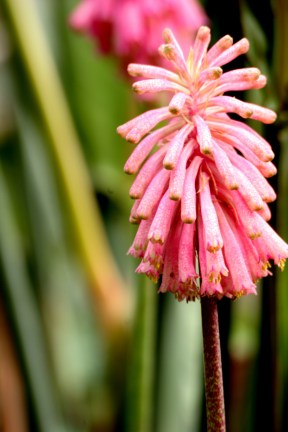
My question first met with a blank, and then, a stalk with a pink flower popped out. At first, it was the bleeding heart flower but became a larger, bell-shaped flower.

file5601245095844

From this:

file000599422326

To something closer to a single one of these:

Then, another and another popped up. Eventually, they started to lean down and crumple. I had a sudden fear that they were withering and dying from some blight, and indeed, they soon disappeared. However, the ground then gave birth to green leaves, like those from orchids, coming out of the ground by the hundreds, spreading out and out and out. I was struck by the abundance of this–an overwhelming sense of compassion and generosity.

I was almost in tears of gratitude as I came out of this meditation. I realized again, that the problem of this kind of pain only bites and tortures when focused on “me“. The question isn’t what I can, should, or will do for myself. That will continue the focus on the pain that is here, never getting beyond it and keeping the story locked in my orbit, reinforcing that story even. Instead, how can I give to all? If my focus becomes about abundance outward, I’ll find lushness throughout existence. Then, it’s not about me. It’s about the universe. It’s about All.

Identification born of ignorance is a source of grief, and its fading a move toward freedom, as I learned in the days following the death of my only daughter, Ona. She had been congested; her doctor failed to notice her swollen ankles and pale complexion. She was a cherubic child, and we, too, were slow to appreciate the extent of her listlessness. A trip to another physician led to a rush to the hospital; Ona died that night. Her heard had a hole in it and could not keep up with the increased burden of pneumonia.

Days and nights followed in a blur of emotion. Relatives wept with us, visitors came and went, sleep was elusive. The pain made a home in my body and lived there. I had never known such grief. Yet, sometimes, I was able to experience this grief in a nonidentified way, noticing feelings rise and fall, as I did in meditation. And I began to detect a pattern. Whenever a telephone call came–yet another person expressing sympathy–my grief erupted anew. Emotion welled up from my belly through my heart, my head flushed with sensation, my eyes filled with tears.

Watching this time and again, I saw how, at the moment of contact with the caller, an image formed in my mind: the father who lost his child. Instead of experiencing the shifting emotions of the moment–now sadness, now disbelief, now compassion for my wife–I inhabited the image of someone overwhelmed with grief. I identified with that fabricated image, stepped into it as if boarding a train, and became overwhelmed. The immediate suffering was compounded, distorted, and amplified. Knowing this was freeing. Once I discovered this pattern, I was able to watch the train come into the station but not board it. I still felt grief: Ona was of my heart; her absence was confusing and painful. But when I stopped stepping into the mental-emotional construction of “the grieving father,” that pain became less sharp and turbulent because it was not proliferated into a “second arrow” of suffering.

Insight Dialogue:The Interpersonal Path to Freedom, Gregory Kramer, pp. 65-66


Later on in the evening, I read the following in Matthieu Richard’s “Happiness” before falling asleep.

As the pain that afflicts us grows stronger, our mental universe contracts. Events and thoughts continually rebound off the walls of our circumscribed inner prison. They speed up and gather force, every ricochet inflicting new wounds. We must therefore broaden our inner horizons to the point where there are no walls for negative emotion to bounce off of. When these walls, built brick by brick by the self, come tumbling down, suffering’s bullets will miss their mark and vanish in the vast openness of inner freedom. We realize that our suffering was forgetfulness of our true nature, which remains unchanged beneath the fog of emotions. It is essential to develop and sustain this broadening of the inner horizons. External events and thoughts will then emerge like stars that reflect off the calm surface of a vast ocean without disturbing it.

One of the best ways to achieve that state is to meditate on feelings that transcend our mental afflictions. If, for instance, we gradually let our mind be invaded by a feeling of love and compassion for all beings, the warmth of such a thought will very likely melt the ice of our frustrations, while its gentleness will cool the fire of our desires. We will have succeeded in raising ourselves above our personal pain to the point where it becomes almost imperceptible.

Exercise: When you feel overwhelmed by emotions
Imagine a stormy sea with breakers as big as houses. Each wave is more monstrous than the last. They are about to engulf your boat, your very life hangs on those few extra yards in the rushing wall of water. Then imagine observing the same scene from a high-flying plane. From that perspective, the waves seem to form a delicate blue-and-white mosaic, barely trembling on the surface of the water. From that height in the silence of space, your eye sees those almost motionless patterns, and your mind immerses itself in clear and luminous sky. The waves of anger or obsession seem real enough, but remind yourself that they are merely fabrications of your mind; that they will rise and also again disappear. Why stay on the boat of mental anxiety? Make your mind as vast as the sky and you will find that the waves of afflictive emotions have lost all the strength you had attributed to them.

After reading this, I lay there in bed and started winding my mind into sleep. As I closed my eyes, I saw the image of a statue of an elephant’s head facing me. It was ancient, long forgotten in some lost glade of the Indian wilds. It was overgrown with grass and hanging vines, although only partially–his regal head was still clearly visible as well as the details of the carving. The foliage hung gently, emphasizing his calm majesty, and the light green was punctuated at the crown of his head and along the edges of the ears with light pink flowers–the same that I had seen in my meditation. His calm warmth inspired me and reminded me that the selfless path to nirvana is described in the Dhammapada as the training of the elephant. This ancient wisdom is still here to calmly inspire and point out the path, overgrown as the symbols may be, even in the darkest times of our lives. That smiling, beautiful tranquility is right here to be seen. I drifted off with this serene joy.

elephant cc

Something like this guy, but just the head from straight on–face to face, and much closer…


At a retreat about 2 years ago, the shaman in charge told all of us that the point of what we were doing was to get beyond the head and into the heart. He was completely correct, but maybe, it was in an even deeper manner than he realized.

Mahayana Buddhism urges practitioners to rouse bodhicittaBodhicitta is translated usually as awakened mind or awakened heart and sometimes as noble mind or noble heart. The point I want to pull out here is that mind and heart are not clearly distinguished as separate in this Sanskrit word. When we Westerners say “mind”, we generally think only of the intellect, but ultimately, mind is all of our experience. All experiences we have in our lives are filtered by our mind. Our emotions, our thoughts, our perceptions, all take place within our receptive engagement with the universe–consciousness: mind. If anything, part of our problem as Westerners is that our usage of these words has tried to split out emotions, “heart”, from what we’ve made into a more idea-laden space of “mind”. However, psychology would show us that even emotions are tempered by our concepts, (hi)stories, and social constructs. Our experience of heart is not separate from our experience of mind. It really is Heartmind (inspired by Sanskrit’s lack of clear distinction between the two).

Opening the heart and traveling into its depths then is both getting beyond the head AND awakening the mind–the heartmind. Really reaching into these depths of mindheart is stepping past all of our identifications and constructs. It’s finding the empty and open potential for all unfolding in this moment–sheer luminosity. We can call it creative force, Source, Tao, or buddha-nature, but opening to this emptiness behind/within All, shunyata, is the great spiritual journey of the warrior who seeks to awaken the heart. Seeing this, even briefly, goes beyond intellectual constructs of self and lights the abundant fire of compassion that is bodhicitta; it makes the awakened heartmind beat with abundance.


Life is a dream,
the years pass by like flowing waters.
Glamour and glory are transient as autumn smoke;
what tragedy–for with the sun set deeply in the west,
still there are those
lost among paths of disillusionment.

Our heart should be clear as ice.
Forget all the worldly nonsense.
Sit calmly, breathe quietly, heart bright and spotless as an empty mirror.
This is the path to the Buddha’s table.

The Book of the Heart: Embracing the Tao, Loy Ching-Yuen, “On Tao: §3”

May this inspire other warriors to rouse bodhicitta and let their heartminds overflow with abundance. May the training of self, the harnessing of the process of walking the path–the trained elephant–act as a guide and inspiration on the path.

Gassho!


Previous Heartbreak Wisdom Journal Entry– Entry 11: Just Live
Next Heartbreak Wisdom Journal Entry– Final Entry: Letting Go of Letting Go

Heartbreak Wisdom Journal — Entry 11: Just Live

The following is a long quote from Dainin Katagiri’s You Have to Say Something: Manifesting Zen Insight. When I read this for the first time a couple of months ago, it took my breath away. It’s been a guiding principle for practice and daily life, by that I mean practicing through the moments of daily life, ever since. If there’s something that has gotten me through the difficulties apparent in my last two Heartbreak Wisdom Journal entries, it’s wise teachings like this. If you don’t find a way to handle each day well and with equanimity, you’ll yearn for escape, and when going through negative emotional terrain, this yearning for escape can be most dire and dark. I hope that you too will be inspired by this and use it as a compass in your daily life as well.


As I mentioned, it is easy to become fed up with daily routine. You do the same thing, day after day, until finally you don’t know what the purpose of human life is. Human life just based on daily routine seems like a huge trap. We don’t want to look at this, so we don’t pay attention to daily routine. We get up in the morning and have breakfast, but we don’t pay attention to breakfast. Quickly and carelessly, we drink coffee and go to work.

But if you don’t pay attention, you will eat breakfast recklessly, you will go to work recklessly, you will drive recklessly, and you will go to sleep recklessly. Finally, you will be fed up with your daily routine. This is human suffering, and it fills everyday life.

The important point is that we can neither escape everyday life nor ignore it. We have to live by means of realizing the original nature of the self right in the middle of daily routine, without destroying daily routine, and without attaching to it. When it is time to get up, just get up. Even though you don’t like it, just get up. Getting up will free you from the fact that you have to get up.

Even though you don’t like your life, just live. Even though death will come sooner or later, just live. The truth of life is just to live. This is no attachment. Zen practice is to be fully alive in each moment. Only by this living activity can you take care of your everyday life.

-Dainin Katagiri, You Have to Say Something: Manifesting Zen Insight, pp. xv-xvi.

chore2

Being fully alive in every moment–even in that of washing the dishes


“Zen practice is to be fully alive in each moment.” This does not mean indulgence, chasing your desires, or trying to set up a string of moments you want. On the contrary, this means to fully be with whatever is at hand: for instance, fully present to washing the dishes, even if you don’t like it. Instead of an endless array of likes and wants–Katagiri says in this book that desires are endless: not the goal of a practice of nonattachment–just live in this moment, whatever arises. Being fully alive in this moment doesn’t mean yearning for something else and attaching to that yearning. Not that yearning is bad; if it comes up, let it be, but don’t invest in it. Don’t spin it. Don’t attach to it. That’s wishing for this moment to end, to be dead. That’s being dead in this moment.

May this inspire you to find the strength to just be in your life, to just live. May your practice allow you to live fully in each moment, without attachment, without mistaking presence in every moment with only showing up to the moments you want to have happen/trying to acquire as many of those moments as possible. May this help you smile at every moment, liked or disliked, without escapism.

Gassho!


Previous Heartbreak Wisdom Journal Entry– Entry 10: Echoes/Grief
Next Heartbreak Wisdom Journal Entry–  Entry 12: Heartmind’s Abundance

Grasping at Sand – The Pursuit of Happiness

We pursue happiness,
grasping onto desires–
Justifying this as wisdom, as nature, as fact–
Fulfillment + gratification = happiness!!!
Yet we don’t see…

The heart grasping onto desires
Is like a hand grasping
Onto grains of the finest sand.
No matter how hard we
Try to hold on,
It slips out,
And what remains
Tickles and scratches,
Holding onto the hand
Even if the hand lets go.
Yet we don’t see…

Sand flits out of the hand’s grasp
Blowing away in the wind
Lost, gone, vanished
Like a dream
As though the grains were never there
Just like this
Desires arise and disappear
Ephemeral phantoms taken as solid
Yet we don’t see…
Is there a better way to be?

100_4073


Without desire, without distress
we keep to our empty heart.
The beauty of the Way is that there is no
“way”.

No self
No this, no that

Everything, everything is simply emptiness.
– Loy Ching-Yuen The Book of the Heart: Embracing Tao (On Tao, §10)

Desire that has no desire is the Way
Tao is the balance of wanting
and our not-wanting mind

Travelers know that steep cliffs mean a long, hard
climb.
Just so with Tao:
No smooth roads without first a few ups and downs.
-Loy Ching-Yuen The Book of the Heart: Embracing Tao (On Enlightenment, §1)

May this help you balance your wanting and not-wanting mind, finding the desire that has no desire. May this help you slowly open the heart that grasps onto desire, one that seeks happiness in selfish fulfillment. May you instead find your way onto the selfless path that brings true happiness: an open heart of bodhicitta (have a look at my discussion of the first chapter of the Dhammapada for more on the selfish and selfless paths, and have a look at this one for more discussion of bodhicitta).

Gassho!

Nothing to Do…

If, if, if…
A set of checkboxes
Mark them all, and…
Get happiness?
Even a spiritual path–
A pursuit of spiritual materialism
An accumulation of ego
The doing of an “I”
“My attainment”
A misperception
Of Truth
“I” am not solid–an illusion
The word, a placeholder,
A Transcendental Unity of Apperception
My “Higher Self”?
Not like anything conventionally conceived:
The ebb and flow of everything
Not separate from it-
A divine chaos–unfolding
The beautiful, empty, mysterious Tao
Emerging-abiding sway of all difference
The path: There’s nothing to “do”
Nowhere to “go”
Enlightenment is here: in this moment
Nirvana in samsara
Just live: realize this one step.

file0001052140987


Inspired by a wonderful meditation this morning and all the wise things I regularly read: in this case, I’ve been particularly moved by Dainin Katagiri’s You Have to Say Something. This passage clarifies some of the final lines:

So, how can we practice zazen as an end in itself? All you have to do is take a step. Just one step. Strictly speaking, there is just one thing we have to face, and nothing else. If you believe there is something else besides this one thing, this is not pure practice. Just take one step in this moment with wholeheartedness. Intellectually, we think about the past and the future, but if we take one step, this shore and the other shore are now. Taking one step already includes all other steps. It includes this shore and the other shore. This one step is zazen.

I’ve also been amazed by a recent find of Loy Ching-Yuen’s The Book of the Heart: Embracing Tao. I would put it up alongside the Tao Te Ching and the Dhammapada; it’s a beautiful intertwining of Taoism and Buddhism written by a true master from about a century ago. I plan on writing about several passages in the future. For now, enjoy these selections from the sections On Tao:

3. Life is a dream,
the years pass by like flowing waters.
Glamour and glory are transient as autumn and smoke;
what tragedy–for with the sun set deeply in the west,
still there are those
lost among paths of disillusionment.

Our heart should be clear as ice.
Forget all the worldly nonsense.
Sit calmly, breathe quietly, heart bright and spotless as an empty mirror.
This is the path to the Buddha’s table.

5. What labor we expend sorting out our mundane chores year after year.
But doing them without regret or tears,
without resistance,
that’s the real secret of wu wei
like the mountain stream that flows unceasingly:
Elsewise, all we do goes for nought.

We can hold back neither the coming of the flowers
nor the downward rush of the stream;
sooner or later, everything comes to its fruition.
The rhythms are called by the Great Mother,
the Heavenly Father.
All the rest is but a dream;
We need not disturb our sleeping.

To see his brilliant fusion of Buddhism and Taosim better, compare this quote with my analysis of wu wei here and my analysis of the famous lines about flowers falling in Dōgen’s Genjōkōan here.
Finally, my words here make subtle references to Chögyam Trungpa, Immanuel Kant, Martin Heidegger, and Gilles Deleuze, and this meditation and wordplay would never have come to be if I hadn’t recently read the Dalai Lama’s How to See Yourself as You Really Are, all of which (these myriad sources!) I highly recommend to anyone willing to begin a spiritual path with heart.


May this inspire your own investigations and journeys along the path, fellow wanderers. May you find ideas to play with and solace in the beautiful words of all these masters who have brought these insights into my life.

Gassho!

Showing Up?

I wonder right now how much of our lives are lived waiting for the next moment–in anticipation of something else. I just sipped my coffee, and I realized as the taste hit my tongue along with the tender reaction against the hot fluid that for the most part, these sips are taken automatically–rushing to do the next thing. It’s hardly even noticed because your mind is focused on whatever you are very briefly interrupting by picking up the coffee cup or whatever you will be doing as soon as you set it down.

I just took another sip, and I intentionally slowed down, feeling the heat from the coffee rising up against my face, looking down and seeing my reflection in the coffee: my eyes and nose rippling in the dark. How little are we present to our lives?

You might say that you show up all the time, but most any examples you would give would be the handful of moments that you look forward to–your escape from all the things you don’t want to be present for. It’s easy to show up for things you like. In fact, most people try to handle their lives by trying to make it all something they like, but this doesn’t save them from illness, old age, loss, and death. You’re going to be in moments you don’t want to be in–traffic jams, public restrooms, cat barf, and flubbed orders at restaurants… heartbreak, false friends, body aches, and self-righteous dunces.

file0001429396083

It’s hard to show up for the moments you don’t like

The question: Can you show up to all these moments too? Can you be present to all the things you don’t like? Can you sit with the world as it is with equanimity? Can you let this grow into the tender openness of compassion for all? I dare you to try.


May this help you develop mindful presence in all of life’s situations.

Gassho!

Heartbreak Wisdom Journal — Entry 8: Reclaiming Shards of the Past

For the longest time, I’ve been unable to listen to one of my favorite songs. Why? During my time with my ex, it became a song about our relationship, and sometimes, even she called it “our song”. This song is “Your Hand in Mine” by the ever-magnificent Explosions in the Sky. This post-rock anthem has always tugged at my heartstrings, despite having listened to it hundreds of times.

After being dumped, the reminders of everything were just too much to listen to this song. At this point, it still plucked at those heartstrings but in a way that I could not bear. I’d just skip it whenever I heard it. Recently, though, I found myself listening to this song again one morning over my ritual cup of coffee. Not only did I listen to the song once, I repeated it numerous times, taking a simple joy in listening to this beloved song for the first time in a long while.

It’s very difficult to get past the emotion in such things. Most people try their damnedest to forget by covering up their past or running from it. That’s not really moving on though (See an earlier post on this here). That’s just as reactive as clinging to something, and running like that leaves unresolved issues, untended wounds seeping deep inside. It takes time and patience–a resolve and open courage–to face the terrors and tortures that you experience in life and sit through them, yet there is no better way to be authentic and to walk your life’s path with a compassionate and awakened heart.

I’ve also found an ability to listen to this song recently which has always symbolically reminded me of the connection of the love between me and her. Now, the pain of that connection is no longer frightening or anxiety-provoking. It just is. I can hear these songs and experience the joy and beauty of them along with residual feelings of pain and sadness. That no longer scares me. After all I’ve been through in the last few months. I can sit with equanimity through many more of life’s challenges; strong, courageous, and awake–the tender presence that gives birth to deep compassion.


Thoughts and emotions will always arise. The purpose of practice is not to get rid of them. We can no more put a stop to thoughts and emotions than we can put a stop to the worldly circumstances that seemingly turn for or against us. We can, however, choose to welcome and work with them. On one level, they are nothing but sensations. When we don’t solidify or judge them as good or bad, right or wrong, favorable or unfavorable, we can utilize them to progress on the path.
We utilize thoughts and emotions by watching them arise and dissolve. As we do this, we see they are insubstantial. When we are able to see through them, we realize they can’t really bind us, lead us astray, or distort our sense of reality. And we no longer expect them to cease. The very expectation that thoughts and emotions should cease is a misconception. We can free ourselves from this misconception in meditation.
In the sutras it says, “What good is manure, if not to fertilize sugar cane crops?” Similarly, we can say, “What good are thoughts and emotions–in fact all of our experiences–if not to increase our realization?” What prevents us from making good use of them are the fears and reactions that come from our self-importance. Therefore, the Buddha taught us to let things be. Without feeling threatened or trying to control them, just let things arise naturally and let them be.
When ego-mind becomes transparent through meditation, we have no reason to be afraid of it. This greatly reduces our suffering. We may actually develop a passion for seeing all aspects of our minds. This attitude is at the heart of the practice of self-reflection.
-Dzigar Kongtrül, “It’s Up to You”, pp. 8-9

pablo (2)


May this inspire you to find your own ability to let things be and to utilize your own experiences to increase your realization.

Gassho!

Previous Heartbreak Wisdom Journal Entry– Entry 7: Letting Go of the Person You Used to Be (Part 2)
Next Heartbreak Wisdom Journal Entry– Entry 9: Scar

Just Be

This moment
Arises & Disappears
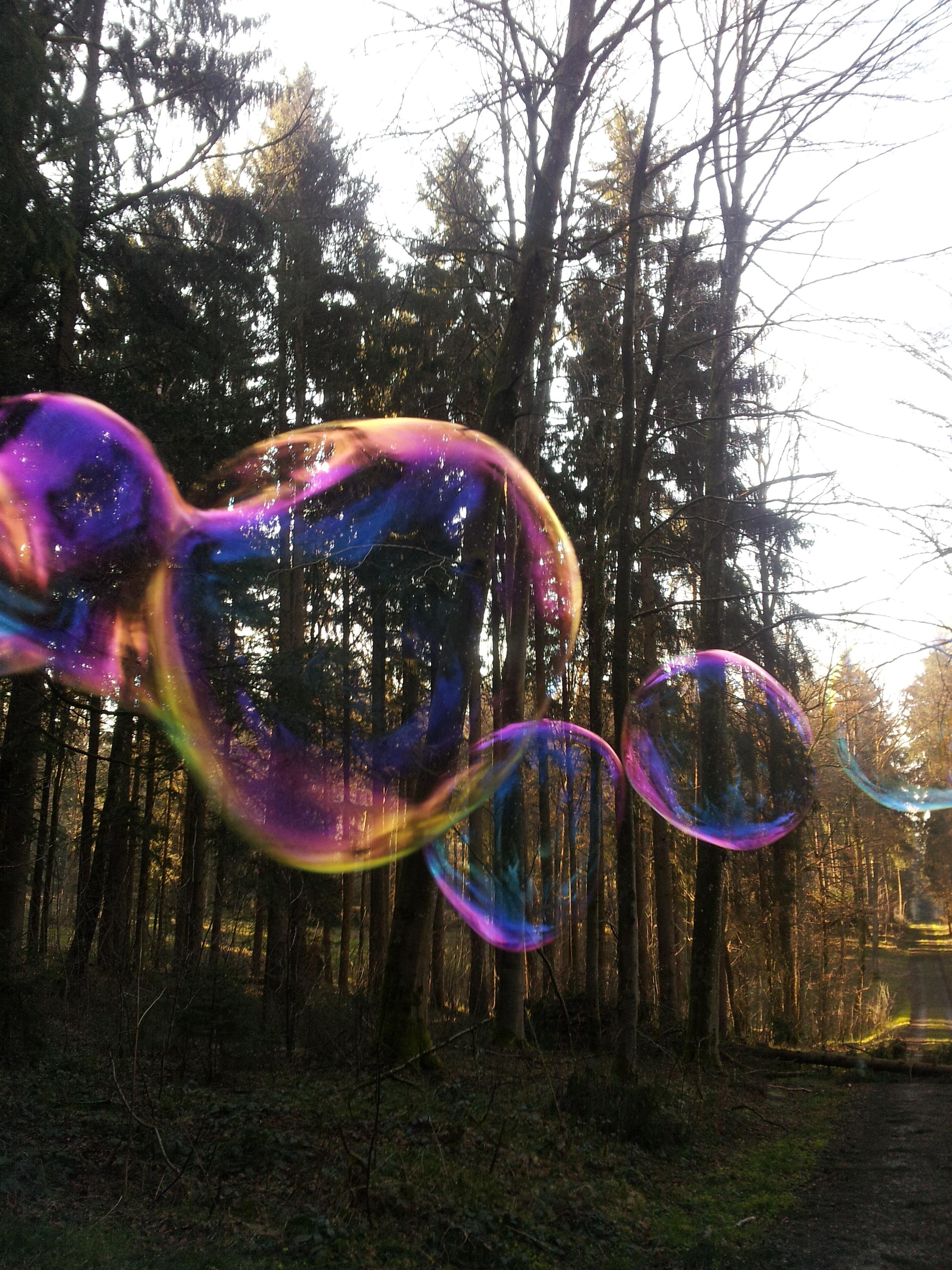
Like a soap bubble
Blown by a playful child,
Shimmering with rainbows,
Floating gracefully
Or awkwardly,
Popping suddenly,
With only the trace
Of memory

20150405_083325

Each moment,
No matter the agony
Or ecstasy,
Is just like this.
With each,
Let it just be.
Trying to hold onto the bubble
Pops it sooner
Trying to pop it,
Leaves soapy hands.

Just be in every moment
Those bubbles come and go
Shining luminously
Then disappearing
Just as in a dream


See also:

Water’s Flux
Tao a Day: Verse 16 – Emptiness
The Practice
The Waking Dream
Suffering and Sweetness

Letting Go and Generosity: Some Tales of Buddhist Ancestors

I’ve recently finished a wonderful book by Lama Surya Das called Letting Go of the Person You Used to Be. Just before the ending of the book, he shares a couple of tales about Buddhist ancestors, letting go, and generosity. I’d like to share this passage. I’ll also write another post related to the closing chapter of the book as it fits well with some of the difficulties of growth and healing that I have been going through recently.


Patrul Rinpoche’s life exemplified generosity; whenever he was given money or offerings, he quickly handed them over to others, giving generously to the poor and the homeless. It is said that there was little that Patrul Rinpoche loved more than being able to give to others. A favorite story my teachers told concerns a man who approached the learned teacher and begged him for some money.
“Oh my poor friend,” Patrul said. “Just say to me, I don’t need any money, and I will give you some.”
The beggar thought that he had been misunderstood, so he repeated his request for money. Once again Patrul answered, “Just say to me, I don’t need any money, and I will give you some.”
Finally the man uttered the sentence Patrul had been requesting. “I don’t need any money,” he said. Patrul in turn rewarded him with a handful of silver coins.
Then Patrul told the beggar the following story about Lord Buddha.
It seems that one day as the Buddha traveled through India, a poor man came up to him and gave the Buddha the only gift he had, a single piece of milk sugar candy. As the Buddha was looking at the candy and wondering what to do with it, another man, known for his greedy inclinations, saw the candy in Buddha’s hand and asked if he could have it. The man, of course, knew that the generous Buddha never said “no” to such a request.
The man was quite surprised when the Buddha did not immediately hand over the candy. Instead the Buddha spoke to the man, saying:
“Just say to me, I don’t need this milk sweet. And then I shall give it to you.”
The man did as the Buddha requested, and he got the candy which he promptly popped into his mouth.
Later the Buddha’s disciples asked the Buddha why he wanted the man to say these words.
“Because,” the Buddha replied, “through hundreds of lifetimes this man has never even once said the words, I don’t need. By saying these few simple words, he may have momentarily experienced the feeling of needing nothing. These words undermine greed and may help plant the seeds of generosity.”

candies-622096_1280

I don’t need any candy…

Padma Sambhava, the great Indian master who introduced Buddhism to Tibet in the eighth century, told his disciples that when asked, they should say, “I don’t know, I don’t want, I don’t need.” I try to remember that.
This is a lesson in nonattachment and acceptance. It is a lesson in learning to love unconditionally without expecting results, rewards, or payments of any kind. It may feel counterintuitive, but acceptance does have a transformative effect. Nonattachment and acceptance have their own magic and can transform anything. Letting go is the ultimate act of generosity and faith. And every good deed is a gift to both giver and recipient.
– pp. 209-210 Letting Go of the Person You Used to Be, Lama Surya Das


Try it yourself. Say: “I don’t need …” and let the attachment slip away. An even better practice: give away some small thing (you can work up to bigger things later) that you feel attached to. Give it to someone who would be happy to have it. This is a very mindful experience of attachment and its hooks. If you can do this and say to yourself I don’t need this, you’ll find the peace of liberation after the pangs of attachment pass.

May this inspire your own ability to let go and to be generous to others.
Gassho!

Previous Older Entries Next Newer Entries