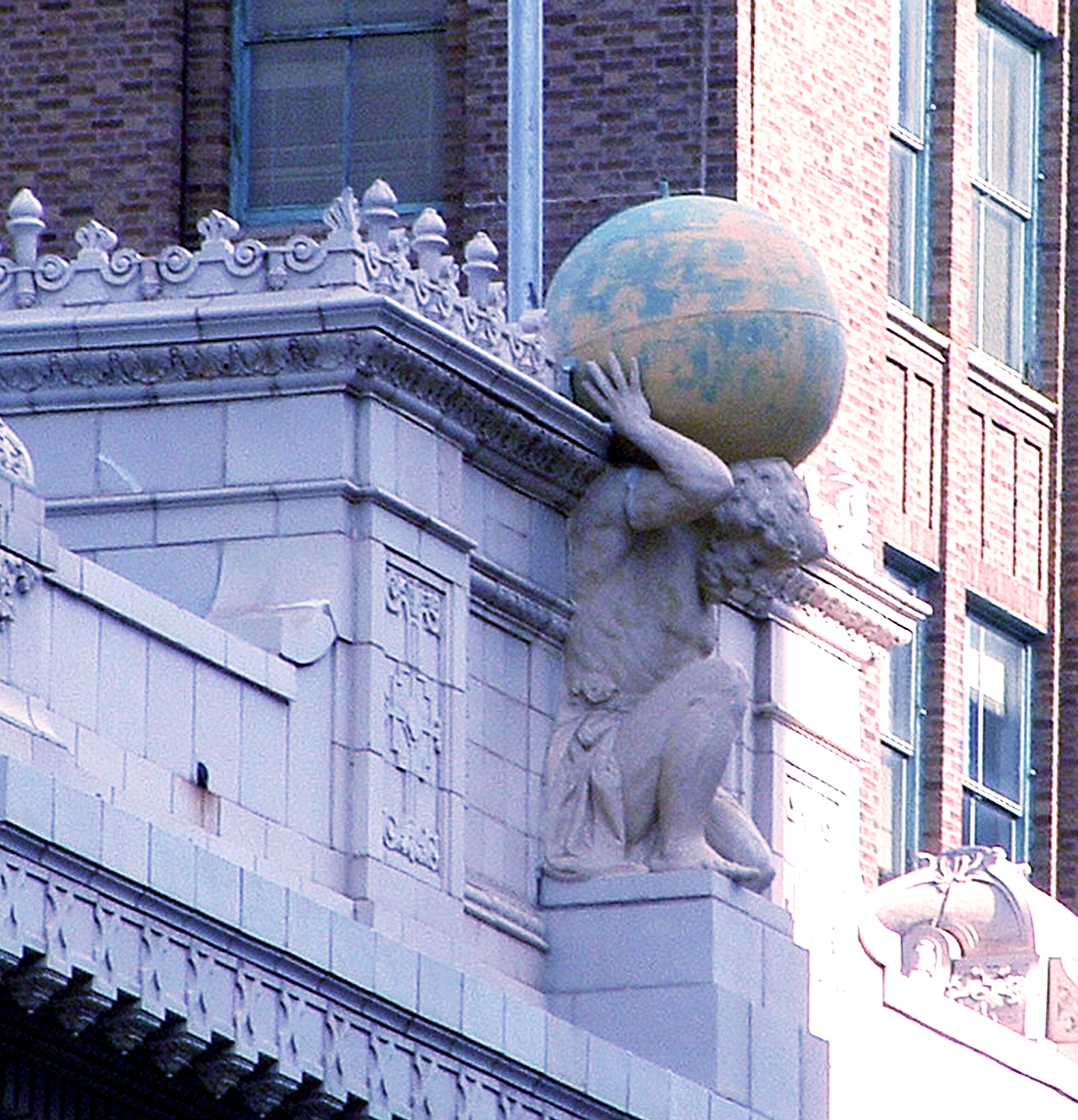
Atlas’ Aching Shoulders

Beneath the stress
And fatigue
Lies guilt
And disappointment
“I could do more”
“I haven’t done well enough”
Good intentions
Driving to exhaustion
Why?–A martyr’s
Self-importance

file000445650926
Giving your best
In the impossible
Ordeals of life
Leaves no room
For guilt or shame
Give and try
Openly, patiently,
Lovingly, and bravely
Do not let success
Or failure
Polish or tarnish
Your ego
True giving
And dedication
Is not about
Ego-fulfillment
The task–Not the burden
On your shoulders
That’s the weight
Of your expectations
And story of “me”

Letting Go and Generosity: Some Tales of Buddhist Ancestors

I’ve recently finished a wonderful book by Lama Surya Das called Letting Go of the Person You Used to Be. Just before the ending of the book, he shares a couple of tales about Buddhist ancestors, letting go, and generosity. I’d like to share this passage. I’ll also write another post related to the closing chapter of the book as it fits well with some of the difficulties of growth and healing that I have been going through recently.


Patrul Rinpoche’s life exemplified generosity; whenever he was given money or offerings, he quickly handed them over to others, giving generously to the poor and the homeless. It is said that there was little that Patrul Rinpoche loved more than being able to give to others. A favorite story my teachers told concerns a man who approached the learned teacher and begged him for some money.
“Oh my poor friend,” Patrul said. “Just say to me, I don’t need any money, and I will give you some.”
The beggar thought that he had been misunderstood, so he repeated his request for money. Once again Patrul answered, “Just say to me, I don’t need any money, and I will give you some.”
Finally the man uttered the sentence Patrul had been requesting. “I don’t need any money,” he said. Patrul in turn rewarded him with a handful of silver coins.
Then Patrul told the beggar the following story about Lord Buddha.
It seems that one day as the Buddha traveled through India, a poor man came up to him and gave the Buddha the only gift he had, a single piece of milk sugar candy. As the Buddha was looking at the candy and wondering what to do with it, another man, known for his greedy inclinations, saw the candy in Buddha’s hand and asked if he could have it. The man, of course, knew that the generous Buddha never said “no” to such a request.
The man was quite surprised when the Buddha did not immediately hand over the candy. Instead the Buddha spoke to the man, saying:
“Just say to me, I don’t need this milk sweet. And then I shall give it to you.”
The man did as the Buddha requested, and he got the candy which he promptly popped into his mouth.
Later the Buddha’s disciples asked the Buddha why he wanted the man to say these words.
“Because,” the Buddha replied, “through hundreds of lifetimes this man has never even once said the words, I don’t need. By saying these few simple words, he may have momentarily experienced the feeling of needing nothing. These words undermine greed and may help plant the seeds of generosity.”

candies-622096_1280

I don’t need any candy…

Padma Sambhava, the great Indian master who introduced Buddhism to Tibet in the eighth century, told his disciples that when asked, they should say, “I don’t know, I don’t want, I don’t need.” I try to remember that.
This is a lesson in nonattachment and acceptance. It is a lesson in learning to love unconditionally without expecting results, rewards, or payments of any kind. It may feel counterintuitive, but acceptance does have a transformative effect. Nonattachment and acceptance have their own magic and can transform anything. Letting go is the ultimate act of generosity and faith. And every good deed is a gift to both giver and recipient.
– pp. 209-210 Letting Go of the Person You Used to Be, Lama Surya Das


Try it yourself. Say: “I don’t need …” and let the attachment slip away. An even better practice: give away some small thing (you can work up to bigger things later) that you feel attached to. Give it to someone who would be happy to have it. This is a very mindful experience of attachment and its hooks. If you can do this and say to yourself I don’t need this, you’ll find the peace of liberation after the pangs of attachment pass.

May this inspire your own ability to let go and to be generous to others.
Gassho!

Flowers Fall

“Therefore, flowers fall even though we love them. Weeds grow even though we dislike them.” – Dōgen Zenji (trans. Okumura)

1866-Pink-Flowers-Fallen-(www.WallpaperMotion.com)

Out of the many pains that we experience in life, the most stinging and most common are losing what we want and getting what we don’t want. This happens on levels both great and small everyday. Beloved flowers fall–beautiful moments end, friends move away, the sun sets, and you eat that last bite of ice cream. Despised weeds grow–you get sick, bills come, cold, grey weather sets in, and you realize the only ice cream the store has is that other, gross flavor.

So, what do we do? The point is not to give up desire completely. Desire is also what drives us to seek enlightenment, to strive to help others, and to get out of bed each day. However, we would do well to let go of attachment to having everything go the way we want: let go of the gratification of those grasping desires. Ask yourself: is that really happiness? To collect a life of fulfilled desires and avoided aversions? Can you find peace and joy with the world as it is and try to help others find that peace and joy as well? Can you pursue that instead of pushing your own agenda first and foremost in the pursuit of happiness even if others burn in your wake? Perhaps happiness is not something you can “get” at all, and such grasping to get all external circumstances just right is a fundamentally deluded idea of what it is to be happy. Pause. Meditate. Connect. Love. Try these things, and you may find within yourself the seed of a true happiness beginning to grow alongside those weeds and fallen flowers.

May this help you find equanimity, non-attachment, and skillful action in the pains of desire.
Gassho

See also: Tao a Day — Verse 26, Inner Virtues for a Taoist take on how to cultivate such internal stability, peace, and joy.

The Waking Dream

We grasp
Unrelenting
This cannot go…”
“Please…”

Yet every moment
Comes & Goes
Seasons change
The world turns
Days are born & die
Everything passes

Like a dream,
The substantiality
–an illusion
With focus
This ephemeral emptiness
Shines

Figments of experience
Life = Dreaming dreaming dreaming
(That is: dream dreaming itself)
Ironically
There is nothing to grasp onto
Not even yourself
What security do you seek?
Certainty in the face of death?

Even those
Embracers of “change”
Declaring its greatness
Its wholesomeness
Move on only
To their next set of certainties
Another structure
To cling onto
A shelter in the storm?
There is no storm.
That fear
–just another part of the dream


One line above reminded me of this song:

pablo

Next Newer Entries