A Human Becoming

Heart beats–*ka-thump… ka-thump”
Breath inward/outward–*hnnnn…ahhhh…*
Thoughts zoom by–*”I should go do…”*

Feelings come & go–agony & ecstasy
Days pass–work, sleep, routine, adventure
Years flourish & wither–seasons, periods, phases

Connections are made & lost
Wrinkles appear & hair recedes
Scars & memories accumulate

Birth, birth, birth
           &
Death, death, death
—  In every moment
    With each heartbeat & breath

Tell me:
Where is the static “I” underneath the process of life?
Where is this being that endures
When all else arises and ceases?
—  A story, a fiction, a masterpiece of self-creation & self-deception

You are not a human being.
You are a human becoming
—  A realization of unfolding potential, moment by moment
An emanation of openness, that is: basic goodness

file0001379279594


Reiki: The Five Precepts (Gokai – 五 戒) – 1st Precept: Peace

Just for today:
Don’t hold on to anger
Don’t focus on worry
Honor all those who came before
Work hard on self-improvement
Be kind to all living things
– Reiki Center App, Windows Phone

Now:
Peace
Faith
Gratitude
Actualization
Compassion
– My shortened mantra of the precepts


In this post, I focus only on the first of the five precepts. I spoke about “Just for today/Now” in my “Precursor” post. I recommend reading that post before reading further if you haven’t already. That post sets up the background for the discussions of all the precepts. Just for today (Now) is the injunction that stands before all the precepts and applies to all of them.

We should recall that Usui-sama, the writer of the precepts, was a Tendai Buddhist priest. This is important, as I would say that the first precept is the beginning of the Buddhist spiritual path, and the last is its culmination in terms of practice. When I say this, I mean in terms of the Mahayana (the Great Vehicle) tradition of Buddhism, a subset of Buddhism that includes well-known schools such as Zen and Chan Buddhism. This tradition focuses on the way of the Bodhisattva, spiritual warriors who focus their efforts on the liberation of all sentient beings from suffering.

The beginning of practice is cultivating a presence that supersedes the cyclic suffering of samsara (ordinary existence; the counterpart of the enlightened existence of nirvana–an awakened state that overcomes suffering). One of the Buddha’s core teachings is the Three Marks of Existence (also called the Three Seals). They are: impermanence, suffering, and selflessness (Not-I). First of these, impermanence–everything changes. Nothing is static. From a scientific viewpoint, we could state this in terms of the second law of thermodynamics: the tendency for entropy to increase in a system. This means that the heat energy in a system changes over time. This is a law of physics. From these tenets, even atoms will break down trillions of years from now. Even that fundamental building block will change.

In our lives, we face change all the time–the weather, our physical appearance, comings and goings of loved ones, illness, birth, death, and even the basic bodily functions of breathing and our hearts beating from moment to moment. Change causes suffering for us in a couple ways: we go through life in a distracted manner and fall into changes we could have avoided because of this ignorance. With mindfulness, we can be in sync with our environment and flow with it rather than cause distracted changes which are painful. Also, despite the fact that all changes, we cling to things. We try to hold on to what we want and avoid what we don’t want. Most of all, we cling to habits and anything to bolster a sense of a permanently enduring self. We cling to the masterpiece of our creation that is the ego. This clinging to desired permanence and the unmindful engagement of a distracted mind with the world lead to suffering–the second of the Three Marks of Existence.

The third mark is selflessness (Not-I). Its the counterpoint to the clinging of ego. With mindful presence, we can experience phenomena as they are. If we attend to them in such a way, we can see them as impermanent arising. They come into being, grow, flourish, wither, and dissipate. None of them is constant. None of them endures. Noticing this reveals the oneness of all phenomena and their inherent emptiness. We can see that the separation and permanence of “I” is my own confused perception and desire to resist change. Everything, including the “I” of ego, is empty, “self”-less.

This realization leads us to a hidden gem, a fourth mark that is sometimes added–peace; we could call this realization the opening of the gate to nirvana. This peace comes from seeing our place in the world (or better said–seeing the world as it is, not as we want it to be): from actively engaging on the path of liberation beyond suffering. There is much that can be said about this path which would necessitate a deeper discussion of the Four Noble Truths. For that, I suggest reading Chögyam Trungpa’s book: The Truth of Suffering and the Path of Liberation. I’ll focus on the fact that the path is mindful presence, facilitated by regular meditation. This gets us past the three roots of suffering: desire, aversion, and ignorance (think of the comments above about changes we want and don’t want–desire and aversion–as well as the distracted engagement with the world–ignorance).

These considerations about the Four Marks of Existence (Four, rather than three, as we have added Peace as the culmination of the Three Marks), returns us to Usui’s precepts, particularly the first precept: “Don’t hold onto anger” — “Peace“. He is offering a Buddhist meditation. You are asked to mindfully attend to these precepts twice a day while doing “gassho” as per his instructions. You focus on doing them well for today only (or for now in each and every instant). You then attend to not being angry. This is the first step on a Buddhist path to enlightenment. The heart of the Hinayana (the Lesser Vehicle) tradition is not doing harm. To achieve this, anger and pursuing an ego-driven idea of my goals from it are put aside (cognitive psychology shows that anger comes from the obstruction of something we want–think of a traffic jam keeping you from getting where you want to go; in such cases, you act out in anger, and this anger is meant to clear away those obstructions to get things back on the desired path). Not getting angry entails letting go of your own story and opening yourself up to whatever is here right now (even that traffic jam). This is how you do no harm, and this is how you begin working toward compassion, the fifth precept; to realize compassion and to let go of anger, you have to step beyond I, me, and mine. From a different, perhaps more familiar perspective for the standard Reiki student, if you are going to be a conduit for universal energy, surely the first step is opening to it and realizing that there is no separation to begin with: this is also a letting go of “I”, me, mine, my truth, my story, my goals, etc. This letting go of self and opening up to existence is realizing the mark of peace.

Let go of anger. Realize the peace that exists beyond your “self”.


As an after-thought, I thoroughly disagree with the understanding of the first precept in The Spirit of Reiki given by Walter Lübeck . The point is not to harness anger for positive personal ends. Perhaps, you could say the point is to transmute anger into peaceful enlightenment, but it isn’t about “me” and “mine” at all. Quite the opposite. First of all, I think that anger comes from desire, not fear (fear is the opposite of hope, not desire. This is commonly confused, and these are all closely related. I hope for what I desire. I fear that which I do not want to happen. Hope and wanting are closely related as are fear and aversion, but they aren’t quite the same). Overcoming the negativity of anger results in our personal healing, but in taking up a spiritual path, it isn’t about me. It’s about healing everything and realizing that all is more important than I. Here again, the precept of peace points toward the Mahayana method at the heart of the Bodhisattva way: compassion.

May this help you find peace.
Gassho!

Previous Reiki: The Five Precepts Post – Precursor
Next Reiki: The Five Precepts Post – 2nd Precept: Faith

Tao a Day – Verse 8: In Accordance with Nature

The best way to live
is to be like water
For water benefits all things
and goes against none of them
It provides for all people
and even cleanses those places
a man is loath to go
In this way it is just like Tao

Live in accordance with the nature of things:
Build your house on solid ground
Keep your mind still
When giving, be kind
When speaking, be truthful
When ruling, be just
When working, be one-pointed
When acting, remember–timing is everything

One who lives in accordance with nature
does not go against the way of things
He moves in harmony with the present moment
always knowing the truth of just what to do – Trans. Jonathan Star

For comparison:

The best are like water
bringing help to all
without competing
choosing what others avoid
they thus approach the Tao
dwelling with earth
thinking with depth
helping with kindness
speaking with honesty
governing with peace
working with skill
and moving with time
and because they
don’t compete
they aren’t maligned – Trans. Red Pine

IMGP5855


Although these two translations have some differences, I think the message is the same. The best way to live is one that flows along with the changes of life being able to adapt with them (“without competing” “in accordance with the nature of things”). Such a way benefits all by moving in accordance with them, rather than fighting against all out of self-interest. Notice, however, that this flexibility, receptivity you might say, does not mean that you don’t act–being dragged along with the flow. Rather, you act with virtue, straightforwardness, and a simplicity of purpose. For instance: “When speaking, be truthful” (“speaking with honesty”). Speech is meant to communicate, that means sharing the truth with others, not holding back and competing by using words to promote your own self-interest through deceit. Thus, speak to speak: speak with honesty. The same follows for the others. Of these two translations, Red Pine worked hard at compiling the most authentic rendition of the text (what we have is based on various copies hundreds of years after the original, which is lost) and translating that quite close to the words (not poetically). As such, I find Jonathan Star’s take of “thinking with depth” and turning it into “Keep your mind still” interesting. This fits well with the entirety of the Tao Te Ching and Taoism’s emphasis on seeing the Tao rather than conceptual thinking. Thought then, should get to the real heart of things, the Tao, which means keeping the mind still from the distractions and divisions of conceptual thought. However, I find the “governing with peace” of Red Pine a bit more interesting than “When ruling, be just”–“justice” is an impossibly difficult concept (just look at the history of philosophy, such as Plato’s “Republic” if you think I’m off). Who can say what justice is? Thinking of this could create endless discourse of conceptual analysis. However, governing with peace is more in line with the intuitive understanding of the Sage, seeing what fits in accordance with the nature of things and moving along with it, as water does.

Our takeaway: Live in accordance with the nature of things, with the flexibility and sustaining nature of water. This opens the way of “doing without doing” – wu wei, which doesn’t mean inaction, rather appropriate action: speaking fully, working fully, etc. It should be pointed out that being able to act so deftly comes from the sight of the Tao, the ability to see the way of things is necessary to move in accordance with them. Furthermore, moving with the way of things not only meets no resistance, it helps the whole as well: Water “benefits all things” (“bringing help to all”). In these points, we are reminded of the importance of intuitive insight in Taoism alongside a simple compassion found in working with Tao, and we can see the resonance with the prajna (knowledge of the way things are) of Buddhism and the skillful action that comes in acting from that knowledge in showing compassion to all, rather than pursuing your “self”.

May this help you find the Way.

Gassho.

Heartbreak Wisdom Journal – Entry 2: Gentleness Toward Your Experience

“Love Love Love” by Of Monsters and Men

&

“Reminder” by Mumford and Sons

Until recently, if I heard these songs, I would almost instantly be brought to tears. Such lines, as: “So I watched the world tear us apart. A Stoic mind and a bleeding heart — You never see my bleeding heart…” were enough to bring the depths of my pain and anxiety to the fore, washing over me like a great tidal wave. The other day, one of the two popped up on my phone, and I found myself smiling gently, enjoying the melody and accepting the myriad feelings that bubbled up.

Some might be confused: “Why not just remove them from your phone?” I cannot hide every reminder of my past and my heartbreak. That would be inauthentic, childish, and extremely difficult. It would be like trying to stubbornly deny that the sun rises in the east and sets in the west while doing my damnedest to never look up at the sky.

The tender heart of the warrior makes friends with the feelings that come up, no matter what they may be. The warrior knows that trying to eradicate or obliviate what we feel just keeps us stuck in our painful patterns. Opening to them tenderly allows room for kindness to oneself… and to others.

As a counterpoint, the song that reminds me of this tender, gentle presence is:

 “Megan” by Anesthesia


What helps more than anything is to be gentle toward yourself. Gentleness doesn’t mean being all “poor baby” or coddling yourself in any way. Real gentleness has much more precision and intelligence than that. Gentleness means simply that you acknowledge and embrace your own experience from moment to moment, without judgment. Without trying to fix it. Without feeling ashamed of it or, if you do feel ashamed of it, you do not feel ashamed of your shame! In this way, gentleness is actually an advanced form of bravery. You aren’t afraid to take on your own suffering, even though you don’t know how or when it will end; still, you agree to feel it. Somehow, this acceptance begins to calm things down. On its own timetable, gentleness begins to pacify even the most raging emotions. Gentleness is the spiritual and emotional warrior’s most powerful weapon.

The best way to cultivate gentleness toward yourself, thought by thought and moment by moment, is through the sitting practice of meditation. In fact, meditation, which is sitting with your self, your thoughts, emotions, and yearnings, and simply allowing them to be as they are, is the practice of gentleness itself. There is no better teacher than this.

Most likely, there will be only a few times in your life when you’ll reach the limit of what you can bear. It may be from falling ill, the death of a parent, or even the loss of a most precious possession, such as your home, and of course it can also be because of a broken heart. To face these extraordinary times, you need to take extraordinary measures. Most of the tactics touted as “extraordinary measures,” however, are really ways of escaping the reality of what we must face: our emotions. Certainly drinking, drugging, random sex, and sleeping all the time are ways to avoid emotional pain, but even healthier means, such as positive thought, physical exercise, therapy, or simply forcing yourself to move on are also methods of stepping away from what ails you, rather than toward it. Stepping toward it and going into it do not just mean lying around crying all the time. It means meeting your emotions and relating to them, not as enemies to be conquered, but as wounded friends from the front, needing your loving attention. — Susan Piver, The Wisdom of a Broken Heart, pp. 48-49

The Strength of the Warrior


Previous Heartbreak Wisdom Journal Entry: Entry 1: Wounded Heart’s Tender Flesh
Next Heartbreak Wisdom Journal Entry: Entry 3: Wounds

Tao a Day – Verse 16: Emptiness

A couple weeks ago, I began a practice of reading one verse from the Tao Te Ching everyday. I will continue until I finish the whole book. I’ve read it before and consider it a masterpiece of both metaphysics and spirituality. There are few works as simple, inspiring, and profound. I will try to post a reading on a verse or a passage from a verse from time to time to share the beauty of this work. The following is Verse 16.

Become totally empty
Quiet the restlessness of the mind
Only then will you witness everything
unfolding from emptiness
See all things flourish and dance
in endless variations
And once again merge back into perfect emptiness-
Their true repose
Their true nature
Emerging, flourishing, dissolving back again
This is the eternal process of return

To know this process brings enlightenment
To miss this process brings disaster

Be still
Stillness reveals the secret of eternity
Eternity embraces the all-possible
The all-possible leads to a vision of oneness
A vision of oneness brings about universal love
Universal love supports the great truth of Nature
The great truth of Nature is Tao

Whoever knows this truth lives forever
The body may perish, deeds may be forgotten
But he who has Tao has all eternity
– Trans. Jonathan Star

Emptiness

Recently, I read some of Alan Watts’ book on Taoism (Tao: The Watercourse Way). In his chapter on wu wei, the well-known “doing without doing”, he contrasts Zen Buddhism and Taoism in that both aim at getting a deeper understanding of reality and then acting in accordance with it. He claims that the difference is that Taoism tries to get the student there through an intuitive understanding pulled out through poetic descriptions and paradoxical stories, whereas Zen approaches it through long and thorough meditation. I think this is accurate to an extent, but I think that Watts is a bit disparaging in his treatment of Zen in his discussion. Both approaches try to get us to see the way things are. The Buddhists guide us toward prajna (knowledge) in realization of Dharma (reality, the truth, the way things are, the law), and with the Tao Te Ching, Lao Tzu tries to get us to grasp the insight of Tao (the Way, the totality of all, the way things are and their source). The approach may differ, but the goal is roughly the same! I think this verse speaks to the parallels between these paths. Meditation is a way of realizing the emptiness and stillness that Lao Tzu emphasizes here–it is a way of getting an intuitive understanding beyond concepts. Both aim at getting past the duality of conceptual thought. The Taoist aim of transcending conceptual thought is stated very clearly in the following passage from Verse 1 as well as the already quoted Verse 16:

A mind free of thought,
     merged within itself,
     beholds the essence of Tao
A mind filled with thought,
     identified with its own perceptions,
     beholds the mere forms of this world.

The emptiness in 16 and “essence of Tao” in 1 are the metaphysical aspect of reality, of Tao, and I find the expression of it here and elsewhere in the Tao Te Ching quite inspirational. Tao is both the origin of the 10,000 things and those 10,000 things as well. In other words, Tao goes beyond the “mere forms of this world”, as their dynamic source of never-ending unfolding and change. Here’s an example in Verse 1:

Tao is both Named and Nameless
     As Nameless, it is the origin of all things
     As Named, it is the mother of all things

Here, we see that our concepts–our thoughts of forms and the words with which we name them–are not the source of the forms which we experience. The things we name are not that which creates those things, yet Tao is both the things named and that which cannot be named–that is, their source. This focus on origin or source and its distinction from the forms of the world leads us to philosophy’s most fundamental question (according to Heidegger’s take): “Why are there beings at all instead of nothing?” Lao Tzu answers without further explanation of why: “There is Tao.” Tao is both this mysterious, ungraspable origin that fluctuates all beings, pulsing with new forms–the ebb and flow of change–as well as those changing forms.

From a very different philosophical background, Wittgenstein delineates the world of forms in his Tractatus Logico-Philosophicus as all that can be said. That which cannot be said must be passed over in silence: it must be shown; moreover, this inexpressible dimension is the mystical (i.e. the metaphysical). [Please note that these quotes have numbers. It’s just a numbering system in that book. I keep it here for you to look them up on your own] ” 6.522 There is definitely something inexpressible. The inexpressible shows itself. It is the mystical” (Es gibt allerdings Unaussprechliches dies zeigt sich, es ist das Mystische.). Previous to this, Wittgenstein points out that the mystical (i.e. metaphysical) nature of the World is not in the how of it–the facts of it–rather in its existing at all: “6.44 The mystical is not how the world is, rather that it is. ” (Nicht wie die Welt ist, ist das Mystische, sondern dass sie ist.) The world–the set of forms that can be perceived and named, i.e. that which can be spoken–is not the mystical, the metaphysical. The metaphysical must be shown as it is beyond that which can be said; this is done through words, but the words themselves do not represent this aspect of reality–they merely indicate it, pointing towards it. Here, in the first verse of the Tao, the indicated mystical aspect of existence is the Nameless, TaoLao Tzu’s masterpiece tries to show us this metaphysical origin beyond the forms we perceive and can express, and much like the paradoxes of Zen koans, he stretches language’s expression to point the way to that intuitive understanding, showing it as a Sage–inviting us to empty our mind and experience the ever-unfolding emptiness of the eternal process of return.

Keep on Walking

Recently, I’ve questioned whether I should continue this blog. It has never been about me–I don’t care if I have 1 follower or 10,000. However, I’ve written every word of this in the hopes of engaging others, impacting their lives. The intention has always been to help others, calling them to see their lives differently. I’ve poured my heart into this recently, writing post after post–some quite challenging for me to write, as I’ve tried to balance difficult topics with a level of expression I hope will be readable for most everyone. Yet, my numbers in terms of views have been low, and I’ve started to doubt, to question whether these posts really make any difference to anyone out there.

Again, this doesn’t hurt my ego, as such accomplishment and feedback is not my aim. However, it has made me feel like it’s not worth the effort to post here if this is becoming an online journal. It’s precisely because I don’t want this to be a space of my self-aggrandizement that I wonder if I should stop. Luckily, I’ve had a couple friends respond to these feelings of mine, and I’m grateful for what they had to say.

One told me that if my purpose is to inspire others, I should take a long-term view. Perhaps the words I write will take time to find the right readers. I should keep writing for those readers, even if they aren’t reading yet and may not be for some time to come.

The other friend told me to keep posting and not worry about readers. Just write.

Both of these acts of support show true friendship: neither offered simple words about how smart or great I am, a little warming blanket of comfort. Instead, they called out the virtue of my efforts and reinvigorated my intention for this blog.

Finally, these words from one of the books I have read recently act as one more source of inspiration in this choice. They resonate well with my recent post about the way being in the heart. If you would like further understanding of bodhicitta, please see that post:

Rousing bodhicitta is an occasion for continual delight. We can hardly wait to raise it again. If we were the only person in the whole world to be generating love and compassion, we would generate it with fearless joy and delight until the day we die. Our aspiration to help others is so great that we would gladly spend an eternity in hell even to help a child be less afraid to speak in class. – Sakyong Mipham, Turning the Mind into an Ally, p. 207

IMG_1127

I keep offering my words here again and again: keep walking the Way.

May I aspire to such awakened heart myself, and may my words help all who need them.

Gassho.

Reiki: The Five Precepts (Gokai – 五 戒) – Precursor

The Five Precepts

About a year ago, I delved into Reiki out of sincere interest. My point of entry was the five precepts–Gokai 五 戒–given by Usui-sama to his disciples with the introduction included for their use: “The secret of inviting happiness through many blessings, the spiritual medicine for all illness” (Bronwen and Frans Stiene, “The Japanese Art of Reiki”). The curious thing to note about this is that Usui is speaking of the five precepts of his teachings, not “reiki” itself. Most people I have met with an interest in Reiki completely overlook these five lines of meditation, a simple, yet powerful mantra; they are more interested in the seemingly magical powers of energy healing. They do themselves a great disservice, missing the insightful point of focus for a spiritual path with heart. I have been developing a meditation practice for some time now, and I still find my time meditating on Usui’s precepts to have been one of the most powerful yet simple meditations I have done–beautiful, heartfelt, and moving. It truly can be a spiritual medicine for all illness. Energy healing is effective because of such practices of self-focus rather than doing energy healing instead of/without these practices. This should be remembered, and many New Agers would do well to think on such things.

Usui added as an afterward to the precepts: “Do gassho [the hand position of gratitude and blessing in Buddhism–hands held in front of neck/face with palms together] every morning and evening, keep in your mind and recite” (Steine, The Japanese Art of Reiki”). This is how to utilize the precepts as a regular meditation practice in order to realize the “happiness through many blessings”. This is all meant to improve the mind and body. It is basically a Buddhist meditation from Usui’s background in Tendai Buddhism, and Usui’s Reiki, I would argue, is actually just Kiko, the Japanese form of Qi Gong. I’ve studied some Qi Gong as well as read that Usui was a Kiko master. While writing this, I read one Reiki site’s claims that Kiko expends the practitioner’s stored energy; however, from what I have read by Qi Gong masters and experienced myself, that is a limited view of and detrimental form of Qi Gong  practice. There are Qi Gong practices of acting as a healing conduit of energy for the qi (the very word that the ki in reiki comes from) to flow through to the person needing healing. I mention all this not to cast stones but to get readers to think outside their conceptual boxes. You may just learn something new about your practice that you have taken for granted. Western Reiki practitioners have appropriated this beautiful and mysterious practice and run with it in myriad directions; while this is beautiful in a way, I find it sad how little interest is placed in venerating the roots of this practice and understanding them on their own terms, which with the effort of research and engagement, hold their own surprises and beauties.

Gassho

With all of this in mind, I’d like to share a couple translations of the precepts along with my own simplified mantra version. I will discuss the opening line of the precepts here, and in five future posts, I will discuss each of the other lines.

The first translation that really grabbed me was in a free app on my phone of all places (the Reiki Center app on Windows Phone)! I still remember it by heart after reciting it hundreds of times:

Just for today
Don’t hold onto anger
Don’t focus on worry
Honor all those who came before
Work hard on self-improvement
Be kind to all living things

I still think this is great. Two points:
1) The third–“Honor all those…”– is an interesting take on a line that usually states something more like “Be grateful”. This is worth a second thought: gratitude should be held for all, including everything and everyone that has brought this moment. In a sense, we might take that as a further examination of cause and effect, the Buddhist concept of karma.
2) “Work hard on self-improvement” used to be a favorite line for me, but the more I work on a spiritual practice, the less I like it. The reason why is because of the self-improvement. I would prefer something that does not emphasize self, as I feel the point of such a practice (a Buddhist practice, of which Usui was a priest) is seeing that all is one and the self is a storied creation. So, “Practice hard”, “Work diligently”, or “Work hard on improvement” would be better.

Here’s another translation for comparison:

For today only:
Do not anger
Do not worry
Be humble
Be honest in your work
Be compassionate to yourself and others

Notice that the same two lines resonate differently here, showing the difficulty in bringing these ideas across from the original Japanese.

I’ve condensed my own simplified version, which I find to be a bit more focused. Bring this to a meditative practice for a comparison of experience between the traditional and the simplified, or bring it to mind if in a painful mood or stressful situation (this shortened version is easier to pull to mind on the fly):

Now
Peace
Faith
Gratitude
Actualization
Compassion

By Faith, I don’t mean the word in some sense of divine delivery, rather the trust in life/the world that negates worry. This turns the traditional precepts around from pushing to negate worry to cultivating the positive state of trust in all. This is not about salvation but about trust and acceptance of the way things are.

By Actualization, I take some points from Dōgen’s Shōbōgenzō and turn them in my own way. Actualization here means practicing in a way to manifest/realize things as they are. I’m evoking what I see as the deepest of spiritual practices and calling for action in accordance with it. You could also think of this as wu wei from Taoism, a beautiful concept that I will have to write another post about. I’ve chosen the term “actualization” to move away from “work” which feels heavy and misleading for this meditation. Although, I have nothing against “working hard” nor do I want to suggest that work is not spiritual, I find “work” feels a bit clunky because of other connotations.

Now to the analysis of the opening line:
I’d like to open the following set of five posts by examining “Just for today”. This invocation of the precepts tells us to focus on the practice of these precepts for today without concern of how we have previously done or how we will proceed for years to come. We only have today to practice. This is always true. We cannot count on tomorrow arriving or for us to be in a healthy state to practice then. We live far too much of our lives in this lazy procrastination. Practice today, right now–as this moment and every return of this moment invites us to practice. My shortened version of the line is “Now”. Every moment is now, and every moment can be used for the practice of the precepts. You need not worry about how you have done before or whether you will fail in the next moment, but you should be aware that now is all you have, and there’s no guarantee that you will be capable of taking up your practice later. There’s no time to lose, but such a statement is not something depressing; rather, it’s the greatest, most uplifting opportunity.

May these words benefit all who read them.

Gassho!

Next Reiki: The Five Precepts Post – 1st Precept: Peace

2 Experiences of Compassion

I’ve recently been engaging with the Way of the Bodhisattva and have thus been practicing and studying prajna and karuna (wisdom and compassion). Compassion is an unfortunately misunderstood and watered down term in general usage/discussion–something I will return to another time. For now, I’d like to share two recent and seemingly connected experiences.


I have been attending a sangha (a Buddhist community) meeting run by a former instructor and personal inspiration of mine. While at the most recent session, I meditated, and as per usual, I felt the discomfort of the half-lotus sitting position, the coughs and wheezes of nearby practitioners, and the turbulent memories and thoughts about all the transition and pain of the last few months which still pulse in my life. Yet, I felt an intense warmth and utter gratitude for everything. I felt profound connection with all those in the room around me. I could sense the whirrings of their thoughts, their difficulty breathing, also their serenity and presence. I felt such deep joy and sadness all at once–too big and profound for words, filling up my chest to the point of nearly bursting. Such tenderness lies within the awakened heart.


The next day, I walked around my work building on a shared break with a co-worker. We make 2 laps around during our breaks. Near the end of the second lap, an injured bird lay before me on the sidewalk–directly in my path. I slowed and gently tried to pick it up so that I could put it in one of the bushes or tufts of grass nearby–hopefully protecting it from further injury and allowing it to heal. As I daintily cradled it in my hands, it fluttered to life, and I could feel its sheer terror at this situation–no longer able to move and flit about to safety and comfort. It flew just enough to come out of my hand and plop back onto the ground. I had to try again a few times, feeling the visceral fear each time I held the bird. Eventually, I carried him a few feet off the path, and his attempted escape landed him in a bunch of grass where he could rest. I walked away.

The last time I had such a compassionate moment of protecting a helpless bird, my life fell into complete chaos not too long after and that was likewise preceded by experiences of profound joy-gratitude-sadness (all mixed together). What comes this time? I know not–perhaps that synchronicity is only apparent. Either way, such beauty has seldom shone through as a moment of being awake in my life.

Karuna

In the service of all sentient beings,

Gassho.

The Way is in the Heart

WP_20141216_00_11_26_Pro

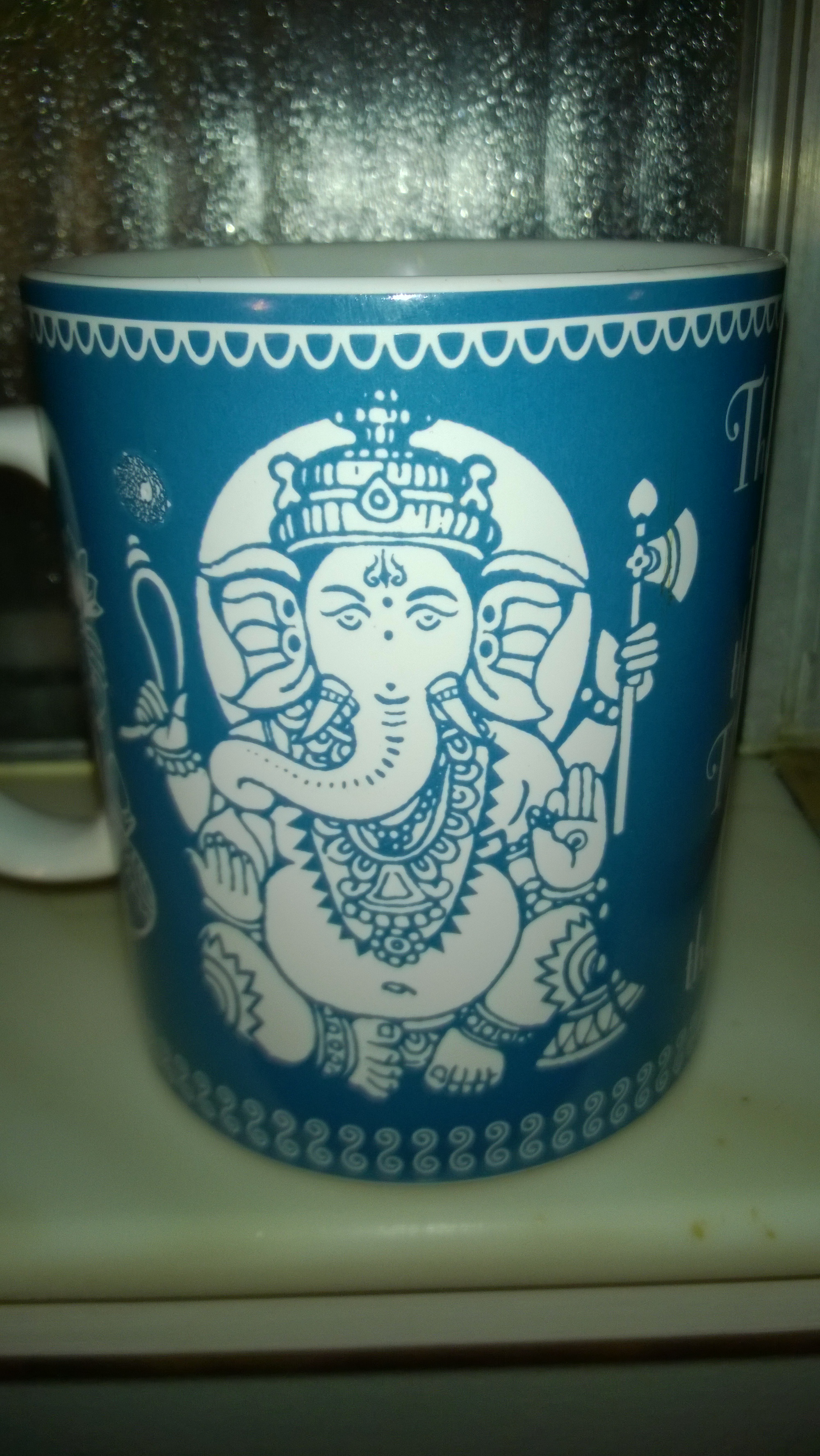
This simple mug, found at a local Ross for a few dollars, has a profound message. The way of an engaged and authentic human life is not to be found in the abstract ideals of dogma and speculations about eternal metaphysical systems. Rather, it is to be found in the concrete embodiment of this body, in the compassionate beat of your heart.

The opening of Jack Kornfield’s book, “A Path with Heart: A Guide Through the Perils and Promises of Spiritual Life”, expresses this lesson deftly:

In undertaking a spiritual life, what matters is simple: We must make certain that our path is connected with our heart. Many other visions are offered to us in the modern spiritual marketplace. Great spiritual traditions offer stories of enlightenment, bliss, knowledge, divine ecstasy, and the highest possibilities of the human spirit. Out of the broad range of teachings available to us in the West, often we are first attracted to these glamorous and most extraordinary aspects. While the promise of attaining such states can come true, and while these states do represent the teachings, in one sense, they are also one of the advertising techniques of the spiritual trade. They are not the goal of spiritual life. In the end, spiritual life is not a process of seeking or gaining some extraordinary condition or special powers. In fact, such seeking can take us away from ourselves. If we are not careful, we can easily find the great failures of our modern society–its ambition, materialism, and individual isolation–repeated in our spiritual life.

Of course, we are individuals, bodies with extremely sensitive nerves which intimately map all the pains and pleasures that the world offers us. We seek out the positive sensations that these senses perceive, and as such, of course we desire these higher goods, ultimate “goods” or the purest pleasures one might say, promised in spiritual pursuits. This is what gets us started. Otherwise, why would we begin? In any path, even if advanced, there will be some small shadow of that egoistic motivation. That’s why Dōgen, one of the greatest Zen ancestors, says: “Those who greatly realize delusion are buddhas. Those who are greatly deluded in realization are living beings” (Genjōkōan in the Shōbōgenzō). To put this as simply as I can, as embodied individuals with a limited perspective, we struggle to realize the greater picture of a huge, interconnected, flowing universe of which we are part (in fact, not “part” per se as this can imply separation–there is no separation). We create elaborate stories of “Me” and accumulate myriad possessions as “Mine”. One particularly cutting and separative term I’ve experienced many times of this type is “My Truth”. This individualizes and upholds the ego’s limited perception above all else, thereby glorifying the Self as spiritual ideal (what Chögyam Trungpa would call “spiritual materialism“) and misunderstanding the concept of truth as well (for example, while a schizophrenic’s experience of a hallucination is true insofar as we can believe that he or she experiences it, it is not true in the same sense as “Water freezes at 32°F.”). From our limited perspective, we can aspire to greater understanding, insight, and experience. This is why buddhas greatly realize delusion–out of their self-centered motivation, they begin practice. They are also living beings (a buddha is clearly a living being!), still feeling some sense of separation and individuality even when realizing the greater truth that all is one. Hence, they are greatly deluded in realization.

The danger here for Dōgen is as Kornfield mentioned. A path without heart can mean: “Furthermore, there are those … who are deluded within delusion.” Those are the practitioners of spirit who get trapped in their pictures of the world, their fabrications, and their value systems. They fall into their own fantasies of being heroes or heroines. Rather than compassionately and vulnerably opening their hearts to the universe, this is selfishly putting on armor to protect their ego, their persona, their “story”–it’s a security blanket.


I’ve said that a way with heart is embodied rather than abstract and openly vulnerable and compassionate rather than egoistic and self-protective. The Buddhist idea of bodhicitta is the perfect expression of this. It translates to “awakened heart” or “noble heart”. However, citta in Sanskrit means both mind and heart in English. They don’t have quite as clear of a distinction as we do in the English language. However, this is apt – the heart (poetically meant) has an understanding–a very visceral and experiential one that grounds more than the airy concepts of the mind (from our Western understanding of “mind”). The heart pumps life throughout our entire body day in and day out for our entire lives–taking the air and nutrients from the world and circulating it through our entire bodies, making that external stuff into our bodies and taking the waste of our bodies to be returned to the world. Last, but perhaps most importantly, the heart is the symbolic organ of compassion–with phrases like “opening your heart” or “have a little heart”. The heart chakra is a perfect example of this in the Indian energetic system of the chakras–the point of connection, compassionate connection rather than individuated separation, with all life and existence. It is the symbolic seat of being open to and aware of the sacredness and wonder of everything rather than the self-centered idea of “My Truth”. In fact, in some of my reading about the heart chakra, I’ve read that developing and focusing on the energy of this green, open chakra can be the most fundamentally beneficial energy healing practice, and this position resonates well with the symbol of Yin-Yang (actually called Tai Chi, meaning supreme ultimate or universal harmony) in the Chinese energy practices of Qi Gong and Tai Chi. My point is that bodhicitta, “the awakened heart”, is the open, tender connection of the spiritual practitioner to the universe. It’s the compassionate engagement that brings a gentle support of all people–recognizing their confusion, pain, and human ways, ways needing compassion and guidance without the self-certain way of dogma (which is basically rigid opinion) or the sterile and abstractly disembodied ideals of some belief systems.

Bodhicitta, the perfect example of a way with heart, opens us to wonder at the universe and to compassionate action towards all. Like Ganesha on the cup, bodhicitta removes obstacles in our way, giving us a path forward, without it being a pre-constructed one; rather, we create the path with each engaged step of practice. This is a way that is in the heart and protects us from Kornfield’s identified failures of ambition, materialism and individual isolation.

WP_20141216_00_12_31_Pro

To those seeking a path with heart,

Gassho

Water’s Flux

Indigo waters gently stir
Under a night sky, black as emptiness
Foggy lights behind – the only luminescence
Ripples gently skim the surface,
Lapping at the dock’s beams
Lip, lup, lap, lup…

The water shimmers as it moves
Undulations in dim, pale light
A glittering, indigo, velvet flow
With each lap, the lake changes,
Water moves, dirt and particles shift
With every moment, fluctuation

The lake remains, but
It is imperceptibly different
I meditate – looking on the splendor
Of flux, of impermanence
As each ripple rolls toward me
Breathing in and out
Changing microscopically
With the lake
The “I” that appears the same
Just as the lake seems constant

Previous Older Entries Next Newer Entries