
This session returned to the experience I only got to the edge of exploring in my recording a couple nights ago and delved in deeply alongside some loving admiration of passages from Shunryu Suzuki’s “Zen Mind, Beginner’s Mind” and Dogen-zenji’s “Genjokoan”. I really tried to express some key ideas of non-attachment and sitting within calm presence, even in the heart of painful desires.
Philosophy Riffing | “It shouldn’t be this way” – Zen Practice, Living in the Burning House
19 Jul 2023 Leave a comment
in Philosophy Riffing Tags: Buddhism, Depression, Dogen, Practice, Samsara, Shunryu Suzuki, Wittgenstein, Zen
Philosophy Riffing | Agency, Neuroplasticity, and the growth and freedom at the heart of practice
18 Jul 2023 Leave a comment
in Philosophy Riffing Tags: Agency, Aristotle, Change, Emotions, Fear, Free Will, Metaphysics, Mindfulness, Neuroplasticity, Plato, Practice
I recorded this session with a much different target in mind, an exploration of the sense that “This isn’t the way it should be,” a damning felt sense of samsara. I get to this topic very briefly at the end but speak at great length about how we can’t choose how we feel, and the small space we have in awareness to change our patterns to move towards different emotional and perceptual patterns.
I also reference this element of the famous painting, The School of Athens, by Raphael (retrieved here from Wikipedia):

Reevaluation | Doubt, Patience, Purpose
11 Apr 2022 Leave a comment
in Buddhism Tags: Absurd, Awakening, Camus, Delusion, Doubt, Dzigar Kongtrül, Dōgen, Koan, Mu, Mumon, Nihilism, Practice
Recently, I have thought about gratitude a lot. I know it’s crucial to a healthy mindset, and at times about a year ago, I had a fair amount of it, even as things felt like they were falling apart around me. Now, not so much. It’s all I can do to hope that my life will make sense again some day. Every day, I feel like I’m waiting to die, and the only gratitude I have for the last couple years is the clarity of boundaries I need to uphold for the future and for the friends who’ve shown they care when I have felt utterly worthless.
A tarot reading recently brought this into focus. It showed two paths forward for a question – one was trying to find gratitude and convince myself that those perspectives were valid. The other was sitting patiently in confusion, in mourning, in meaninglessness and despair, sitting with the feelings of doubt — being intimate with the mysteriousness of being rather than trying to explain it away. The second of the two actually looked like the more positive long-term path, and ultimately, it made me feel more at ease with a sense of failing my own values.
How so? I doubt everything – I doubt there’s any point to existence, the full-on absurd of Camus as a felt existential experience. The key with that comparison is that the task is then on me to affirm and create my own purpose. That seems impossible. More daunting, and more painful, I doubt ideas of the dharma. In my best days, I feel like showing up and doing well for myself and others is all that matters, understanding that we all share the pain of samsara, but at times, the nihilistic overtones in my perspective make me wonder if that’s even true, if it all washes away in impermanence.
However… I hold to the idea that those doubts are precisely the strongest possibility for seeing clearly and really feeling compassion and wisdom fully. I’ve remembered that Zen emphasizes doubt as crucial to breaking through to enlightenment, and Dogen emphasizes a chiasm of intimate intertwining between delusion (doubting the dharma in this case) and enlightenment. My own feelings of doubt are rooted deeply in personal loss, and when I really pause, I can’t help but see the impermanence of it all – love is empty. It’s a passing construct like all the rest that exists, and as a Buddhist nun I know speaks about such things regarding gain and loss, “How could it be otherwise? Nothing is more natural.” As such, why do I cling???????
All I do know is that showing up for others teaches me time and again that my own pain is not separate from the human lives around me all the time. It’s easy to fall into your own ego narrative, but when you see the passing of time and the confusion and pain of others, it’s easier to be patient with their own selfish treatment towards you as their own delusion from a misunderstanding of time and life, of dharma, as well as to see your own moments of being lost rather than skillful, and furthermore, it’s clear that those moments of seeing clearly and helping others are the most fulfilling, even when life seems meaningless. I hope that continuing to invest in this and to take up practices like meditating on the brahmaviharas, which feels right, will grow the seed of new purpose through the nutrients of patience, growing in the rich soil of doubt – just as the lotus grows in the muddy water
Here are a few quotes that I hope will fit with this – first a quote regarding the Tibetan slogan practices and the cultivation of bodhicitta. I find the Tibetan practices some of the best at overturning our understanding and valuation of self.
How bodhicitta works is very simple. When we look outward and see how much all other beings are suffering–even though they want to be happy just as much as we do–then our care for our small, individual self naturally transforms into care for a much bigger “self”. We grow from having self-care to universal care. Right away our own suffering becomes smaller. It doesn’t instantly and totally disappear, but diminishes naturally and progressively as we free ourselves from attachment to the small self. When the sun shines, it absorbs all the light of the moon and stars into its brightness. Similarly, when we have bodhicitta, the brilliant light of our universal love and care outshines and absorbs our concerns for this one individual.
– Dzigar Kongtrul Rinpoche, The Intelligent Heart: A Guide to the Compassionate Life, p. 12-13
Once again, I’m going to throw in Dogen’s Genjokoan, but I’ll use another translation this time, regarding self-involvement, buddhahood, delusion, enlightenment, and practice:
To carry the self forward and illuminate myriad things is delusion. That myriad things come forth and illuminate the self is awakening.
– Dogen, “Actualizing the Fundamental Point” (Genjokoan) in Treasury of the True Dharma Eye (Shobogenzo), trans. Kazuaki Tanahashi, p. 29
Those who have great realization of delusion are buddhas; those who are greatly deluded about realization are sentient beings. Further, there are those who continue realizing beyond realizations and those who are in delusion throughout delusion.
When buddhas are truly buddhas, they do not necessarily notice that they are buddhas. However, they are actualized buddhas, who go on actualizing buddhas.
Finally, Mumon’s commentary on the famous first koan of the Gateless Gate (the Japanese/Zen version of the Chinese/Chan originals) emphasizes the importance of doubt for breaking through and having a great experience of kensho. Aside: I’ve actually written previously about this wonderful koan in relation to a heavy song by my favorite band here.
For the practice of Zen, you must pass the barrier set up by the ancient patriarchs of Zen. To attain to marvelous enlightenment, you must completely extinguish all thoughts of the ordinary mind. If you have not passed the barrier and have not extinguished all thoughts, you are a phantom haunting the weeds and trees. Now, just tell me, what is the barrier set up by the patriarchs? Merely this Mu (Z note: the key word of the koan that means “nothing”) — the one barrier of our sect. So it has come to be called “The Gateless Barrier of the Zen Sect.”
Those who have passed the barrier are able not only to see Joshu (Z note: the master in the koan) face to face but also to walk hand in hand with the whole descending line of patriarchs and be eyebrow to eyebrow with them. You will see with the same eye that they see with, hear with the same ear that they hear with. Wouldn’t it be a wonderful joy? Isn’t there anyone who wants to pass this barrier? Then concentrate your whole self into this Mu, making your whole body with its 360 bones and joints and 84,000 pores into a solid lump of doubt. Day and night, without ceasing, keep digging into it, but don’t take it as “nothingness” or as “being” or “non-being.” It must be like a red-hot iron ball which you have gulped down and which you try to vomit up but cannot. You must extinguish all delusive thoughts and beliefs which you have cherished up to the present. After a certain period of such efforts, Mu will come to fruition, and inside and out will become one naturally. You will then be like a dumb man who has a dream. You will know yourself and for yourself only.
Then all of a sudden, Mu will break open. It will astonish the heavens and earth. It will be just as iff you had snatched the great sword of General Kan: If you meet a Buddha, you will kill him. If you meet a patriarch, you will kill him. Though you may stand on the brink of life and death, you will enjoy the great freedom. In the six realms and the four modes of birth, you will live in the samadhi of innocent play.
Now, how should you concentrate on Mu? Exhaust every ounce of energy you have in doing it. And if you do not give up on the way, you will be enlightened the way a candle in front of the altar is lighted by one touch of fire.
– Mumon, The Gateless Gate, trans. Koun Yamada, p. 10
Two last notes: Hakuin, a Zen patriarch, is quoted as saying, “The greater the doubt, the greater the awakening,” although I’m struggling to find a solid source for where he said this, but the idea is clarified well here in this article from Tricycle about great doubt in Zen, written by the very translator for The Gateless Gate above. Furthermore, Yamada Roshi, said translator, is summarized as seeing Zen practice as such in the foreward to his translation: “Genuine fruit of Zen practice, he repeatedly maintained, is manifested when a human being is able to experience an emptying of one’s ego, and truly live out one’s humanity with a humble heart, at peace with oneself, at peace with the universe, and with a mind of boundless compassion” The Gateless Gate, p. xii. I think that’s a fantastic inspiration to close this with and a guiding aspiration, one I didn’t have when I started to fumble through writing this post. It’s a happy accident, the best thing that I could find in writing this.
May this inspire others to break through their perspective with great determination and great doubt.
Gassho!
Cross-Post: The Post-Rock Way – Presence | Each Moment is the Universe
10 Mar 2022 Leave a comment
in Buddhism, Existentialism, Music, Presence Tags: Camus, Delusion, Dōgen, Practice, Realization
This post was originally on my other blog about exploring spirituality and philosophy through post-rock music. I recently wrote a post on the best albums of 2021 in post-rock, so I recommend checking that out if you find the music in this post interesting. A recent release of an old favorite band inspired this post.
A few weeks back, an old post-rock favorite released a revamp of a previous album. The second song grabbed me in particular, leaving me almost in tears due to several layers of personal meaning in the album.
First, this album was one of the first post-rock points of connection between myself and the woman whom my heart was still broken over. Second, the album was being released on the 2nd anniversary of the day we met. Third, the song feels like an exploration of the faith in facing each day with perseverance, even in the difficulty of a human life.
I had meant to write this post earlier. Now, it feels out of tune with my emotional landscape, but I still feel the poignancy of that idea/sentiment should be shared: the presence of getting up and doing one’s best to be present, kind, and open-hearted to whatever arises day to day, no matter the difficulty involved. In my other blog, I’ve spoken many times about the Zen saying of “before enlightenment, chopping wood, carrying water; after enlightenment, chopping wood, carrying water.” So much of the pursuit of release from suffering, no matter the pursuit (including many practitioners takes of Buddhism) falls into an idea of deliverance from suffering, such as nirvana/enlightenment being a fully different realm or life, but that’s not the case. I touched on this in my most recent post on my other blog – the Buddha lives in the burning house, i.e. nirvana is right in the middle of the burning suffering of samsara. There’s no other life or existence out there. Opening to the moment vulnerably and being present to the full unfolding of it is key to showing up with an appropriate response that is the wu wei skillful action of a buddha. I struggle to express this, but ultimately, this comes forth in the realization of selflessness and the interdependence of all things: each moment is the universe.
Another much more beautifully poetic and philosophical way for us to express this is some evocative statements from Dogen’s Genjokoan (my title here is somewhat inspired by Katagiri Roshi’s book on Zen and Dogen of the same title). Warning – these truly are confusing to the extent of almost being infuriating to standard logic: truly a koan. I posted some of this on facebook years ago, and several friends got full on annoyed because they didn’t understand. However, in philosophy, and especially in Zen koans, we need to open ourselves to the conundrum and let it break our standard conceptual barriers.
Since the Buddha Way by nature goes beyond [the dichotomy of] abundance and deficiency, there is arising and perishing, delusion and realization, living beings and buddhas.
Therefore flowers fall even though we love them; weeds grow even though we dislike them. Conveying oneself toward all things to carry out practice-enlightenment is delusion. All things coming and carrying out pratice-enlightenment through the self is realization. Those who greatly realize delusions are buddhas. Those who are greatly deluded in realization are living beings. Furthermore, there are those who attain realization beyond realization and those who are deluded within delusion.
…
To study the Buddha Way is to study the self. To study the self is to forget the self. To forget the self is to be verified by all things. To be verified by all things is to let the body and mind of the self and the body and mind of others drop off. There is a trace of realization that cannot be grasped. We endlessly express this ungraspable trace of realization.
…
When a person attains realization, it is like the moon’s reflection in water. The moon never becomes wet; the water is never disturbed. Although the moon is a vast and great light, it is reflected in a drop of water. The whole moon and even the whole sky are reflected in a drop of dew on a blade of grass. Realization does not destroy the person, as the moon does not make a hole in the water. The person does not obstruct realization, as a drop of dew does not obstruct the moon in the sky.
…
When we make this very place our own, our practice becomes the actualization of reality (genjokoan). When we make this path our own, our activity naturally becomes actualization of reality (genjokoan). This path, this place, is neither big nor small, neither self nor others. It has not existed before this moment nor has it come into existence now. Therefore [the reality of all things] is thus. In the same way, when a person engages in practice-enlightenment in the Buddha Way, as the person realizes one dharma, the person permeates that dharma; as the person encounters one practice, the person [fully] practices that practice.
Translation of Dogen’s Genjokoan as presented in Realizing Genjokoan: The Key to Dogen’s Shobogenzo – Shohaku Okumura (pp. 1-4)
This may all seem obscure, but it’s worth summing up with pointing out how Dogen focused on the practicalities of life. Practice was outlined in such examples as how a cook should prepare food to stay fully present to the process. The day in and day out is precisely this: the actualization of reality that is chopping wood; the actualization of reality that is carrying water. In other words, it’s a mindful openness to the interdependence of each moment, and furthermore, that engagement is not one where delusion is forever left behind, it happens within our deluded life. Buddhas are those who greatly realize delusions – sitting awake right in the middle of them. The Buddha lives in the burning house.
When I listen to this song, “When I Rise & When I Lay Down”, I feel this engaged, living practice. Another way we could think of it – that realized delusion – is the creative affirmation of Sisyphus that closes out The Myth of Sisyphus. Even in struggling to push a damned boulder to the top of a hill in the afterlife over and over, we have to imagine Sisyphus happy in some of the most poetic, heartlifting, Nietzschean words you’ll ever read:
One always finds one’s burden again. But Sisyphus teaches the higher fidelity that negates the gods and raises rocks. He too concludes that all is well. This universe henceforth without a master seems to him neither sterile nor futile. Each atom of that stone, each mineral flake of that night-filled mountain, in itself forms a world. The struggle itself toward the heights is enough to fill a man’s heart. One must imagine Sisyphus happy.
The Myth of Sisyphus, Albert Camus. Trans: Justin O’Brien (p. 123)
Oddly enough, Old Solar is a Christian band with religious themes resonant throughout – the album is called “Quiet Prayers” and has other songs with titles such as “Help Us to Be Faithful”. As such, taking a deeply spiritual tone as a call to holding to a faithfully engaged life throughout the burdens of the day to day is perfectly on point with this song, just with a very different perspective of what that kind of practice entails: not one of the grace of God, but one of the practice of actualizing this moment in its totality, even in the midst of suffering.
This song may have made me cry for personal reasons, but these considerations I’ve outlined are so much deeper and more profound, and I hope you’ll find them in listening to it too.
Walking along the Dhammapada — Chapter 18: Corruption
02 Jan 2022 Leave a comment
in Buddhism, The Dhammapada Tags: Mindfulness, Practice, Purify Mind
I’m taking another journey through the Buddha’s lessons on the path of the Dharma (one way you could translate the title Dhammapada). A few years ago, I wrote posts on a handful of chapters, but I didn’t go over every chapter. This time, I’m challenging myself to post on every chapter and share them here.
This chapter has two key focuses:
- There is an apparent ease to the corrupt path, but this overlooks the ongoing samsaric suffering of such an approach to life.
- Focus on your own efforts – it’s easy to see the faults in others and to hide your own from yourself, and moreover – your goodness is achieved through your own efforts, so focus on purifying yourself.
So what does one purify? It’s come up multiple times throughout the previous chapters, but let’s take a moment to look at three passages that line out everything regarding these two points.
Easy is life
For someone without conscience,
Bold as a crow,
Obtrusive, deceitful, reckless, and corrupt.Difficult is life
The Dhammapada, 244-245, trans. Fronsdal
For someone with conscience,
Always searching for what’s pure,
Discerning, sincere, cautious, and clean-living
This speaks to both points – it seems like life is easy for someone who selfishly does for him or herself, but ultimately (as is emphasized in other lines and in all the other chapters), it is not. This chapter doesn’t necessarily elucidate this well, but we might think here of Plato’s discussion of the tyrant in the Republic. When taken to the ad absurdum, someone who acts with impunity in life moves into a path of obsession of self-protection and protecting his/her possessions. It’s a life of paranoia and clinging. This is perhaps a good transition into our next passage, as it emphasizes exactly what ails the mind of one who lives that life:
There’s no fire like lust,
The Dhammapada, 251, trans. Fronsdal
No grasping like hate,
No snare like delusion,
No river like craving.
More pithy poetic examples could certainly be provided, but the point is that a life of apparent selfish ease is actually a life full of samsaric pain.
However, we’re then counselled not to judge the faults of others. In a sense it’s the bad faith (as from Sartre) of Buddhist practice. It’s easy to look outward and just miss the efforts that oneself must make.
It’s easy to see the faults of others
But hard to see one’s own.
One sifts out the faults of others like chaff
But conceals one’s own,
As a cheat conceals a bad throw of the dice.If one focuses on others’ faults
The Dhammapada, 252-253, trans. Fronsdal
And constantly takes offense,
One’s own toxins flourish
And one is far from their destruction.
As elsewhere in The Dhammapada, the emphasis is on self-mastery and that the path to Nirvana depends on your own efforts. Perhaps the simplest game to avoid that difficult path (the difficult path of continually searching for what’s pure from our first quote above) is to find fault in others, while hiding your own, thereby appearing to shine and not need any effort. However, this is simply a mild version of the grasping of hate and the snare of delusion.
As such, let’s close with one of the most poetic passages in this chapter as our focus for purification:
As a smith does with silver,
The Dhammapada, 239, trans. Fronsdal
The wise person
Gradually,
Bit by bit,
Moment by moment,
Removes impurities from herself.
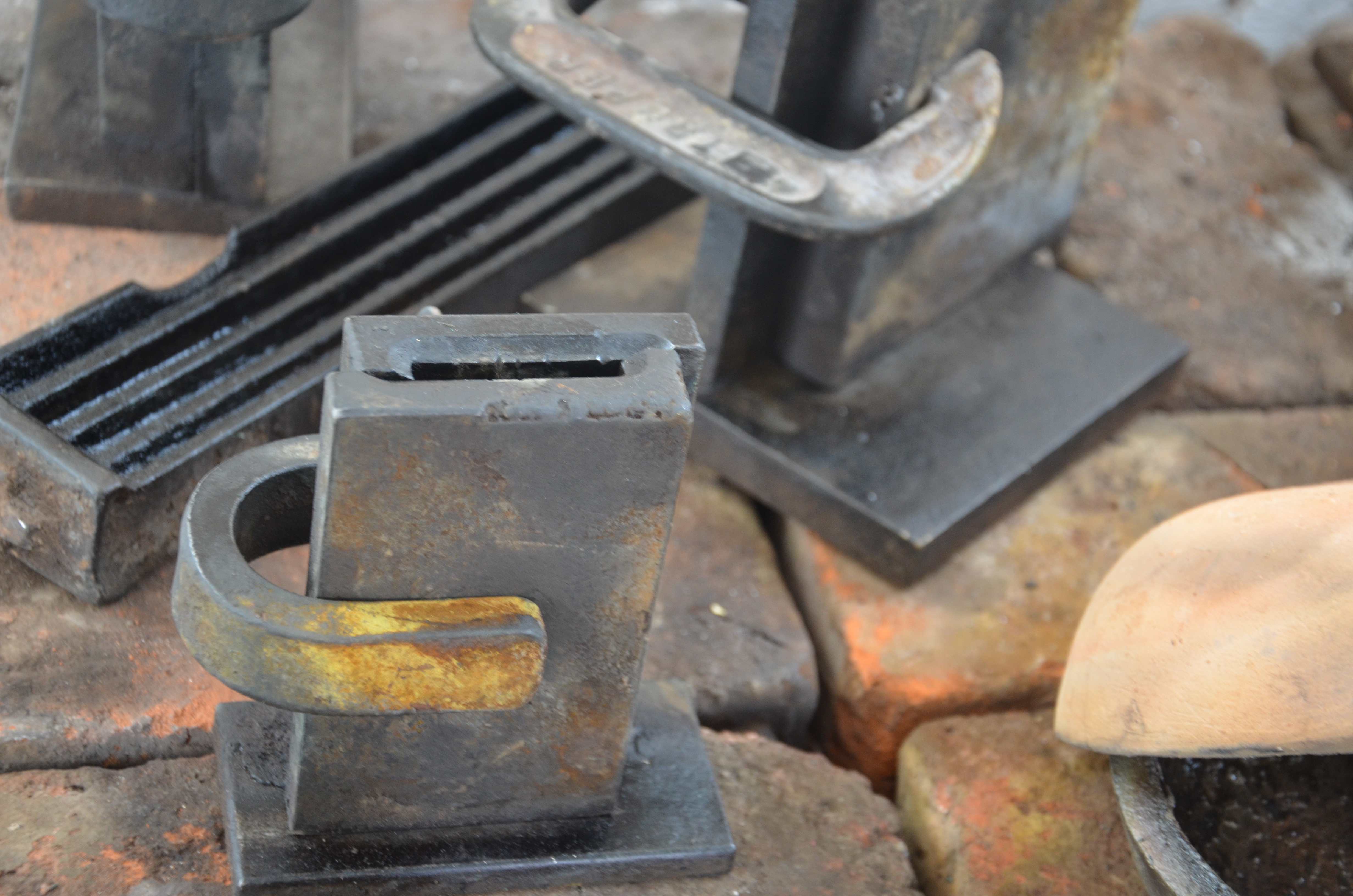
May this inspire the ongoing purification of mindfulness of self and world that is practice and purification.
Gassho!
Walking along the Dhammapada — Chapter 16: The Dear/Affection
12 May 2021 Leave a comment
in Buddhism, The Dhammapada Tags: Attachment, Craving, Four Noble Truths, Karma, Practice, Suffering
I’m taking another journey through the Buddha’s lessons on the path of the Dharma (one way you could translate the title Dhammapada). A few years ago, I wrote posts on a handful of chapters, but I didn’t go over every chapter. This time, I’m challenging myself to post on every chapter and share them here.
I’ll be honest – I find this chapter difficult. It’s difficult precisely because of questions I’m currently wrestling with in my own personal development. They’re also questions related to ongoing queries I have for Buddhism around the life of a householder vs. that of a monk. How does one handle the issue of attachment in the middle of a standard, nonmonastic life? It’s a problem in terms of finding balance and a Middle Way through the tangles of craving and clinging. The best I can come up with is seeing the attachments we have and letting them be without grabbing onto them with clinging and craving, but that is incredibly difficult to do, and that’s precisely why one is pressed to go into the freedom of a monastic life. This chapter has a very strong tone that doesn’t help me with these considerations at all, and like much of the oldest Buddhist teachings, it feels like one is only able to find liberation by leaving the life of the householder behind and severing all attachments.
This may all sound like some kind of philosophical knots over a non-issue, but one description of the founding of the practices of tantra in Buddhism precisely highlighted this issue (and unfortunately, it’s been years, so I can’t remember where I read it now). It was the legend of a king who asked the Buddha for practices to find enlightenment while still holding onto his sensual life, basically (surely a legend because tantra is one of those practices from other Asian spiritual traditions Hinduism/Bön that were fused with Buddhism as it grew and travelled).
In any case, let’s focus on one main passage here. This whole chapter really emphasizes that craving/clinging in its various guises keep one rooted in samsaric suffering. This fits with the Four Noble Truths. There is suffering. Suffering arises from tanha (craving/clinging). One can be liberated from suffering by ceasing the bond of tanha. There then is a path forward to realize this goal. This chapter emphasizes that aspect of tanha – we crave that which we desire. We crave for that which we don’t desire to not happen. In fact, whatever else doesn’t fit the desired or undesired is so separate from our affected awareness, that we just ignore it. These are the three poisons: desire, aversion, and ignorance. We can see in passages like this chapter that clinging/craving drives all three on a continuum of sorts. Think of it like a number line where – craving = aversion, 0 = ignorance, and + craving = desire. It’s worth mentioning here that the titles in my two translations point to this as well: “The Dear” – we cling to that which we hold dear; and “Affection” – affect, our emotional movements that pull us hither and yon in samsara, are driven by the clinging in the 3 poisons. There are several lines that point out these dynamics and then accentuate different versions of affection where it is at play and that such things should be avoided. The overall summary is captured in the final emphasis:
Craving gives rise to grief;
The Dhammapada, 216, trans. Fronsdal
Craving gives rise to fear.
For someone released from craving
There is no grief;
And from where would come fear?
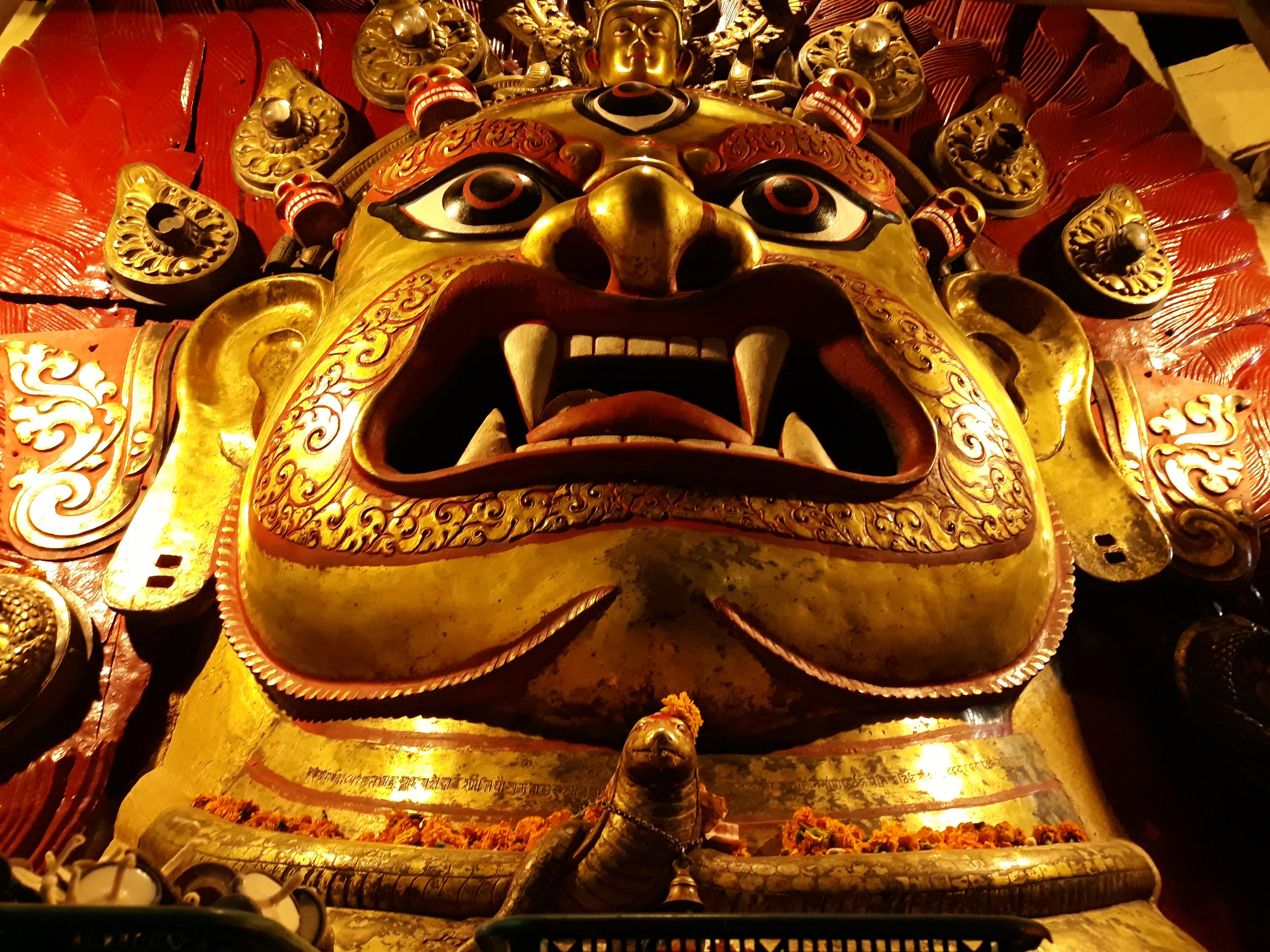
In terms of my own struggles, I’m left thinking of these considerations, and I think the path is truly that of sitting in the midst of the swirl of affection, whatever arises, and seeing how there is the pull of desire and aversion as well as the lack of interest in ignorance. We can watch what comes up within our mind and try to respond skillfully rather than getting hooked into craving and the karma that arises from acting within it. What this means for myself in terms of relationships, my own stories, and an engaged life, is an ongoing investigation.
In relation to that little idea of karma, I love the closing lines in this second translation, where good deeds are presented as analogous to a seeker’s family who celebrate his return home into Nibbana. As such, we have yet again an emphasis on acting well from the stance of nonattachment at the end of this chapter admonishing the seeker to not cling.
When, after a long absence, a man safely returns home from afar, his relatives, friends, and well-wishers welcome him home on arrival.
As relatives welcome a dear one on arrival, even so his own good deeds will welcome the doer of good who has gone from this world to the next.
The Dhammapada, 219-220, trans. Buddharakkhita
May this bring others to recognize the role of clinging in samsara and get them to investigate its role in their lives.
Gassho!
A Lotus in the Muddy Water
21 Dec 2020 Leave a comment
in Meditation, Mindfulness Tags: Depression, Interdependence, Kensho, Practice
Recent times have been a struggle for me, as I’m sure they have been for so many. I sit mired in unemployment, and it doesn’t seem that countless job applications are going anywhere. Furthermore, virtually every other aspect of life feels stagnant. There seems no hope any time soon of moving forward out of the muck, despite my best efforts. In my worst moments, I feel the downward pull into those murky depths of depression.
Thankfully, I’ve been trying to really focus on mindfulness and meditation practice again. Thus, in a couple of my worst moments recently, I’ve tried to stop, focus on my breathing, and just let thoughts pass through as I let my attention take in not only them but my body and all the sound and world that is my greater sphere of experience and interdependence, which is so muted and out of focus when the narrative, samsaric mind revs up into full gear. When I’ve done this, I’ve found moments of light kensho where the self seems to just melt away, and everything is just happening, one becoming, rather than “I” and world. I’m not sure what word to use for it. It’s “peaceful” and “compassionate”, but these are both inadequate somehow, as it’s no longer a reaction of me as the observer and judger of what’s happening. It’s just becoming. Afterwards, everything seems more worthy of acceptance and gratitude as it is, and reactions of anger or judgment seem silly — from a misplaced, reactive, and self-protective stance that misses key aspects of how others are wrapped in their own stress and confusion.

I’d remembered the phrase “a lotus in the muddy water” when thinking about these experiences and it struck me as a good metaphor. Our samsaric lives are right in the middle of the chaotic churn of karmic mud. The water can’t help but be muddy. However, in trying to escape, we only rile it up more and more. Yet, there’s beauty in seeing that this isn’t some terrible, profane thing that we must overcome. The chance at peace is right there in the middle of it by taking root and growing in it. Only then can you truly blossom.
May this help others find the ability to pause and open their minds and hearts in their most trying moments.
Gassho!
Musings of an Aspiring Oneironaut: Interconnected Awareness in Dream?
16 Nov 2017 Leave a comment
in Dreams, Meditation Tags: Buddhism, Dream Yoga, insight, Interdependence, Practice
I recently had a dream in which I went to a doctor — and there was a weird sexual temptation and gender-bending with this doctor, but hey, dreams are weird that way. I don’t recall the reason why I was visiting this doctor, but the doctor was known for having unique and alternative methods to address issues.
At some point, the doctor kneeled before me and induced a trance in me by looking me in the eye directly and asking me a question (although it’s a couple weeks later, so I don’t remember what the question was). The important thing was my answer. In my trance, my eyes closed, and I saw a beautiful golden statue of the Buddha. It emanated wonder and peace – a soothing certainty that the universe is an unfolding connection in all aspects, not only in those I like, and I felt myself dissolve into that interdependence. Along with this feeling came the words, “I love the Buddha. I am a Buddhist.” Yes, not nearly as profound as the emotion, but it capped off the whole experience and made it even more personal.
This feeling that I tried to describe just now is an intense insight that I’ve been lucky enough to feel a few times in meditative practice, an embodied experience of interdependence and the other seemingly mysterious and abstract ideas of Buddhist cosmology. Then again, I had the first experience of this before I had fully read up on these ideas, perhaps its what made them sensible to me – having already sensed them.
The interesting thing about the dream is that this is the first time I’ve had this experience within a dream. I have read a lot about all the amazing things that are possible in lucid dreams, but I hadn’t expected that deep meditative insight could be experienced in dream.

I take this as an exciting inspiration. I have ups and downs with dream yoga, but this experience shows me that the potential of it is just as deep (if not more so) than waking life.
May this inspire you to feel interdependence in your waking life and to deepen your own pursuits of insight, whether waking or dreaming.
Gassho!
Big Mind/Little Mind
29 Apr 2016 Leave a comment
in Big Picture, Non-dualistic thought, Poetry, Zen Tags: Practice, Proper Insight
We wander
Lost in thought
Landscapes of inner
Confusion, enchantment
In waking
Absorption
Blossoms vibrantly
Becoming Everything
Mind vibrates
Nothing outside
Wave rolls upon wave
Relative
Part of all
Neither one,
Nor yet two
Little mind; big mind
The waves are
The ocean

It will take quite a long time before you find your calm, serene mind in your practice. Many sensations come, many thoughts or images arise, but they are just waves of your own mind. Nothing comes from outside your mind. Usually we think of our mind as receiving impressions and experiences from outside, but that is not a true understanding of our mind. The true understanding is that the mind includes everything; when you think something comes from outside it means only that something appears in your mind. Nothing outside yourself can cause any trouble. You yourself make the waves in your mind. If you leave your mind as it is, it will become calm. This mind is called big mind.
If your mind is related to something outside itself, that mind is a small mind, a limited mind. If your mind is not related to anything else, then there is no dualistic understanding in the activity of your mind. You understand activity as just waves of your mind. Big mind experiences everything within itself. Do you understand the difference between the two minds: the mind which includes everything, and the mind which is related to something? Actually they are the same thing, but the understanding is different, and your attitude towards your life will be different according to which understanding you have.
That everything is included within your mind is the essence of mind. To experience this is to have religious feeling. Even though waves arise, the essence of your mind is pure; it is just like clear water with a few waves. Actually water always has waves. Waves are the practice of the water. To speak of waves apart from water or water apart from waves is a delusion. Water and waves are one. Big mind and small mind are one. When you understand your mind in this way, you have some security in your feeling. As your mind does not expect anything from outside, it is always filled. A mind with waves in it is not a disturbed mind, but actually an amplified one. Whatever you experience is an expression of big mind.
– Shunryu Suzuki, from “Zen Mind, Beginner’s Mind”
May this help you experience the non-dual nature of the universe.
Gassho!
Mindfulness: The Great Challenge
03 Dec 2015 2 Comments
in Buddhism, Mindfulness, Spiritual Path, Tao Te Ching, Taoism Tags: Impermanence, Practice, Prajna, Presence, Unfolding
Mindfulness doesn’t live and die on the cushion.
It’s a journey, an opportunity,
In every moment.
I can be here, present:
Composed and compassionate
Serene and serendipitous
Open and observant
Or I can be lost, confused:
Reactive and restricted
Selfish and selective
Dormant and dogmatic.
The journey of a thousand miles begins with a single step
-Lao Tzu, Tao Te Ching §64, Trans. Jonathan Star
The Sage worries not about the journeys or tales of yesterday. Nor does he lose sight of the beginning step while looking at the future destination beyond the horizon. Knowing both, he steps forward, feeling every inch of ground in this step–right here, right now. The Sage’s secret wisdom?–This step is the only step. Each step is the beginning step. Each step is the whole journey. The only step to take is the one underfoot right now. The only journey is the current movement of the leg and foot, and there is no greater miracle than this. The Sage takes this step with awareness and gratitude–not lost, elsewhere, and not attached to any outcome.

The present is direct and straightforward. Your experience of it is heightened through mindfulness. When you are mindful of your breath in meditation, when you mindful of your thoughts, or when you are mindful of going from the practice of meditation to dealing with the kitchen sink, all those situations are in the present. You don’t borrow ideas from the past, and you don’t try to fundraise from the future. You just stay on the spot, now.
That may be easy to say, but it’s not so easy to do. We often find it satisfying to have a reference point to what might happen in the future or what has happened in the past. We feel more relaxed when we can refer to past experiences to inform what is happening now. We borrow from the past and anticipate the future, and that makes us feel secure and cozy. We may think we are living in the present, but when we are preoccupied with the past and future, we are blind to the current situation.
Living in the present may seem like quite a foreign idea. What does that even mean? If you have a regular schedule, a nine-to-five job, you cycle through your weekly activities from Monday to Friday, doing what is expected of you and what you expect of yourself. If something out of the ordinary occurs, something that is completely outside of the routine of your Monday-to-Friday world, it can be quite disconcerting.
We are bewildered when something unexpected pops up. A flea jumps on your nose. What should you do? You swat at it or you ignore it if you can. If that doesn’t work, then you search for a memory from the past to help you cope. You try to remember how you dealt with the last flea that landed on you. Or you may try to strategize how you’ll prevent insects from bothering you in the future. None of that helps much. We can be much more present if we don’t pay so much attention to the past or expectations of the future. Then, we might discover that we can enjoy the present moment, which is always new and fresh. We might make friends with our fleas.
-Chögyam Trungpa, Mindfulness in Action, pp. 46-47.
May this inspire you to mindful presence in this moment.
Gassho!

 On the Way
Recent Comments