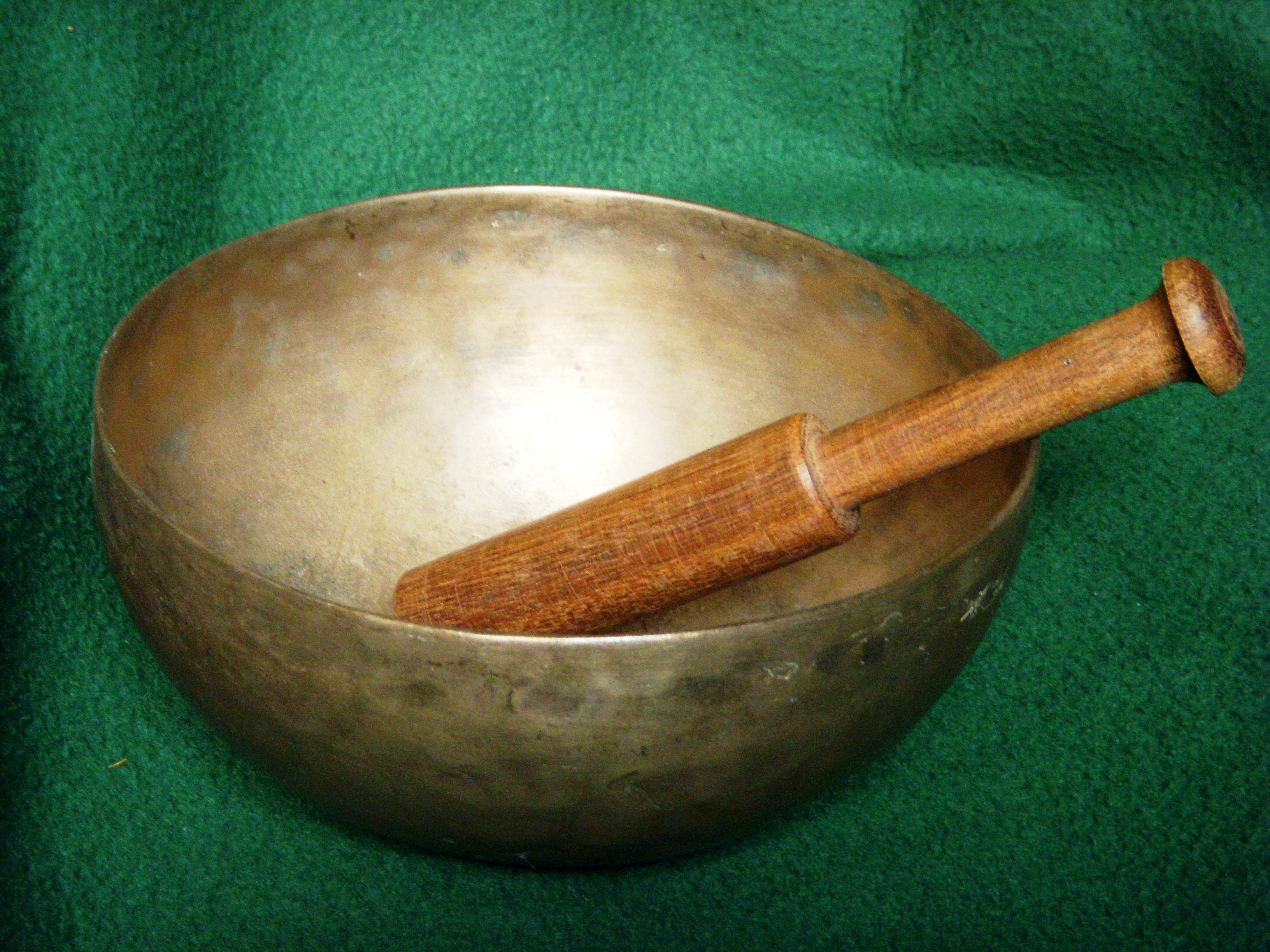
Nothing to Do…

If, if, if…
A set of checkboxes
Mark them all, and…
Get happiness?
Even a spiritual path–
A pursuit of spiritual materialism
An accumulation of ego
The doing of an “I”
“My attainment”
A misperception
Of Truth
“I” am not solid–an illusion
The word, a placeholder,
A Transcendental Unity of Apperception
My “Higher Self”?
Not like anything conventionally conceived:
The ebb and flow of everything
Not separate from it-
A divine chaos–unfolding
The beautiful, empty, mysterious Tao
Emerging-abiding sway of all difference
The path: There’s nothing to “do”
Nowhere to “go”
Enlightenment is here: in this moment
Nirvana in samsara
Just live: realize this one step.

file0001052140987


Inspired by a wonderful meditation this morning and all the wise things I regularly read: in this case, I’ve been particularly moved by Dainin Katagiri’s You Have to Say Something. This passage clarifies some of the final lines:

So, how can we practice zazen as an end in itself? All you have to do is take a step. Just one step. Strictly speaking, there is just one thing we have to face, and nothing else. If you believe there is something else besides this one thing, this is not pure practice. Just take one step in this moment with wholeheartedness. Intellectually, we think about the past and the future, but if we take one step, this shore and the other shore are now. Taking one step already includes all other steps. It includes this shore and the other shore. This one step is zazen.

I’ve also been amazed by a recent find of Loy Ching-Yuen’s The Book of the Heart: Embracing Tao. I would put it up alongside the Tao Te Ching and the Dhammapada; it’s a beautiful intertwining of Taoism and Buddhism written by a true master from about a century ago. I plan on writing about several passages in the future. For now, enjoy these selections from the sections On Tao:

3. Life is a dream,
the years pass by like flowing waters.
Glamour and glory are transient as autumn and smoke;
what tragedy–for with the sun set deeply in the west,
still there are those
lost among paths of disillusionment.

Our heart should be clear as ice.
Forget all the worldly nonsense.
Sit calmly, breathe quietly, heart bright and spotless as an empty mirror.
This is the path to the Buddha’s table.

5. What labor we expend sorting out our mundane chores year after year.
But doing them without regret or tears,
without resistance,
that’s the real secret of wu wei
like the mountain stream that flows unceasingly:
Elsewise, all we do goes for nought.

We can hold back neither the coming of the flowers
nor the downward rush of the stream;
sooner or later, everything comes to its fruition.
The rhythms are called by the Great Mother,
the Heavenly Father.
All the rest is but a dream;
We need not disturb our sleeping.

To see his brilliant fusion of Buddhism and Taosim better, compare this quote with my analysis of wu wei here and my analysis of the famous lines about flowers falling in Dōgen’s Genjōkōan here.
Finally, my words here make subtle references to Chögyam Trungpa, Immanuel Kant, Martin Heidegger, and Gilles Deleuze, and this meditation and wordplay would never have come to be if I hadn’t recently read the Dalai Lama’s How to See Yourself as You Really Are, all of which (these myriad sources!) I highly recommend to anyone willing to begin a spiritual path with heart.


May this inspire your own investigations and journeys along the path, fellow wanderers. May you find ideas to play with and solace in the beautiful words of all these masters who have brought these insights into my life.

Gassho!

Path of the Dharma: Dhammapada – Chapter 1: “Twin Verses”

This opening chapter shows the way by pointing out the enlightened path and comparing it to the deluded path. The amazing thing about this opening passage is its balance between solid ethical philosophy/cognitive-behavioral psychology and more austerely poetic spiritual maxims. It’s pretty long, so I’ll only cover part of it, and I’ll go through that part in pieces.

All that we are is the result of what we have thought: we are formed and molded by our thoughts. Those whose minds are shaped by selfish thoughts cause misery when they speak or act. Sorrows roll over them as the wheels of a cart roll over the tracks of the bullock that draws it.

All that we are is the result of what we have thought: we are formed and molded by our thoughts. Those whose minds are shaped by selfless thoughts give joy whenever they speak or act. Joy follows them like a shadow that never leaves them. — Trans. Easwaran

This initial chapter is called “Twin Verses”, and the reason is clear here. We have the deluded and enlightened paths–samsara and nirvana–side by side, twinned in the same structure and style of explication.

IMG_1959

The first sentence is the same in both, and it reveals the importance of karma in a way that resonates with Western philosophy and cognitive psychology. Aristotle’s Nicomachean Ethics couches virtuous (that is excellent) action in an ongoing awareness of oneself within a social landscape. This requires an ongoing examination of how I have been molded by my background–upbringing and origin–and how I am molding myself further with each thought and action. Another familiar parallel is cognitive-behavioral psychology, which is more or less the successor of a Stoic understanding of the mind. Our thoughts mold our perception of ourselves and the world. In that sense, all that we are and all that the world is are the thoughts that mold us/it. Therapy, then, becomes an engagement to change the thoughts that harm us and the related behaviors to those thoughts. With these comparisons, the relevance of the Buddha’s position for us from the West is made clear.

Our two paths are displayed before us, and this is where the Buddha goes dramatically beyond these familiar points of comparison. The deluded path of ongoing suffering is the path of selfish thoughts. This includes all the plans oriented on my own aggrandizement. Out of the just listed Western parallels, the Stoics would be the only ones to make this dramatic leap (I’m reminded here of Marcus Aurelius speaking of being a citizen of the Universe). Selfish thoughts, even those oriented toward my success, my story, and my truth, even when they don’t harm others, will lead ultimately to dukkha, i.e. suffering, discontent, and continual yearning.

Why? This is a path that continually tries to get beyond the inevitability of impermanence. It’s an ongoing attempt to rig the game just right to get me that happiness of success that will never dissipate, never change, never fade. If I try hard enough… If I plan thoroughly enough… If I get the conditions just right…

Notice how all these thoughts are turned inward. If the world gives to me just right, I will be happy. That is the crux: external conditions have to be right, whether following the path of avoiding pain or pursuing pleasure. The energy of this system goes from outside to inside, from the world to me, thus the inward nature of these thoughts. “I” become the focus and goal of thoughts set up toward making my life just perfect. Even if that perfection includes others, it’s still about my perfect life.

In comparison, the enlightened path is one of selfless thought (and action). Such people (at least attempt to) give joy to all in all their speech and action (that which follows from thought), and hence, they are regularly cultivating joy in situations. It follows them everywhere. This invites a larger discussion of Buddhist psychology and karma, but let’s put this simply: the first path keeps the selfish person in an ongoing chain of cause and effect. His or her actions bring consequences that maintain an enduring cycle of felt dissatisfaction and of fighting to be free of this dissatisfaction with subsequent action … which is ultimately not fully satisfying. Selfish thought leads to selfish action which leads to the karmic consequence of this never-ending cycle: samsara. The other path invites us to at least see the difference. Then, perhaps, we have a gap after selfish thoughts arise–before we speak or act on them. Realizing that they lead only to sorrow, we instead change our thoughts, speech, and actions to more selfless ones. With time, this practiced self-reflection becomes a new mold for our thoughts, and selfless thoughts come on their own. With such a shift, we attempt to give joy to all, attempting to help them find peace, happiness, and health (by inspiring them to step beyond sorrow-laden paths as well). With this, we first begin cultivating more positive chains of consequences (as if that’s a necessary motivation), and ultimately, we step beyond the cycle of ongoing dukkha–that karmic chain is broken.

Notice that this second passage focuses on the selfless person giving joy, not getting it. Here, we have the contrast that this path is not inward-oriented like the first, in the sense of seeing the world’s purpose as to give to me or for me to take from it. Instead, this is outward-oriented. My thoughts are aimed out from myself toward the joy of all. The energy of this system now moves from me outward, rather than the inward grasp of appropriation for self. Through such a step beyond concern about my own joy, beyond “I”, me, and mine, I paradoxically realize that very joy in myself.

Let these discussions open one other passage for consideration:

“He insulted me, he struck me, he cheated me, he robbed me”: those caught in resentful thoughts never find peace.

“He insulted me, he struck me, he cheated me, he robbed me”: those who give up resentful thoughts surely find peace.

For hatred does not cease by hatred at any time: hatred ceases by love. This is an unalterable law. — Trans. Easwaran

Again, I’m reminded of Western philosophy in that one of Nietzsche’s greatest concerns is man’s propensity for “ressentiment”–more or less, resentment. The problem is precisely how inwardly driven this is–it’s literally a feeling again and again, a “re-sentir” (to feel again). This keeps us trapped and tortured, perpetually reactive, rather than vibrant, active, and creative. We get again and again, but we only get the pain of a stung mind, an envenomed heart. As in the passage of Thus Spake Zarathustra (II, 29–The Tarantulas), we feel the toxic bite of the tarantula, again and again, stagnant and rotting with emotional poison, and with Nietzsche, according to Deleuze, the problem is that this reactivity, this “feeling again”, lies throughout our entire human psychology. So the question becomes how do we step beyond this into that active state, rather than feeling reactivity everywhere?

To exemplify this problem, we can take another verse from chapter 18 of the Dhammapada:

There is no fire like lust, no jailer like hate, no snare like infatuation, no torrent like greed.

Notice that all of these are reactive evaluations–wanting to have what one does not have or jealousy of what someone else has (which is really another version of the same). In each, we become trapped in or tortured by reactivity. Hate, the jailer, is an instance of not wanting, and as such, it is wanting. It is not wanting a situation or person to be as he/she/it is, so it is wanting to have the world be completely different for me. (See my comments on love and hate in Love, Rebounds, and Relationships: Part 3 – Love and Metaphysics and also my comments on hope and fear in Reiki-The Five Precepts: 2nd Precept-Faith)

In comparison, the Buddha offers the selfless, enlightened path, one that is not stung by holding on to the continual, reactive poison of internalized wrong done to self:

For hatred does not cease by hatred at any time: hatred ceases by love. This is an unalterable law.

To let go of the resentful thoughts, the bars of the prison of hate, we cannot negate that person or thing out there which has wronged me. This is the most basic impulse in us, but as Gandhi said: “An eye for an eye makes the world go blind.” Selfish action to escape pain, begets another and another, and moreover, it begets this same resentful and retaliatory (as with hatred) reactivity in others. The only way to get beyond this is to selflessly give–to love–rather than to selfishly take–to hate (remember that hate wants the world to be utterly different in a way more suitable to me; it is a wanting, and it can lead to the subsequent action of taking, through negation). This means even giving up the self-righteous thoughts of being wronged. You instead give yourself to the world, finding connection with it, finding the suffering in those who have “wronged” us, finding the compassion of an awakened heart.

IMG_9929_statue

In conclusion, let’s offer this passage of Red Pine’s translation of Verse 63 of the Tao Te Ching which I discussed in a recent post. These guiding words for the Sage go hand in hand with the Buddha’s words for the arhat who walks the selfless path of love, peace, and joy:

Act without acting
work without working
understand without understanding
great or small[,] many or few
repay each wrong with virtue
– Trans. Red Pine


May this inspire you to read the rest of this beautiful chapter and the whole book. May it show you the first steps on the selfless path, and may you begin to walk it towards joy, peace, and love.

Gassho!

Heartbreak Wisdom Journal — Entry 5: Depression – Experience & Practice

My last entry was meant to focus on and express my experiences of depression in heartbreak, a particularly vexing set of painful emotions that keeps coming to visit, even after all this time. However, instead, I got into a philosophical examination of how depression alters our experience. This time, I’m going to focus on my experience and offer some tips/support for those readers out there who suffer from the same problems of the heart.

The world is barren. Nearly every day, I feel utterly lonely. It seems like there is no one who can hear me, no matter how hard I try to be heard. There’s no one who really cares–not really. People might show up on their own terms, but can any of them truly bear witness to me in my entirety? No. At least, I don’t know who that person is. Some days, I wonder who would care if I died tomorrow. My family, surely, but anyone else? Let’s stop here. Let me emphasize that these are feelings. Like I wrote about last time, I know that they are a particular alteration of perspective–a very pained one, curled up in a ball and wishing that the pain would end. Let’s not take these feelings to be truths, and let’s definitely not take them as blame on anyone who may be reading this. They’re my feelings, my reactions, and you hold no blame or responsibility for them. That being said, it has been particularly hard for me to move forward in recent weeks. I’m stuck at a job that irks me with false promises, poor pay for my responsibilities, and NO benefits–not even sick days, forcing me to expose my co-workers to illness out of my inability to afford missing a day. Furthermore, I struggle to find meaningful connectivity–something I’ve lacked throughout most of my adult life, despite my best efforts. Honestly, at this point, I’ve virtually given up. Who else reads philosophy for fun and yearns to learn as much as possible in this life? Who else is working hard at being an intensive practitioner of the Dharma? I don’t know such people, and they’re hard to find…

I’ve had an idea in my head for some time of returning to my ex’s city to live with some friends who stepped forward in my heartbreak and appeared as family to me. I’d love to show up and support them. However, each job I apply for comes to naught, and the other people I know there seem to be slowly denying or forgetting my existence. If I reach out and write something kind on one of their blogs or social media profiles, I get no response, but at the same time, I can see when they mention my ex and how great she is in whatever way. I guess she succeeded: in a certain way, I’m dead.

All of these difficulties have exacerbated those intense feelings I’ve expressed, and now, I’ve expressed them, both to let these feelings out and to let others know that they are not alone, not in the slightest. However, despite these feelings, I’m OK, and to explain that, let’s shift to how to deal with such feelings and such times in life. We all go through hard times, so let’s face these together with bravery, tenderness, and equanimity. The following are what I use to get through these feelings that could easily turn me into a blubbering mess; through these methods, I manage to have some grace, dignity, and joy in the wounds of heartbreak.

  1. Take care of yourself. You can’t continue with your life and show up for it if you fall into the abyss now (although there is no judgment if you crash at this point–no shame. Hang in there and recover). Taking care of yourself can make the unbearable a lot more manageable–not nice, not easy, but survivable. Not taking care of yourself will let it crush you. Also, taking care of yourself will give you the base of strength you need to excel with the other tips to follow. So–shower, exercise, continue to do things you like, reach out to friends and family to talk–don’t be afraid: others understand your pain and heartbreak, and the best way to feel loved is to reach out and find that others care, even if they can’t necessarily help beyond just listening. Personally, I had many of these self-care tools well-established this time from other bouts with depression, but this time, I learned that dressing well–that simple move of treating yourself with respect, with dignity–helped keep me positive and empowered day to day. This is not about being ostentatious or dazzling others–it’s about finding and holding your dignity. If you can find a way to do the same, do it. You could be wearing anything–your favorite band shirts and shorts. Just wear something that makes you feel that you matter and that you are embracing that.
  2. Be authentic. I’m not a big fan of the term as it is thrown around to the point of near meaninglessness. Here, I mean: show up for what’s happening. It’s easy to run away from such feelings or fall really deeply into them. Instead, try authentically showing up. These feelings show the depths of your heart. Let these feelings come up. Don’t fight against yourself or your emotion. Instead–gently be present. You’ll find that these feelings come and go, if you don’t grasp at them or fight against them. They’re just another part of your myriad possibilities of human experience. The brave, compassionate practice is to gently lean into them and surrender the fight against your emotional demons, finding that they, like a monster in your dreams, are part of you. It hurts, but it’s not good or bad: that’s just a reaction to that emotional experience. Don’t be afraid. Be brave, tender, and gentle towards yourself.

    Bringing awareness to depression works the same way. People often feel very bad about being depressed. When we don’t understand what depression is, it bears down on us. But when we get the hang of it, so to speak, we can allow more space around our depression and just let it be. Depression often comes when the hidden, dark corners we’ve tried to avoid actually surface. It may feel like a tight knot in our chest or an incredible sense of anxiety. It may feel like the earth has cracked open in front of us and we’re falling into some miserable lower realm. Or we may just feel blue. Depression is often accompanied by strong physical sensations. In the Tibetan tradition, this physical imbalance is called sok lung, or “wind disturbance.” But no matter what it feels like, remember that depression is just “experience.” And the experience of depression can be very valuable in coming to know aspects of our mind. When we come to know our mind, we feel much freer and less fearful. Whether depression is physical or conceptual, the important thing is to try and relax with it. Just relax with depression without feeding it by reacting–physically, mentally, or emotionally–with fear. There is no need to fight or identify with these habitual responses. This only makes them seem more solid and difficult to deal with. Initially the experience of depression is not such a big deal; it is more like a headache. If we bring awareness to depression. it won’t dominate our life. It is important to always return to the understanding that suffering is not personal. It’s an integral part of being alive and something that we all share. A great deal of understanding can come from bringing awareness to suffering, rather than thinking about or judging it. A quality of wakefulness comes with any sensation, which enables us to appreciate any experience. — Dzigar Kongtrül, It’s Up to You, pp. 57-58

  3. Move beyond “me”. You might notice that my expression in my story was all about I, me, and mine as well as how the world/others were not going in line with my expectations/desires. The suffering of samsara comes primarily from the grasping of self, and this is strongest with my attachments, especially in the stories of how I wish the world were. We fight very hard for these things, but in the end, they are impermanent–we lose them, and it hurts. OR we never get them at all, and it hurts because we want them so! We could discuss elaborate counter-plans of changing goals and such, but really, that just is a continuation of the same dynamic. It’s the same game with a different strategy to win. The real step forward as a brave spiritual warrior is to let go of the “me” game altogether. This sounds dramatic and incites immediate aversion, but it’s not the end of existence to stop staring at your belly button and look at the world instead. In this case, start small–engage in things that are about supporting others, even if that’s just doing things for a single friend. It can be as small as getting a plant or a goldfish to take care of and as major as volunteering to feed the homeless every week. Look your cashier in the eye–really see them, and thank them for helping you. There are truly opportunities everywhere. Small things spread positivity in the world and end up not only making you feel more positive but also getting you outside the miasma of your feelings.
  4. Engage, connect, process, and learn. There are so many resources beyond friends and family to help you feel witnessed, learn how to grow/heal, and take up your path as a brave warrior. Check out the book by Susan Piver that inspires these Heartbreak Wisdom Journal entries: “The Wisdom of a Broken Heart”. There are many blogs here in WordPress to read with others’ expressions of their experiences, tips, and tricks. I follow one called: “How to successfully get out of depression… and never go back!” The author adds lots of new ideas regularly, and they are well-informed and practical. Check that one out for a start! Find a therapist or a spiritual community. Know that you are not alone in this experience and that there are many avenues to find help and others who know your pain.
  5. Finally–Try meditating. You might scoff at this, but there is no better way to find peace. We externalize so many of our reactions, and our minds often run willy-nilly without much ability on our part to find mental calm. We think that happiness will come from realizing all the desires of “me”. Meditation sees through this and finds the basic goodness of who we are. It offers the true path to a happiness beyond the constant games of grasping and attachment. Just a few minutes a day can change your life and pull all these other suggestions together into an empowered, present, tender, brave, and beautiful embrace of your life.

May this post help others find companionship in their experience of depression as well as give them some help finding peace through it. As in the quote below, may your heart be big enough to hold all of these experiences with courage and tenderness. Gassho


pablo (1)

In both Western and Tibetan cultures, having a big heart is associated with generosity, kindness, warmth, and compassion. In Tibetan culture, a person with a big heart is also someone with the ability and courage to hold even the most painful truths in his or her heart without becoming despondent. During difficult times my mother used to say, “You need to make your heart big enough to hold a horse race inside.” Working with difficulties in a compassionate way doesn’t necessarily mean we can resolve them. Samsara, by its nature, can’t be fixed. It can only be worked with and transcended–which means seen through. A traditional Buddhist image of compassion is that of an armless woman watching her only child being swept away by the raging torrent of a river. Imagine the unbearable anguish at not being able to save your child–and not being able to turn away! In the practice of bodhichitta, this is the unconditional compassion we try to cultivate toward all sentient beings, even if we’re unable to truly help them until we ourselves become free. The willingness to not turn away from our anguish as we reflect on the suffering of samsara is the bodhisattva path. This path is possible only because we have seen that the true nature of suffering is egoless, or empty. Not turning away from suffering doesn’t mean “toughing it out.” It means that, having seen the true nature of suffering, we have the courage to encounter suffering joyfully. — Dzigar Kongtrül, It’s Up to You, p. 89

Previous Heartbreak Wisdom Journal Entry — Entry 4: Depression’s World Next Heartbreak Wisdom Journal Entry — Entry 6: Forgiveness

Next Newer Entries