Heartbreak Wisdom Journal — Entry 9: Scar

Several months ago, as the end of my relationship began to unfold, I wrote a poem about having a scab over my heart (read it here)–inspired by one of my last visits to my ex, in which she and I (and cute cat in tow) acted as a family, saving a little baby bird that our curious cat had found. In the process, I climbed up on a neighbor’s roof, scraping my knee and leaving a nasty scab. The emotional treatment I got during this time period left a scab on my heart too, hence the poem.

Now, so many months later, I feel that change has come, but it’s only one letter of change: from scab to scar. Of course, I don’t mean to say that this change just happened today or recently, for that matter. No, healing is a process, and many changes are processes (by that I mean longer term developments). However, I’ve encountered so many times, in both everyday conversations and even in my masters psychology courses, talk of healing as though it’s a return to fullness to the same state as the way things used to be. However, the word “healing” and the associated concept are related to “health”, and “health” is ultimately an idea/understanding of physical well-being. Why is this important? Anyone who has lived much past childhood can likely understand/agree with the proposition that some wounds do not “heal” to be what they once were. In fact, most wounds don’t once we get past the abundant vitality of youth (though it may take some time before we realize that things didn’t “heal” fully). For instance, I sprained my ankle badly once in my late teens. It’s never been the same since, but for the most part, it functions well enough to get by without issue. That’s what healing is: a return to general functionality–well-being. It is not a cure. Curing is a complete eradication of ailment, which would apply mostly to disease; with a contagion, viruses/bacteria can be completely killed off. Healing has to do with the fact that we are unfolding processes of change on biological, mental, emotional, and spiritual levels. With healing, there is a recognition of the organic nature of these becomings: time marches on, all of these changes are impermanent (in the sense of not being a final change), and even a revitalization does not mean that everything can be or is reversed.

Scar tissue is a particular example of this irreversible healing. I have a four-inch long scar on my lower abdomen where my appendix was removed as a child. Despite the initial pain of a cut that had opened all the way to my internal organs, the pain receded within a couple weeks, and I could do most things normally afterward. However, for a year or so afterward, I remember being unable to do certain exercises like sit-ups without excruciating agony after a few repetitions, and even today there feels like a slight imbalance between my right and left sides. While it may be minor, and perhaps, the difference is in my head, it has affected my experience, and the scar has had a long-term impact on my life.

OLYMPUS DIGITAL CAMERA

Years ago, I had a cut much like this one after having my appendix removed. What do the wounds and scars of heartbreak look like?

Scar tissue can be sensitive for a long time, and the muscle may mend but not quite to the strength of what it once was. Internal scar tissue can even cause problems for organ functioning, as it is different than the normal tissue around it.

So how about the scar tissue of a broken heart? Honestly, I can’t readily say. Very few days go by where I don’t miss her in some way–usually minor but sometimes greater. It’s the scar’s tingling, unique sensitivity–that of nostalgia. In fact, I dreamt of her recently, and though the dream was odd and painful, it left the rest of my day an aching knot.

The one thing about the healing that seems more certain is that I don’t feel the same way about romantic love. I’m not seeking it, and I have little interest in it. It seems primarily tied up with stories of self and finding completion in another. That’s the whole game of samsaric conflicts that I don’t need.

Plus, I reached a deep-seated love of absolute gratitude for my ex, foibles and all–not that this meant that I didn’t see and support how she could grow past her painful patterns; acceptance is not enabling such patterns. This is a regular point of confusion for people. Acceptance is not collusion. Just because it isn’t some sort of domineering attempt to force a person to change does not mean that it is a stance that enables a person to remain hurtful to themselves and others; true acceptance is seeing a person’s beauty and pain and trying to help them get past their pain out of love for their well-being. A mother loves her children with her entire existence, but this does not mean that she lets them do selfish and maladaptive things. Instead, she tries to steer them to the best path and growth for them, although this requires some discipline at times. The problem is seeing what should be done for that end of helping and loving someone else and what is being done out of one’s own selfishness… I’m not sure that healing can take me back to a state of opening like that–intense gratitude–with another person. It’s difficult to describe the overwhelming joy and gratitude I had for her in the last few weeks I was with her. I feel like this experience may never return, no matter how much time is allotted for healing. Instead, the tingling pain of a scar remains. Instead of actively seeking this type of love again, I’m cultivating love and compassion for existence now.

I don’t know what the future will bring, and I don’t worry about it. If romantic love comes my way, fine. If not, fine. I don’t seek it or deny it. I don’t worry about it. No attachment. Whatever arises. Meanwhile, the wound heals in its own way.


May this help others find their own peace with their scars.

Gassho!


Previous Heartbreak Wisdom Journal Entry– Entry 8: Reclaiming Shards of the Past
Next Heartbreak Wisdom Journal Entry– Entry 10: Echoes/Grief

Reiki: The Five Precepts (Gokai – 五 戒) – 3rd Precept: Gratitude

Just for today:
Don’t hold on to anger
Don’t focus on worry
Honor all those who came before
Work hard on self-improvement
Be kind to all living things
– Reiki Center App, Windows Phone

Now:
Peace
Faith
Gratitude
Actualization
Compassion
– My shortened mantra of the precepts


“I want”–there may be no more fundamental aspect of our psychology, or at least, our standard psychology of samsara. Freud placed the wanting aspect of the self as the original identity of the psyche. In doing so, he hardly broke the mold (no matter what the psychology or literature textbooks might lead you to think)–stealing from and echoing his precursors in Western philosophy, reaching all the way back to Plato. No, this position is not new or radical. Reading Plato’s “Phaedrus” will quickly disabuse the reader of any notion that Freud’s positions regarding the systems of the tripartite psyche or the driving nature of desires were revolutionary. He took a lot from Nietzsche, Plato, and his mentor, Charcot, at the very least. However, Freud succinctly identified a part of our experience with his descriptions of the id as primary: we feel driven through life by desire. In a certain sense, how could it be otherwise?

On another philosophical note, Aristotle’s entire system is about the becoming of things into their end product (a woefully quick and dirty summary that does not do full justice to this dynamic thinker). His physics and his understanding of behavior are teleological–that is, everything is oriented toward its telos: its goal, its fruition, its end. Desire drives us towards ends. For Aristotle, the end that all behavior aims at is happiness (eudaimonia–which is not quite the same as our standard understanding of “happiness” now; just as one swallow does not make a spring, for Aristotle, a fine moment does not make eudaimonia. Rather, eudaimonia is always in action, always in development through a well-lived life by sets of standards that cultivate excellence requiring an ongoing examination and engagement). We desire happiness and we act to move toward it.

Buddhism actually agrees that we all aim for happiness. However, and in a certain way Aristotle would agree: Buddhism thinks that we misunderstand happiness and its pursuit. True happiness is not to be found in the neverending chase of desire. As Zen Master Dainin Katagiri said, “Desires are endless.” How could we ever think that we could pin them all down just right to get an ongoing sensation of tickled nerves? It sounds silly, but that’s precisely what we do when we seek “happiness” as it is standardly understood. No, happiness is not that, Buddhism reveals; rather, it is finding joy in this moment, whatever arises. This doesn’t mean that we obliterate desire, as some people imagine when they envision a Buddhist monk. Hardly. Meditation and mindfulness are not about blotting out every thought and desire. That’s precisely why Katagiri Zenji said that desires are endless: it would be ridiculous to even posit blotting out the flow of thoughts as a path. Instead, we are supposed to see them arise one by one without investing in them and getting entangled with attachment. From a related perspective:

Desire that has no desire
is the Way.
Tao is the balance of wanting
and our not-wanting mind.
-Loy Ching-Yuen, The Book of the Heart: Embracing Tao

Such a path takes a lifetime of training the mind, or rather, it’s an ongoing engagement of a present mind in every moment. Every moment is a journey, walking the way with mindfulness. With cultivation, the happiness of being simply what one is comes forth instead of the ongoing chase after what one wants to be (or have), the anxious flight from what one does not want to face, and the hazy-eyed ignorance of the ways of the universe. As Dōgen Zenji would remind us–every moment is a miracle; miracles are not the grand, crazy moments when huge desires are fulfilled, fears avoided, or laws of nature superceded. On the contrary, every moment is a miracle–even the mundane annoyances like washing the dishes.

A key first step to finding the miracle that is in every moment is cultivating gratitude. Usui-sensei’s 3rd precept tells us to be grateful, and perhaps, its position as the 3rd of 5 precepts, the middle precept, is no accident, as it is the heart of practice. In fact, the precepts are meant to be recited while holding the hands together in the pose of “Gassho” (have a look at my original post on the Reiki precepts for a refresher on this). This gesture is an expression of gratitude. So, as we recite all the precepts, they are framed by this gesture, and this precept of gratitude stands in the middle of each recitation–its beating heart.

The Reiki center app translates this precept as “Honor all those who came before”. True gratitude does not lie in the hazy avoidance of averting your gaze from that which you don’t want to see/admit. That’s merely bad faith. Instead, gratitude sees this moment in all its particulars, all of the conditions at play in it–arising and disappearing, just as they are. “Whatever arises”. True gratitude honors all of these current conditions as well as all of the conditions that came before–the causes and precursors to now, necessarily entangled with this moment. True gratitude is grateful for this unfolding karmic situation, no matter whether “I” like “it” or not.

Again, the moment of washing dishes deserves our gratitude just as much as the moment of a bite of ice cream that made those dishes dirty. Seeing the entire karmic unfolding of each moment and smiling at it, whatever arises, that’s our true path to happiness. If we can even begin to do this for just a few minutes a day as Usui prescribed (30 minutes in the morning and the evening: “Do gassho [the hand position of gratitude and blessing in Buddhism–hands held in front of neck/face with palms together] every morning and evening, keep in your mind and recite” (Steine, The Japanese Art of Reiki”)), we’ll find that there is truth to what he said about the precept recitation practice: it’s a key to health and happiness. This practice can truly grant “happiness through many blessings”. The heart of this happiness beats with the pulse of gratitude.


Buddhist lore states that the Buddha taught the precious opportunity of having a human life. His parable: imagine a planet that is covered by one giant ocean. On the ocean, a wooden yoke floats in the water, tossing violently to and fro with the ebb and flow of the ocean’s waves. A blind turtle swims in the ocean and rises to the surface once every 100 years. Being born as a human being is even more unlikely than the blind turtle rising to the surface and sticking his head through the hole of the yoke by “blind” luck. The conditions of your life are greatly precious, and each moment is an opportunity to take up a path of enlightenment and compassion for all. If you see this preciousness instead of your myriad stories of “me” which are intertwined with a neverending web of desires, gratitude can open to the way things are, and action can be taken to walk this path with open eyes, knowing that the opportunity of this life–the chance to cultivate wisdom and compassion–is not permanent and could end at any time.

May this inspire you to gratitude for your precious life, and through the regular practice of reciting these precepts, may you find gratitude for the way things are as well as the true happiness that goes beyond the eternal game of fulfilling selfish desires.

Gassho!

Previous Reiki: The Five Precepts Post – 2nd Precept: Faith
Next Reiki: The Five Precepts Post – 4th Precept: Actualization

Grasping at Sand – The Pursuit of Happiness

We pursue happiness,
grasping onto desires–
Justifying this as wisdom, as nature, as fact–
Fulfillment + gratification = happiness!!!
Yet we don’t see…

The heart grasping onto desires
Is like a hand grasping
Onto grains of the finest sand.
No matter how hard we
Try to hold on,
It slips out,
And what remains
Tickles and scratches,
Holding onto the hand
Even if the hand lets go.
Yet we don’t see…

Sand flits out of the hand’s grasp
Blowing away in the wind
Lost, gone, vanished
Like a dream
As though the grains were never there
Just like this
Desires arise and disappear
Ephemeral phantoms taken as solid
Yet we don’t see…
Is there a better way to be?

100_4073


Without desire, without distress
we keep to our empty heart.
The beauty of the Way is that there is no
“way”.

No self
No this, no that

Everything, everything is simply emptiness.
– Loy Ching-Yuen The Book of the Heart: Embracing Tao (On Tao, §10)

Desire that has no desire is the Way
Tao is the balance of wanting
and our not-wanting mind

Travelers know that steep cliffs mean a long, hard
climb.
Just so with Tao:
No smooth roads without first a few ups and downs.
-Loy Ching-Yuen The Book of the Heart: Embracing Tao (On Enlightenment, §1)

May this help you balance your wanting and not-wanting mind, finding the desire that has no desire. May this help you slowly open the heart that grasps onto desire, one that seeks happiness in selfish fulfillment. May you instead find your way onto the selfless path that brings true happiness: an open heart of bodhicitta (have a look at my discussion of the first chapter of the Dhammapada for more on the selfish and selfless paths, and have a look at this one for more discussion of bodhicitta).

Gassho!

Path of the Dharma: Dhammapada – Chapter 12: “Self”

Disclaimer: This book has 26 chapters, and I highly recommend you get a copy and read them all. I’ve had to pick and choose, and in so doing, much is passed over. I only hope to emphasize what is key for getting to the other side, but even in my choices, it would be too long to write out each whole chapter, so I have to pick selections from them as well.


Learn what is right; then teach others as the wise do. Before trying to guide others, be your own guide first. It is hard to learn to guide oneself.

Your own self is your master; who else could be? With yourself well controlled, you gain a master hard to find. (Chapter 12, Verses 158-160)

Stephen Ruppenthal introduces this chapter in my translation with an analysis of how the Buddha does not specify his position on what the self is; he cites the Buddhist scholar/philosopher par excellence, Nagarjuna. The Buddha, indeed, does not posit: “The self is X”. However, both here and in the opening lines of the first verse, (“All that we are is the result of what we have thought” see my previous post on the first chapter here), the Buddha makes clear that the self is something that can be trained. As such, it is something that can change; thus, it follows the Buddha’s emphasis on impermanence as does all else. The Buddha does not posit here that there is no atman (a soul), but he does say that the self is something that can be trained, mastered, and he indicates that the spiritual path is one in which you master yourself. The Buddha doesn’t posit anything about the self’s nature, as that would go entirely against the point (i.e. positing something that “atman is”.). Rather, he indicates selflessness, or as is often described as the Buddha’s position: no-self. As he says later in chapter 20: “All states are without self; those who realize this are freed from suffering.” He displays to us that what we label self is not fixed or permanent, rather a dynamic process: one that can be trained and mastered. A permanent, unchanging thing is not open to such dynamism. A biography I have recently read about the Buddha expressed the subtleties of this stance very well:

This was the last thing Gautama wished to communicate. He believed that in this life we inherit the karmic consequences of our actions in past lifetimes, and that when we die, our future existence will depend on our moral state in this one. Having been brought up to believe implicitly in rebirth, this didn’t raise for Gautama or his listeners the metaphysical problems it brings to many who hear these ideas today. He was trying to get away from metaphysical abstractions and point people towards the kind of experience they could detect and observe. Of course, Gautama was saying, every person, including a Buddha, thinks, feels and experiences; the point is that how we think and feel shapes the kind of people we become in the future. The self, therefore, is a process and the task is to shape it. The wanderers should stop asking of life, ‘What is it?‘ or ‘Where is the true self?‘ They should look, instead, at their actual experience and ask, ‘How does it work?‘ Sue Hamilton succinctly encapsulates Gautama’s approach: ‘That you are is neither the question or in question: you need to forget even the issue of self-hood and understand instead how you work in a dependently originated world of experience.’ (Blomfield, Gautama Buddha: The Life and Teachings of the Awakened One, p. 151)

whirlpool-waves

The self is a process that changes with time like the flow of a river (read Hesse’s famous “Siddhartha”) or the waves ebbing and flowing on an ocean. Note: the flux of some processes can take a very, very long time–such as the erosion of a mountain. That does not make the mountain a permanent, solid entity…

In the quoted passage from Chapter 12, as elsewhere in the Dhammapada, the Buddha tells us to guide ourselves to develop our own wisdom (especially if no wise people are around to guide us–he clearly states it is better to go alone than follow the spiritually immature) and master our own minds. No one else can master them for us. This is the most fundamental aspect of the path–the aspect that wholly depends on our own efforts and no one else’s.

The evil done by the selfish crushes them as a diamond breaks a hard gem. As a vine overpowers a tree, evil overpowers those who do evil, trapping them in a situation that only their enemies would wish them to be in. Evil deeds, which harm the doer, are easy to do; good deeds are not so easy. (Chapter 12, Verses 161-163)

This injunction to not do evil comes right after the call to master the self. How are they connected and what exactly are we supposed to avoid? The answer could readily be seen in the twin verses of the opening chapter already discussed in my previous post. Self-mastery, the proper way to guide yourself, is to tame your thoughts in such a manner that will bring you away from sorrow and closer to joy beyond death–nirvana. It’s a taming that cultivates selfless thought–thought in accordance with the Eightfold Path, rather than the selfish thoughts that our mind is constantly lost in as untamed monkey mind. Selfless thought shapes the mind in a way that brings joy and nirvana. Selfish thought molds the mind in a way that brings sorrow and samsara.


May this help you see your “self” in a light that allows you to cultivate joy for yourself and others. May you be inspired to read through this great spiritual work and find the path to liberation from suffering. May you have the generosity, energy, discipline, patience, meditative insight, and wisdom to walk it.

Gassho.

Nothing to Do…

If, if, if…
A set of checkboxes
Mark them all, and…
Get happiness?
Even a spiritual path–
A pursuit of spiritual materialism
An accumulation of ego
The doing of an “I”
“My attainment”
A misperception
Of Truth
“I” am not solid–an illusion
The word, a placeholder,
A Transcendental Unity of Apperception
My “Higher Self”?
Not like anything conventionally conceived:
The ebb and flow of everything
Not separate from it-
A divine chaos–unfolding
The beautiful, empty, mysterious Tao
Emerging-abiding sway of all difference
The path: There’s nothing to “do”
Nowhere to “go”
Enlightenment is here: in this moment
Nirvana in samsara
Just live: realize this one step.

file0001052140987


Inspired by a wonderful meditation this morning and all the wise things I regularly read: in this case, I’ve been particularly moved by Dainin Katagiri’s You Have to Say Something. This passage clarifies some of the final lines:

So, how can we practice zazen as an end in itself? All you have to do is take a step. Just one step. Strictly speaking, there is just one thing we have to face, and nothing else. If you believe there is something else besides this one thing, this is not pure practice. Just take one step in this moment with wholeheartedness. Intellectually, we think about the past and the future, but if we take one step, this shore and the other shore are now. Taking one step already includes all other steps. It includes this shore and the other shore. This one step is zazen.

I’ve also been amazed by a recent find of Loy Ching-Yuen’s The Book of the Heart: Embracing Tao. I would put it up alongside the Tao Te Ching and the Dhammapada; it’s a beautiful intertwining of Taoism and Buddhism written by a true master from about a century ago. I plan on writing about several passages in the future. For now, enjoy these selections from the sections On Tao:

3. Life is a dream,
the years pass by like flowing waters.
Glamour and glory are transient as autumn and smoke;
what tragedy–for with the sun set deeply in the west,
still there are those
lost among paths of disillusionment.

Our heart should be clear as ice.
Forget all the worldly nonsense.
Sit calmly, breathe quietly, heart bright and spotless as an empty mirror.
This is the path to the Buddha’s table.

5. What labor we expend sorting out our mundane chores year after year.
But doing them without regret or tears,
without resistance,
that’s the real secret of wu wei
like the mountain stream that flows unceasingly:
Elsewise, all we do goes for nought.

We can hold back neither the coming of the flowers
nor the downward rush of the stream;
sooner or later, everything comes to its fruition.
The rhythms are called by the Great Mother,
the Heavenly Father.
All the rest is but a dream;
We need not disturb our sleeping.

To see his brilliant fusion of Buddhism and Taosim better, compare this quote with my analysis of wu wei here and my analysis of the famous lines about flowers falling in Dōgen’s Genjōkōan here.
Finally, my words here make subtle references to Chögyam Trungpa, Immanuel Kant, Martin Heidegger, and Gilles Deleuze, and this meditation and wordplay would never have come to be if I hadn’t recently read the Dalai Lama’s How to See Yourself as You Really Are, all of which (these myriad sources!) I highly recommend to anyone willing to begin a spiritual path with heart.


May this inspire your own investigations and journeys along the path, fellow wanderers. May you find ideas to play with and solace in the beautiful words of all these masters who have brought these insights into my life.

Gassho!

Open, Bare Gratitude

Gratitude for all–whatever arises. It’s beautiful yet nearly impossible to cultivate. It takes a radical acceptance, an embrace of the world as it is. We’re far more likely to get caught up in our minds–in our interpretations, in how we think things should be.

Near the end of my shift yesterday, I went for a walk during a break. The afternoon sunshine shone brilliantly as I did laps around the building. Cars whizzed past excitedly as people left to return home for the day. I went around one corner of the building and nearly gasped aloud as I looked up at the sky. The clouds were so crisp, their edges so intricate and nuanced with definition and color. I continued my walk in an ongoing meditation–open to each moment without grasping onto it. The birds chirping as they fly overhead… The bee buzzing by me to gather pollen… The wispy, white cotton from the trees in bloom floating on the wind… The people at the bus stop chatting as they wait for the bus… My feet thudding softly on the asphalt, feeling every shift of bone and muscle in the dynamic change that is a step forward…

cropped-zeus-bolt_20140802_20_13_53_pro.jpg

Being open and aware like this, even for a few minutes, is no small feat. Indeed, the discursive mind waits at the fringes, looking for a moment to jump in and comment–grasping at further analysis, and I have a particularly long-winded discursive mind! However, we mistake this analyzer for the depths of thought, for the mind itself, yet underneath its myriad words, there is the open, bare gratitude of being present. Before the reactions of dis/liking, commenting, and analyzing, there is just letting be. This ground is always open, waiting for us to slow down and embrace it with gratitude and wonder.


May this post help you find that open, bare gratitude.

Gassho!

Just Be

This moment
Arises & Disappears
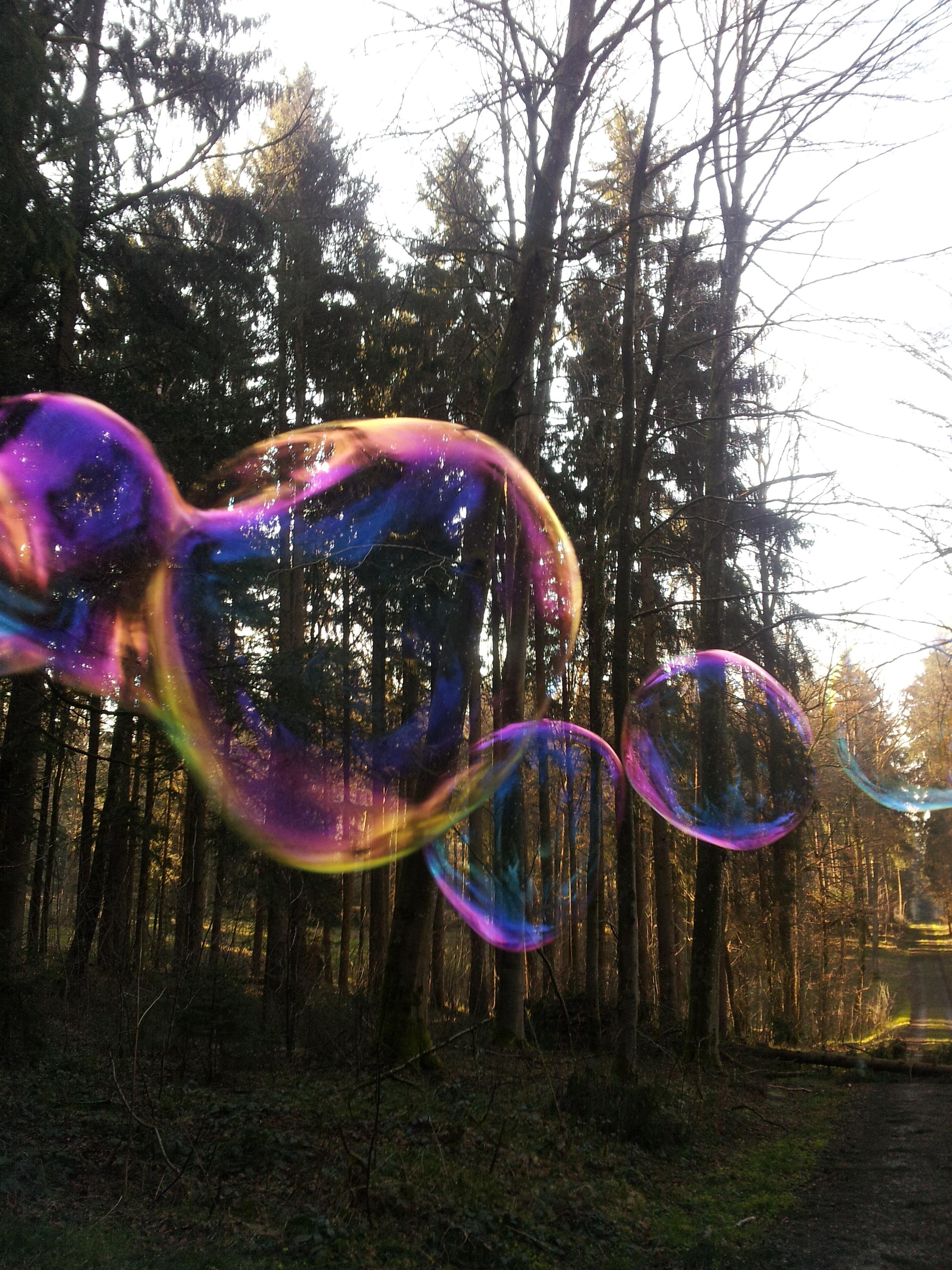
Like a soap bubble
Blown by a playful child,
Shimmering with rainbows,
Floating gracefully
Or awkwardly,
Popping suddenly,
With only the trace
Of memory

20150405_083325

Each moment,
No matter the agony
Or ecstasy,
Is just like this.
With each,
Let it just be.
Trying to hold onto the bubble
Pops it sooner
Trying to pop it,
Leaves soapy hands.

Just be in every moment
Those bubbles come and go
Shining luminously
Then disappearing
Just as in a dream


See also:

Water’s Flux
Tao a Day: Verse 16 – Emptiness
The Practice
The Waking Dream
Suffering and Sweetness

The Patterns that Bind

The following is a piece from a new journalling practice: Morning Pages. I approach these without any real agenda beyond writing three pages every morning. This entry began with questioning what to write and not wanting to stick in going on and on about negative feelings. I didn’t want to share that intro here and the personal details of what I “could” talk about, as the shift at the end is the point.


…Why grab onto negativity like that if not expressing to someone else, getting it out, or resolving? I’ve talked about it at length with others.

No, we all too readily fall into the patterns that bind, defining ourselves–struggle by struggle, habit by habit. We’d rather invest our time and energy in these than step out into uncharted waters or develop more positive habits that open our hearts and our vision–like meditation.

Is uncertainty–facing the fact that our selves hold a blank canvas of possibility–really so terrifying? Would we really rather pin ourselves down in our identity: I’m defined as such and such, and it explains everything about me?

There’s a lot of wonder in us. We’d prefer to dilute it with something safe–something known. The known here, however, is but a mask, a creation, not the discovery from investigation.

One of the beauties of meditation is the opportunity to face ourselves in an open space of self-reflection. Seeing the flowing nature of our thoughts, experiences, feelings, and ourselves, all these things we hold dear as definite. They emerge, shift, shine, and pass moment by moment: a dance of unfolding wonder, no matter how much we might try to staticize them.

I’d like to use this journal for that open exploration, allowing the words to flow through me, offering my mind in its open potential as creative unfolding.

wave-683415_1280


What I’ve written here fits well with the title of this song (at least I think so):

May you find your own creative unfoldings and steps beyond the patterns that bind.
Gassho!

Reiki: The Five Precepts (Gokai – 五 戒) – 2nd Precept: Faith

Just for today:
Don’t hold on to anger
Don’t focus on worry
Honor all those who came before
Work hard on self-improvement
Be kind to all living things
– Reiki Center App, Windows Phone

Now:
Peace
Faith
Gratitude
Actualization
Compassion
– My shortened mantra of the precepts


buddha-76468_1280

At the end of my last post, I spoke of hope and fear as opposites rather than love and fear. This will open the door for the discussion of this precept and my interpretation of it as faith.

The more traditional translations of this precept are “Don’t focus on worry”, or more simply: “Don’t worry.” Worry and fear are closely related–anxiety and terror. Let’s use a couple sentences to see just how close these are in our conceptual/semantic/experiential space:

  1. I’m worried that I may have left the burner on at home.
  2. I’m afraid that I may have left the burner on at home.
  3. I worry that I might never find the love of my life.
  4. I fear that I might never find the love of my life.
  5. I’m worried about the spider across the room.
  6. I’m afraid of the spider across the room.
  7. I worry about my sister.
  8. I fear my sister.

The last few sentences were chosen to show where the similarities in our usage/semantics/experience diverge. #5 is ambiguous: am I afraid that the spider will come to get me, or am I concerned about its well-being (perhaps my roommate will notice it and smash it to bits, and I won’t be able to save it from such a squishy demise)? The last pair take this further to show that “worry about” can have the connotation of “concern” and “fear” does not make sense as a replacement. What do we see here? Being afraid of something is fear of it– an object is seen as a threat as in #6 (and #8???) or there is fear that the threat of an unwanted situation will arise: a “could” or “what if” type of hypothetical extension. In a sense, they are the same thing: an object as a threat is the potential “could” of that object harming us. That spider might come over and bite me! Being worried is similar in terms of the hypothetical extension. We worry about things that could go wrong (or could be going wrong/have gone wrong, depending on the situation). Again, there is an aversion to an unwanted situation. Even worry as concern holds this: we are worried about somebody because we think something bad may happen to them, may currently be happening to them, or may have happened to them. To summarize: this is all about aversion. Worry and fear are about experiencing things that we want to avoid. On a simple level, there is an aversion to being harmed or dying, and such fear can be helpful or good in the right circumstances, but there is a lot of aversion that pulls our monkey minds hither and thither, drawing us to continually react to the world as we think it is.

Now, let us compare hope. Again, let’s take up a few example sentences:

  1. I hope that he’ll show up on time!
  2. She held the hope of seeing her son again until the end of her days.
  3. He hopes that with practice he will improve.
  4. We’re hopeful that she’ll pull through.

I won’t compare these with the much more complicated and nebulous/term/concept/experience “love”, but both have to do with desire (as I mentioned at the end of my last post). Notice how clearly hope stands in contrast to fear/worry: I hope for a desired situation to come to be. Again, in a “could”/”what if” hypothetical extension, I look toward what could be this time with desire instead of aversion. These are things that I want to happen rather than don’t want to happen.

Pointing out these general motivations of desire and aversion is intentional. From the Buddhist analysis (remember here that Usui-sama was a Tendai Buddhist priest), the three roots of suffering (“dukkha“: suffering is the standard translation, but it does not capture the full range of meaning in the original word) are desire, aversion, and ignorance. You could say that desire and aversion spring from ignorance. This ignorance is not ignorance in the sense of being unaware of another’s virtues, equalities, etc. or being unaware of an idea, i.e. uneducated or closed-minded. This ignorance, in contrast, is a basic confusion about existence. It is the groundwork of delusion–the opposite of enlightenment. The push and pull of our desire and aversion, two mundane aspects of our existence that send our monkey mind running back and forth are rooted in an underlying misunderstanding of the way things are. For further description, see Chögyam Trungpa’s The Truth of Suffering and the Path of Liberation

With these considerations of Buddhist analysis in mind, we return to the precept; “Don’t worry” gets us beyond the ego-laden motivations of desire and aversion. “Don’t worry” also implies “Don’t hope”. In hoping for an outcome, there is always the attached possibility that it won’t turn out to be. Worry carries the same hope that the bad thing won’t happen, albeit a small shadow under the impending doom. “Don’t worry” tells us not to reach out with energy about how things could happen, one way or the other. Rather, we should be right here in now: seeing and accepting all just as it is and trusting the process of unfolding.

Thus, I changed the precept into “faith” as a shortened version. Having faith in this sense is not about believing in salvation through a higher power. Rather, faith is a fundamental trust in and acceptance of the world just as it is. Here, faith is an affirmation of the world in its glory and mystery, its agony and ecstasy, its banality and wonder. Faith is both the way of the bodhisattva who seeks enlightenment for all and the stillness of the Sage who cultivates Te in accordance with Tao.

The simple injunction of “Don’t Worry,” calls us to be present to the world and to pursue it as practitioners with acceptance of our place in it, with faith; getting past hope and fear–the ego’s pulls of desire and aversion. Let your desire be to practice well–cultivating true happiness and spiritual health–and to help all sentient beings achieve peace and enlightenment. Let your aversion be the various traps and pitfalls of ego’s constant attempts to turn even the noblest of intentions into self-aggrandizement and the stagnant cocoon of I, me, and mine.

May this inspire your own faith.
Gassho!

Previous Reiki: The Five Precepts Post – 1st Precept: Peace
Next Reiki: The Five Precepts Post – 3rd Precept: Gratitude

Tao a Day – Verse 63: Doing without Doing

Let’s approach this verse in two pieces. We’ll compare the Red Pine and Jonathan Star translations for each piece in that order:

Act without acting
work without working
understand without understanding
great or small[,] many or few
repay each wrong with virtue
– Trans. Red Pine

Act without acting
Give without giving
Taste without tasting

Tao alone becomes all things great and all things small
It is the One in many
It is the many in One

Let Tao become all your actions
then your wants will become your treasure
your injury will become your blessing.
– Trans. Jonathan Star


It’s always interesting to see how different translations of this classic have been approached, and the power of Red Pine’s translation is to get it down to one without artistic interpretation: a simple, bare-bones, as close to the original as possible translation without embellishment. The quote from his translation here boils this down; act without acting in all instances and with everyone, no matter how they treat you. Do this by repaying wrong with virtue. However, what are we to make of the very enigmatic opening lines? Luckily, his book also has chosen commentary from Chinese masters throughout the ages. I found these two bits of commentary quite helpful. Ho-Shang Kung, a Taoist master from around 100 B.C., says: “To act without acting means to do only what is natural. To work without working means to avoid trouble by preparing in advance. To understand without understanding means to understand the meaning of the Tao through meditation.” Sung Ch’ang-Hsing, a seventh patriarch of the Dragon Gate and Taoist master from the 1700s, says: “To act without acting, to work without working, to understand without understanding is to conform with what is natural and not to impose oneself on others. Though others treat sages wrongly, the wrong is theirs and not the sages’. Sages respond with the virtue within their hearts. Utterly empty and detached, they thus influence others to trust in doing nothing.”  These two pieces of commentary make this short section shine. It fits well with my previous discussion of Verse 8 (What I called: “In Accordance with Nature”), and it also fits with a previous post (in terms of doing what is natural and not imposing oneself on others and the world): Control and Letting Go. The doing without doing, wu wei, is acting in appropriate resonance with the nature of things–situations as they present themselves. It is not about imposing your own will on the world and making it conform to you. The Sage does not see such a separation, and the Tao Te Ching speaks in passage after passage about how that which is gained by force does not last very long: it comes to an early death. Hence, the way to live forever (or live longer and at peace) is to develop the virtue, Te, which goes along with the emanations of the 10,000 things (one aspect of Tao). Acting through force and reactive vengeance is not only ego-centered, it does not embrace Tao. It embraces “me”. That’s all. Acting in that very standard sense of pursuing your own motivations to make the world the way you want it to be, to form it in your own image as some creator-God-wannabe, is not virtuous, not wise, and not seeing the universe and its mysterious origins for what they are. We could look to the comments on Verse 26. Jonathan Star’s translation says pretty much the same thing as everything I just explicated but in a more succinct and poetic manner. As he closes, letting Tao become all of your actions is to act without the intention of promoting yourself. Instead, it is to act in accordance with Tao, the ever unfolding beauty of All, and by so doing, you act without acting. It’s not about complete inaction. It’s about acting through Tao rather than through your “self”.


Here is the second passage from the verse:

Plan for the hard while it’s easy
deal with the great while it’s small
the world’s hardest task begins easy
the world’s greatest goal begins small
sages therefore never act great
they thus achieve great goals
who quickly agrees is seldom trusted
who thinks things easy finds them hard
sages therefore think everything hard
and thus find nothing hard
– Trans. Red Pine

Take on difficulties while they are still easy
Do great things while they are still small
Step by step the world’s burden is lifted
Piece by piece the world’s treasure is amassed

So the Sage stays with his daily task
and accomplishes the greatest thing
Beware of those who promise a quick and easy way
for much ease brings many difficulties

Follow your path to the end
Accept difficulty as an opportunity
This is the sure way to end up
with no difficulties at all.
-Trans. Jonathan Star


Let’s take one more piece of commentary to handle these lines. Te-Ch’ing says (again from Red Pine’s book): “When I entered the mountains to cultivate the Way, at first it was very hard. But once I learned how to use my mind, it became very easy. What the world considers hard, the sage considers easy. What the world considers easy, the sage considers hard.” Controlling the mind in Buddhism is mindfulness. This is showing up to each moment just as it is without concept. Taoism’s stories of insight are meant to produce the same result: non-conceptual understanding. We might understand the Sage here as the mindful one of Tao’s unfolding with each moment. A task, no matter how large, is always right now. For instance, the next verse is the one with the famous line “A journey of a thousand miles begins with a single step.” The thing is: it begins with a single step, it continues with a single step, and it ends with a single step. The task is always the small, easy task of just one step. The Sage approaches doing by not looking at the goal which sees the task in its entirety: huge, hard, insurmountable. Rather, he sees it as this small, single step in this moment. Each moment of doing is a step. Again and again. Yet, the Sage sees it just as the step of this moment, not all the steps that lie ahead. The Sage recognizes the greatness of the task, but he is not daunted, as he approaches it in accordance with the task and with flexibility in each and every step, moment by moment: just this. Through such a mindful engagement with the present action that is in accordance with nature, the Sage will surely accomplish the greatest of things.

May this help you achieve the greatest things without acting.
Gassho!

yin-yang-382328_640

Previous Older Entries Next Newer Entries