Cutting Through the Mask

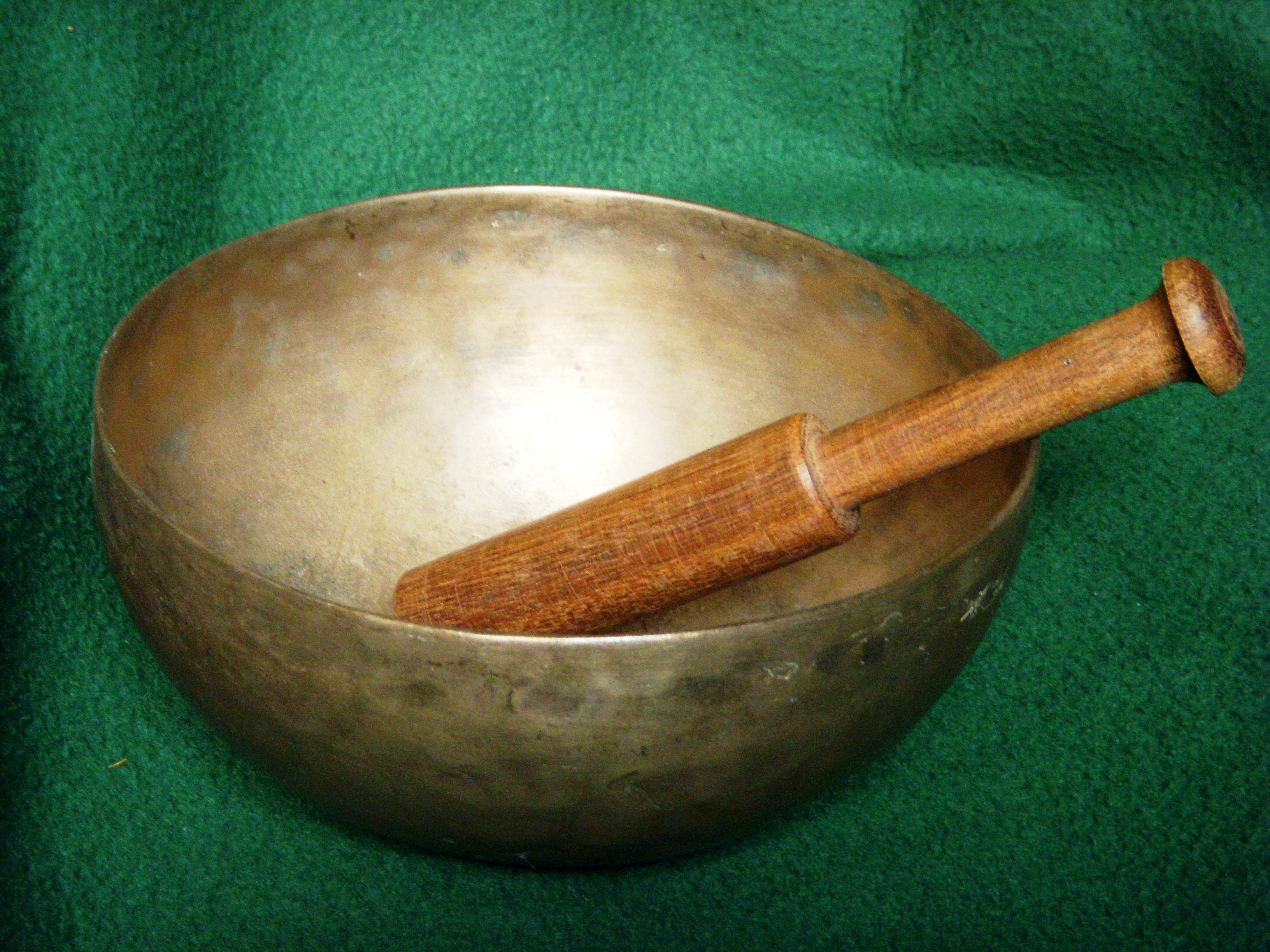
Om mani padme hum…
Repeat again and again…
1000s of times…
Working for the liberation
Of all sentient beings
From Suffering
From Delusion
Goes on and on…

Can you hope to help
If you are still stuck
In your own delusion?
Compassion in action:
Om mani padme hum
Begins with seeing,
How “I” become special
“I” am advanced.
“I” will become enlightened
“I” am nearly a guru!
Such sentiment perpetuates
Delusion, is the core of
Delusion, is the beating,
Black heart of Separation

Suffering begins with
This separation that creates
“Your” mask.
A constructed aegis
To ward off inevitable Death
The black heart of Selfishness
Beats in a network of
Ego’s arterial stories.

Let go of such
Spiritual materialism
Compassion begins:
Cut through your “self”,
Open your heart
Let it beat
The ebb and flow of The Universe,
Tao
, resides in emptiness
Feel that you
And others
Are not two.

file0001460179628


It is a radical method for cutting through the inflation of ego-fixation through the willingness to accept what is undesirable, the disregard of difficult circumstances, the realization that gods and demons are one’s own mind, and the understanding that oneself and others are utterly equal.
-Jamgön Kongtrul, as quoted in “Machik’s Complete Explanation”

When there is no perceived difference
between square and circle,
light and dark in our minds,
we have attained the profound truth of Tao.
Everything in heart should be as one:

Emptiness
Emptiness

-Loy Ching-Yuen, “The Book of the Heart: Embracing the Tao”

Thoughts without a Thinker

The following is another example of the things I write in my Morning Pages. Sometimes, it’s amazing what streams forth when the space and time is offered.


Another morning, three more pages… What to write today?

It’s interesting how many thoughts and feelings flutter in a quiet moment. I suppose the point is that they’re always fluttering by, but usually, we collude; we run along with them, often at breakneck speed. However, if you just sit for a moment and close your eyes, not “thinking”, thoughts will come rushing in of all types. Perhaps, part of the lesson to draw from this is that many (all?) of our thoughts are thoughts without a thinker. The mind whirs along, churning through content, but that doesn’t require an “I” to be there, actively making it happen. You might point and say that these are the products of the Unconscious. However, there are problems with that. Positing the Unconscious is saying that there is an unknown/unknowable puppetmaster behind much of our psychic life. First, the unknown/unknowable problem is one that is never clearly analyzed in the psychology and philosophy I have read. There’s a big difference. If unknown, it’s possible to be known, and we merely have to find the right way to approach it. If so, the mysterious nature, nigh on supernatural, fades precipitously. If unknowable, the Unconscious stands supreme at the same level as the supernatural. It is something that cannot be approached by any epistemological means. You may as well say that God has put these thoughts in your head in this case. It amounts to the same problem–the ineffable. F’ that.

Here’s an alternative–a way out of the fly jar, perhaps. Both of these are taking thought and thinking as having a thinker. It’s almost a grammatical necessity to have an agent at work with these terms. The Unconscious merely becomes agent when the more familiar conscious agent cannot be said to have “thought”, i.e. actively crafted these thoughts. However, what if thoughts arise without an active creator involved? What if they simply pop up and grow from the soil, water, and air, the ecosystem, of the mind? Then, “the unconscious” and thoughts themselves become radically different. Now, the problem is no longer to find the thinker behind the thoughts and unmask him/her/it. Rather, it is to learn to sit with the myriad thoughts in the mind and no longer water the nettles and weeds with collusion, attachment, and reaction.

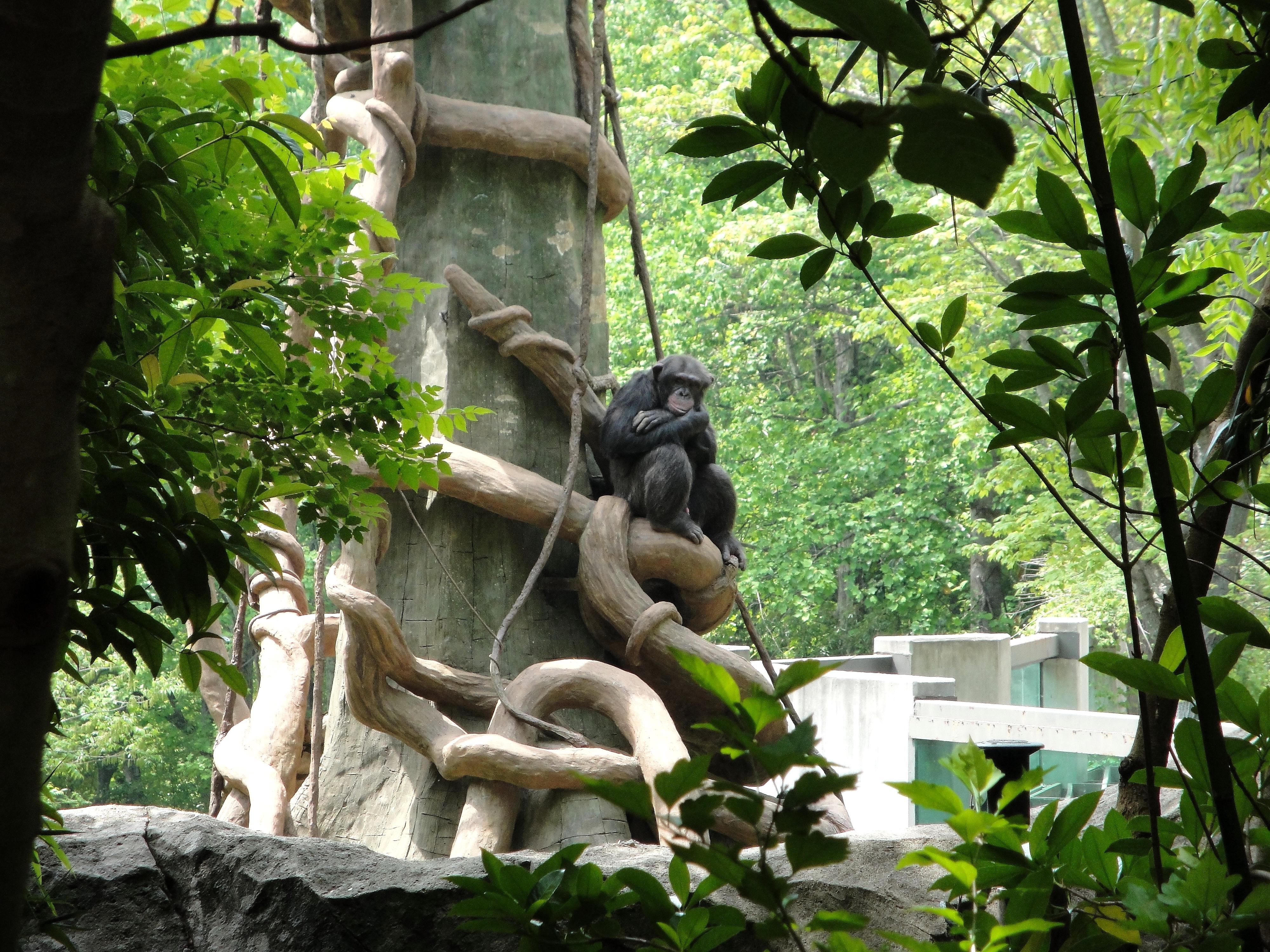
monkey


Somewhere in this process, you will come face-to-face with the shocking realization that you are completely crazy. Your mind is a shrieking, gibbering madhouse on wheels barreling pell-mell down the hill, utterly out of control and hopeless. No problem. You are not crazier than you were yesterday. It has always been this way and you never noticed. –Henepola Gunaratana, as quoted in “Wake up to Your Life” by Ken McLeod

May this help you sit calmly with all of your thoughts–without collusion, attachment, and reaction.

Gassho!

A Moment of Gratitude

My last post left some residual inspiration for gratitude, and I spontaneously wrote this opening to my Morning Pages this morning.


Thank you, journal, for all of these blank pages, and thank you for existing–thanks to all, from the person who made you, to the hundreds of years of history that brought about written language and the practice of journaling, to the millions of years of evolutions that brought about human beings with all of our wonders and curiosities, and to all of the myriad conditions of the universe that made these moments of writing open wide. I’m grateful for all of it, even the very painful moments that I write down at times. This moment is not those moments, but it would not have come to be without them.

May I continue to see all of these aspects of my journal with the diamond eye that really sees things as they are.

Unknown


May this inspire you in your own practice of gratitude.

A bow with hands together: gassho!

Nothing to Do…

If, if, if…
A set of checkboxes
Mark them all, and…
Get happiness?
Even a spiritual path–
A pursuit of spiritual materialism
An accumulation of ego
The doing of an “I”
“My attainment”
A misperception
Of Truth
“I” am not solid–an illusion
The word, a placeholder,
A Transcendental Unity of Apperception
My “Higher Self”?
Not like anything conventionally conceived:
The ebb and flow of everything
Not separate from it-
A divine chaos–unfolding
The beautiful, empty, mysterious Tao
Emerging-abiding sway of all difference
The path: There’s nothing to “do”
Nowhere to “go”
Enlightenment is here: in this moment
Nirvana in samsara
Just live: realize this one step.

file0001052140987


Inspired by a wonderful meditation this morning and all the wise things I regularly read: in this case, I’ve been particularly moved by Dainin Katagiri’s You Have to Say Something. This passage clarifies some of the final lines:

So, how can we practice zazen as an end in itself? All you have to do is take a step. Just one step. Strictly speaking, there is just one thing we have to face, and nothing else. If you believe there is something else besides this one thing, this is not pure practice. Just take one step in this moment with wholeheartedness. Intellectually, we think about the past and the future, but if we take one step, this shore and the other shore are now. Taking one step already includes all other steps. It includes this shore and the other shore. This one step is zazen.

I’ve also been amazed by a recent find of Loy Ching-Yuen’s The Book of the Heart: Embracing Tao. I would put it up alongside the Tao Te Ching and the Dhammapada; it’s a beautiful intertwining of Taoism and Buddhism written by a true master from about a century ago. I plan on writing about several passages in the future. For now, enjoy these selections from the sections On Tao:

3. Life is a dream,
the years pass by like flowing waters.
Glamour and glory are transient as autumn and smoke;
what tragedy–for with the sun set deeply in the west,
still there are those
lost among paths of disillusionment.

Our heart should be clear as ice.
Forget all the worldly nonsense.
Sit calmly, breathe quietly, heart bright and spotless as an empty mirror.
This is the path to the Buddha’s table.

5. What labor we expend sorting out our mundane chores year after year.
But doing them without regret or tears,
without resistance,
that’s the real secret of wu wei
like the mountain stream that flows unceasingly:
Elsewise, all we do goes for nought.

We can hold back neither the coming of the flowers
nor the downward rush of the stream;
sooner or later, everything comes to its fruition.
The rhythms are called by the Great Mother,
the Heavenly Father.
All the rest is but a dream;
We need not disturb our sleeping.

To see his brilliant fusion of Buddhism and Taosim better, compare this quote with my analysis of wu wei here and my analysis of the famous lines about flowers falling in Dōgen’s Genjōkōan here.
Finally, my words here make subtle references to Chögyam Trungpa, Immanuel Kant, Martin Heidegger, and Gilles Deleuze, and this meditation and wordplay would never have come to be if I hadn’t recently read the Dalai Lama’s How to See Yourself as You Really Are, all of which (these myriad sources!) I highly recommend to anyone willing to begin a spiritual path with heart.


May this inspire your own investigations and journeys along the path, fellow wanderers. May you find ideas to play with and solace in the beautiful words of all these masters who have brought these insights into my life.

Gassho!

Open, Bare Gratitude

Gratitude for all–whatever arises. It’s beautiful yet nearly impossible to cultivate. It takes a radical acceptance, an embrace of the world as it is. We’re far more likely to get caught up in our minds–in our interpretations, in how we think things should be.

Near the end of my shift yesterday, I went for a walk during a break. The afternoon sunshine shone brilliantly as I did laps around the building. Cars whizzed past excitedly as people left to return home for the day. I went around one corner of the building and nearly gasped aloud as I looked up at the sky. The clouds were so crisp, their edges so intricate and nuanced with definition and color. I continued my walk in an ongoing meditation–open to each moment without grasping onto it. The birds chirping as they fly overhead… The bee buzzing by me to gather pollen… The wispy, white cotton from the trees in bloom floating on the wind… The people at the bus stop chatting as they wait for the bus… My feet thudding softly on the asphalt, feeling every shift of bone and muscle in the dynamic change that is a step forward…

cropped-zeus-bolt_20140802_20_13_53_pro.jpg

Being open and aware like this, even for a few minutes, is no small feat. Indeed, the discursive mind waits at the fringes, looking for a moment to jump in and comment–grasping at further analysis, and I have a particularly long-winded discursive mind! However, we mistake this analyzer for the depths of thought, for the mind itself, yet underneath its myriad words, there is the open, bare gratitude of being present. Before the reactions of dis/liking, commenting, and analyzing, there is just letting be. This ground is always open, waiting for us to slow down and embrace it with gratitude and wonder.


May this post help you find that open, bare gratitude.

Gassho!

Stopping to Look – The Invitation of Every Moment

[After journaling at length about a frustrating morning.]

I stopped just now and focused on my coffee cup. The swirls of oil film across the surface, moving slowly, dreamily. The steam wafts off the top, lazily unfurling into swirling waves, loops, and whorls. I touch the handle, looking at my single finger lining up with the edges of the curve. I focus on the sense of touch–the smoothness of the glaze, the comfort of the solid pottery bearing the weight of my finger. I feel my touch extend to the table bearing the weight of the cup, the table’s rest on the floor, and the floor extending to the entire room of people around me and the whole world outside the window just beyond them.

_IMG_0075_

It’s so easy to get involved in our own pain to the point of overlooking the entire universe outside our heads, but it’s all there–just a breath away. All it takes is only a second to stop and look. The best part? Every moment is an invitation to do just that.

Ayn Randian Dreams (Nightmares?) — A Philosophical Mosaic

I saw a clip–
A grey, hazy time capsule,
Chronicling our past
Yet so present…
Still a specter
Which dominates our minds

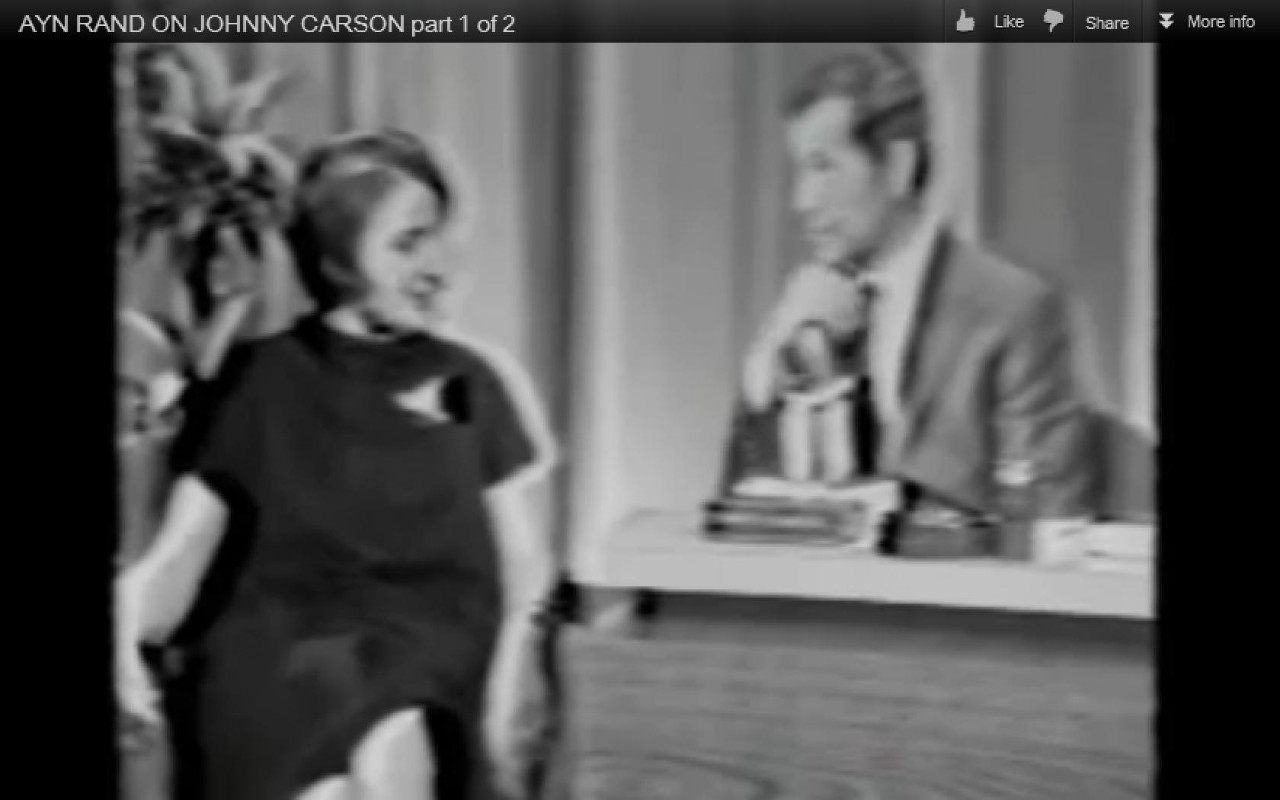
Ayn Rand on Johnny Carson???
She expounds,
In a gratingly brittle voice:
The virtue of greed
The reason in selfishness
Only a system
In which
Every man pursues
His own “Reason”
Is one
In which
Humanity can be
Actualized
Capitalism is this system?
Surely a jest!
Each man is not free
Nor guided by his reason
In our system
Of markets
Of money
Of subjugation
–All for profit…

cq5dam.web.1280.1280

She says at the outset:

Man’s proper ethics, or morality, is a morality of rational self-interest. Which means that every man has a right to exist for his own sake, and he must not sacrifice himself to others or sacrifice others to himself (brief pause) that the achievement of his own rational happiness is the highest moral purpose of his life. As a consequence of that, the only system, the only political system, that expresses this morality is the system of laissez-faire capitalism, by which I mean full, unregulated, uncontrolled capitalism, a system based on the recognition of rights, including property rights…

Yet capitalism seeks
To subvert fellow men
Sacrificing others to one’s reason
Readily
Often
Systemically
In the name of Profit,
The almighty God
–The only self-interest
Which receives worship,
The singular idol
Sitting atop
The altar of industry
Do you not believe me?
The annals of history
Surely show
Such systemic sacrifice of others
Upon the altar of Profit

The “Reason” of true Philosophers
Would not aim at this
As Wisdom, the Good, or Love
Those are the true aims
Of “Reason”;
Not this solipsistically myopic,
Self-serving materialism
Should we see this
As worthy successor
To profound analyses of eudaemonia?
I laugh
What other response is fitting?
As Nietzsche once said:
“Not with anger, rather with laughter does one kill.” *

What of the “Reason” of the Stoics?
Would they not scoff as well?
Laughing at how poorly,
How childishly,
You, lady with delusions of grandeur,
Have misunderstood
The entire Universe
And our place in it
Those who vouch
For other such
Individualistic notions
Of Truth and Wisdom
Are equally lost.
No authentic seekers of Truth…
Merely idealistic demagogues
Preaching greed from soapboxes,
Rather than providing wisdom
Or anything of substance.
They are lost
Yet declare it insight
Seeing shadows on the wall
As deep, whole, and true
Rather than with the wise sight
That has seen the sun
The sight that sees them
As empty figures


The immature are their own enemies, doing selfish deeds which will bring them sorrow. That deed is selfish which brings remorse and suffering in its wake. But good is that deed which brings no remorse, only happiness in its wake.

Sweet are selfish deeds to the immature until they see the results; when they see the results, they suffer. Even if they fast month after month, eating with only the tip of a blade of grass, they are not worth a sixteenth part of one who truly understands dharma.

As fresh milk needs time to curdle, a selfish deed takes time to bring sorrow in its wake. Like fire smoldering under the ashes, slowly does it burn the immature.

Even if they pick up a little knowledge, the immature misuse it and break their heads instead of benefitting from it.

The immature go after false prestige – precedence of fellow monks, power in the monasteries, and praise from all. “Listen, monks and householders, I can do this; I can do that. I am right and you are wrong.” Thus their pride and passion increase.

Choose the path that leads to nirvana; avoid the road to profit and pleasure. Remember this always, O disciples of the Buddha, and strive always for wisdom.  — The Dhammapada; Chapter 5, Lines 66-75


A human being is a part of the whole called by us “the universe,” a part limited in time and space. He experiences himself, his thoughts and feelings, as something separate from the rest–a kind of optical delusion of consciousness. This delusion is a kind of prison for us, restricting us to our personal desires and affection for a few person nearest to us. Our task must be to free ourselves from this prison by widening the circle of understanding and compassion to embrace all living creatures and the whole of nature in its beauty.  — Albert Einstein, found in The Places that Scare You by Pema Chödrön

May this bring you to think differently about yourself and your place in society and the universe. May it bring you to desire authentic wisdom and reason. May it inspire you to the love of wisdom (philosophy) and lead you down the path of many questions and insights.
Gassho!

*”Nicht durch Zorn sondern durch Lachen tödtet man.” — Nietzsche, Also sprach Zarathustra; Vom Lesen und Schreiben

Snippets of Wisdom from an Old Journal

I recently moved, and when I did, I came across some things that had been buried in boxes and corners. I found an old journal in which I wrote about the beginnings of my spiritual path, roughly a year and a half ago. I’ve strayed a bit and returned since then, but I was impressed to have found these thoughts and feelings at the end (because they are close to where I am now in many ways although I subsequently lost many of them) and thought I would share them here. I also shared another piece from this journal in a previous post: Control and Letting Go.


Reading through my words from the past…

8/15/2013

In any case, I am finding it very difficult to remain compassionate in the interpersonal drama of daily life. I see everyone casting about their plans, goals, and emotional hooks. In so doing, they use others as objects, as though we are all some great game of emotional physics–balls of emotional matter bouncing off one another and taking on each others’ energy. Is it any surprise that everyone else acts in turn when this is the inherently agreed upon name of the game? Some might say this is human nature or the human condition; I would say that the second is possible but only because we all make it so. I know that by the end of the retreat, I was able to step away from this game for the most part with a different perspective, and I understand why monks remove themselves from the attachment of the world now.

8/16/2013
Yesterday, I distinctly had a moment when I felt that the activities and lives of people are like so many ants, scurrying around the face of the planet, myopically thinking that their aspirations are more profound as their self-centered goals damage their very home. Of course, who am I to think I am removed from this, but I don’t think I am; I just think I am able to see it. We each think our own life is special and unique, thinking ourselves separate, and in one way, we are; however, in a larger way, all of the manifestations of separate difference are part of a greater universal whole that holds all difference in its chaotic depths, and we are merely its unfolding sway. This is where my Buddhist experiences from the retreat encounter Deleuzean difference, and I think they work together beautifully. It seems to me that Deleuze offers a metaphysical theory that resonates with the changing nothingness of Buddhist thought.
Another issue I face again and again now is the problem of balance and integration. How do I take my experiences and insights up as an ongoing practice in my life? I think that I’m doing OK with this despite my moments of being drawn into my own drama. Also, how does one balance the truths of separate individual life with that of the greater picture? This is the question I’m left with after Dōgen and after my new-found insight. I don’t know, but I find myself thinking often of ethics and self-growth over and across from trying to be a bodhisattva. This will take much more reading and meditation.

8/22/2013

I ultimately had to take a short walk to the park. Once there, I sat and meditated for a few minutes. I heard the cries of joy from nearby children and felt their lives wash over me as they experienced excitement, pain, happiness, and frustration. I heard cars go by on 33rd Ave. I saw the green of the grass and the blue of the sky as wind blew across my face. I saw people walk by, absorbed in their daily lives. I felt the universe unfolding in all the particularity of that moment, felt it unfolding again into the next and then again in the next–each just as miraculous as the last.
At the same time, I opened my heart chakra and felt that I was part of it all without separation. I was the children, the grass, the cars, the wind, and the universe. Of course, “I” is somewhat inaccurate here, and I’ll return to my placeholder about judgment from earlier. We constantly go through life labeling everything as “good” or “bad”. This is how our minds work–an apparatus for making decisions which is a separation of things into different categories. The unison of things is split apart into qualitatively different entities by the mind. This is not false. It is one aspect of existing as an embodied individual, but it is also not absolutely true as it is also true that everything is one and that the differences of separation are merely an illusion. As such, it is narrow-minded, or rather, missing the greater picture in pursuing “good” moments as special, uplifting moments of existence. Good and bad are just our own cognitive labels. Every moment is just as miraculous as every other.
In any case, my meditation allowed me to return to such a compassionate perspective, and I was able to go through the rest of the day and night with more grace and acceptance.


For more discussion of “good”/”bad” and our labeling of things, see: Love, Rebounds, and Relationships: Part 3 — Love and Metaphysics.

A Point of Perspective – Our Place in the Universe

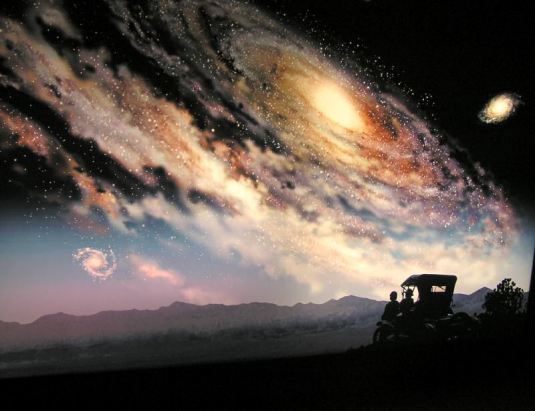
This world has over 7 billion people
Living among untold myriad lifeforms
On a planet circling a star,
Pulsing heat alongside the galaxy’s millions more.
And this enormous galaxy, mother of countless stars:
One small clump among a cosmic ocean of them.
All in a universe that is billions of years old.

Yet, you worry about the meaning in your life,
In your day,
In this instant.

Banalities of consumption
And a navel-gazing rendition of “me”
Those certainly must be
Of universal concern.

file0001718004766


When I was young, I used to entertain myself this way before falling asleep. In my mind’s eye I would see myself lying in bed. I would zoom back like a camera to include my house in my neighborhood in Boulder, in Colorado, in the United States of America, on the continent of North America. Then I would look at the planet like a globe, including India, where I was born; Tibet, where my father and mother were born; and Scotland, where I learned to speak English. Then I would picture Earth as a beautiful blue sphere floating in blackness. I would make the picture bigger, including other planets in our solar system with the sun in the center. The most amazing thing was to see earth disappearing into the darkness as a speck. Then I would imagine the outer planets of the solar system. The sun would disappear as I imagined all the stars in our galaxy, which seemed endless. I would dissolve our galaxy into one star, one light, and make that light very tiny, surrounded by other lights in the darkness, which weren’t stars, but galaxies. Then I would think about how small I was, and how strange and wonderful it is to have been born.

Everybody we know was born. Everyone we see was once a baby. First they weren’t here, and then they were. We don’t often contemplate birth–we’re too busy worrying about money, food, the way we look, the way other people look, what other people are thinking about the way we look. But birth is a profound passage. Seeing a chick peeking its way out of an egg is moving and powerful. Even though in being born we suffer, birth can happen in such love, such openness. And like death, birth shows us the fragility of life.

We’re just these tiny vulnerable beings riding on a blue dot in space. Yet sometimes we act as if we’re the center of the universe. The enlightened alternative is to appreciate how incredibly rare and precious human life is. The enlightened alternative is to appreciate everything. By appreciating whatever we encounter, we can use it to further our journey of warriorship. We are good as we are, and it is good as it is. Once we have this understanding, we’ll see that we are living in a sacred world.

— Sakyong Mipham, Turning the Mind into an Ally, pp. 140-143

Murderous Zeal – Letting Go

Disclaimer: This post is much more personally revealing than most posts I write. This will not be quite as didactic, rather processing with the intent of expressing what I need to express but cannot share with the person with whom I wish to express it. Some of you may know me enough to know who that is, and to those, I say that this is not meant to judge or cast aspersions to that person’s character, a person I love with all my heart. Instead, this is trying to put into words what I have experienced, the pure, raw pain of it, and the folly I see in what has happened. Disagreeing with another’s choices and trying to accurately describe them as they are, to call a spade a spade, so to speak, does not mean that you belittle them or that you necessarily even think poorly of them (judgment can mean both identification as well as moral judgment; judgment here is meant as the first of these two). Believe me, that’s part of the depth of my pain expressed here. So, those of you who know, either don’t read this, and let my expression be, or see what I have to say about what I’ve felt and how I’m moving forward. Expressing this here is therapeutic for me. This is not meant to cause any stir; that person will likely never see it, and I wouldn’t publish it here if I thought that that person would. So either let this be, or read it to share my expression without any more motive than that.


You took the ideology of relationships from a friend, a maxim we would have previously scoffed at, and you embraced it as creed and animating principle. “If we were together again, it would have to be completely different.” Thus armed, like one of the furies, you killed “us” with a murderous zeal that I’ve never previously seen — lashing out in fear and pain, you held dear the despairing mantra: “This must die.” Yet, must it have? You never stopped. You never questioned. You held on with certainty, out of pain, unwilling to see how things could already be different. You instead repeated fatalistic stories of how they could never change without this melodramatic action.

Stumbling forward, revising what you said from one conversation to the next, galvanizing your certainty as having been one clear idea that you held all along — not merely a reactive lash of pain which grew into a clearer purpose with time — you stand, superior, self-righteous, cold, and cruel. I’m cast as naive, weak, and pathetic, so worthy of the death you dole out. Yet, our conversations reveal that your position has not been clear throughout beyond the reaction of pain, and your words come again to stubborn, self-righteous contradictions, and after knowing you for years, it all shines as an inauthentic escape from that which you can’t face. The hardest has ultimately been the empty promise of friendship, the last thing to die after love and family: the third and final death. I’m no more than an acquaintance now. Best of luck with your coping with this pain, with your soothing escape from it. May your pain and resentment have been quenched. I fear deeply that you will feel them again in your next deeply intimate connection, as I am not the source of your emotional reactivity. My greatest hope is merely that you can be real about this at some point, for your own growth.

I’ve been working on letting go of my pain in regards to this for some time. It’s been hard. It’s been painful (ironically, letting go of pain is painful). I’ve lost more than I can put into words, and that clings to me like an old skin that I can’t slough off — so close to a fresh rebirth if I could only peel off an essential layer of who I have been. Strangely, a few sentences in a popular psychology magazine have helped me find acceptance in ways that so many wise words from friends have been unable to do (more due to my own difficulties than any ineffectiveness of theirs; sometimes, only the right words stick — one key opens a door): “To let go of a past injustice that preoccupies us, we must relinquish our natural burning hope for equity. or at least for exposing to the world the wrongdoer — your brother, your crooked business partner, your vicious former friend — for who and what he is. Dimming that eternal flame of rage is effortful. The bad guy won. It happens.” (Psychology Today, Jan. 5th 2015, p. 56)  Indeed, it does happen, and so many of the things we need to let go of are not done by “bad guys” at all, my case included. We are people. We make selfish, myopic, or childish choices sometimes. That’s how it goes, and perhaps, the first step to letting go in cases like mine is accepting that — accepting that someone you love deeply can throw you aside, can lose sight of you, but it’s not really about you. They’ve done something “bad”, but it’s not something you should take personally, no matter how deeply that cut may go into your heart. The Stoics would remind us that there are things that are up to us, and there are things that aren’t. Only the first deserve our concern, and the only part of this situation that is up to us is our reaction to it, so let’s not make the other person’s decision — that part of existence that is up to him or her — about us. It isn’t. It’s about them. Let it be, and wish them well from a place of strength and dignity, as hard as that might be, because it still hurts…

In line with what I just said, I’ve also been inspired by a book by Chögyam Trungpa entitled “Shambhala: The Sacred Path of the Warrior”. In one passage, he states:

As human beings, we are basically awake and we can understand reality. We are not enslaved by our lives; we are free. Being free, in this case, means simply that we have a body and a mind, and we can uplift ourselves in order to work with reality in a dignified and humorous way. If we begin to perk up, we will find that the whole universe — including the seasons, the snowfall, the ice,and the mud — is also powerfully working with us. Life is a humorous situation, but it is not mocking us. We find that, after all, we can handle our world; we can handle our universe properly and fully in an uplifted fashion. The discovery of basic goodness is not a religious experience, particularly. Rather, it is the realization that we can directly experience and work with reality, the real world that we are in. Experiencing the basic goodness of our lives makes us feel that we are intelligent and decent people and that the world is not a threat. When we feel that our lives are genuine and good, we do not have to deceive ourselves or other people. We can see our shortcomings without feeling guilty or inadequate, and at the same time, we can see our potential for extending goodness to others. We can tell the truth straightforwardly and be absolutely open, but steadfast at the same time. The essence of warriorship, or the essence of human bravery, is refusing to give up on anyone or anything. (pp. 16-17)

Here, warriorship is not meant in terms of violence and war, rather courageous action in life’s difficulties with wisdom and dignity. In letting go, I think there’s nothing greater to aspire to than the courageous realization of our freedom to be upright and dignified, to walk forward with intention of loving-kindness for the world, when every signal and resonant vibration of pain tells us to stop, turn back, give up, and be jaded. This simple way of seeing the world for the beauty that it is may just be the hardest thing to do, especially in times of severe pain, but this is precisely the choice that is up to us, and it is more important in these times than in any other. Has my pain fully subsided? Of course not. However, I can choose to see it, to embrace my situation with courage and dignity. Most importantly, I can choose to love myself in all of this. What better thing to share than that, and how better to share it than being a sacred warrior?

I hope that someone out there reads through this long post and finds some point of inspiration for his or her own journeys. If you make it to these words, know that you are not alone, dear friend.

Gassho.

Previous Older Entries Next Newer Entries