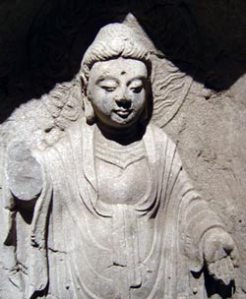
Heartbreak Wisdom Journal — Entry 6: Forgiveness

Going through heartbreak is one of the trials of a lifetime–of the soul. Everything that was once familiar and taken for granted is now gone, destroyed, lost–but not forgotten. If only it could be forgotten! You won’t be at your best. It’s as simple as that.

In my last entry, I had a quote that said your heart has to be big enough to hold a horse race inside. How do you do this when everything feels wrong and you feel weak? Even if you can muster up the presence to show up and do your best for others and yourself, you will fail–miserably and often. Sometimes your big and beautiful intentions will come to naught. You won’t get any farther than tripping over your own feet. Such moments feel like there is no point, like all you can do is give up.

What do you do? — You forgive yourself. You have two choices: you can either feel guilty and hate yourself as well as everything you’ve lost, or you can forgive yourself for struggling, for wanting to be happy, for being vulnerable, and for having a heart. If you truly want to share deep compassion with the world, you have to begin with yourself. That’s how your heart grows to hold even the hardest emotions with tender equanimity–growing to the size of holding a horse race. This doesn’t mean that you aren’t going to push yourself to learn and to get beyond your own mistakes; instead, it’s giving yourself the gift of patience to do just that.

May this plant a seed of compassion in anyone out there who suffers from the pain of a broken heart.
Gassho!


chinese-676650_1280

Previous Heartbreak Wisdom Journal Entry– Entry 5: Depression – Experience & Practice

Next Heartbreak Wisdom Journal Entry– Entry 7: Letting go of the Person You Used to Be (Part1)

Fate???

What if fate isn’t a gloomy set of chains pulling us along through history or the ecstasy of positive fruition–destiny?
What if, rather, our choices are always our own yet also are not–nestled as they are in the environment of an entire world: a life, a society, a history, others, and a universe unfolding alongside these choices? (Aside: Can a painting exist without the boundaries and texture of the canvas, the materials (oil vs. acrylic, for instance) and colors of the paint, and the cultural history informing the creative process? Likewise, our choices hold infinite potential, but they spring forth from certain sets of certainties.)  What if these dynamically intertwined choices have their own consequences entangled, sometimes in years to come?

Our lives are not written. We write them. However, as we write, our story takes shape, and certain words, plot twists, and styles of expression become more and more likely to follow. We create words, a story, a voice in the universe which shines and reverberates forth as an unfolding path of neverending light–ever-changing, dynamic, but with direction. Rather than the gloomy story already decided, the tangled yarn of fate as usually understood, fate is both defined and indefinite, deciding and decided, bound and boundless, free choices made within discreet limits and an open future limited by the karmic consequences of choice. It is the paradox of luminous emptiness and karmic interdependence.

May this post get you to see your own luminous possibility and the interdependent limitations and impacts of your own choices.
Gassho!


I was inspired in part by these songs. The title of the first really brought up this different idea of fate:

Also:    Wake Up by Anesthesia

Neverending tracks of light…

The Practice

We go through
Day by day
Expecting…
More of the same
Routines, comfort
–Both good and bad,
“The same” returns

Yet, Life is full
Of happenings
–Unforeseen,
Unwanted
Chaotic
In a word:
Change

In a moment,
All can turn
That is the Truth
Such is All
The Universe:
Impermanent
Flowing–in flux

buddha-statue-378137_1280

All changes. Practice embraces this.

The Practice:
To accept this
As Truth and Path
Without attachment
To the way things were
Or the way things could be
Find comfort in the
Emptiness
And show up
With Compassion
For it All
Impartial:
Bearer of
Awakened Heart
Fearless and open

50

With the re-blogging of the last post on a summary of Buddha’s teachings, I hit 50 posts for the blog. I started this blog just under 6 months ago with the hopes of helping others engage differently with their lives, their thoughts, and their world. I nearly gave up on posting a couple months ago, and what I had initially envisioned for the blog has evolved with time (I initially thought it would be primarily philosophical discussions or my philosophy-prose poetry, but it has become much more about Buddhism, Taoism, and finding a truly engaged spiritual path in the midst of heartbreak and all the other difficulties of life). It’s been quite a journey! I thank you all for traveling the path with me. Knowing that there are others out there who are touched by these writings has been my greatest support and inspiration at times in the last months. I’m grateful for your comments and likes, as well as all the posts on your own blogs that I have the joy of visiting. Please continue reading and writing. I’ll be here.

Best,
Z

Foundations of Buddhism—some notes

This is a great, succinct summary.

Buddhism Now's avatarBuddhism now

Stone Buddha Photo © David BlancoThe Buddha

Siddhartha Gautama, the Buddha, lived approximately 563-483 bce in the north of India (today Nepal).

The Gotamas were a branch of the Sakya clan. His mother, Maya, gave birth to him in Lumbini Grove. She died seven days later and his aunt, Prajapati, took over as foster mother. The family were of the warrior (khattiya) caste.

As a young man, a prince, he began to contemplate sickness, old age, and death. Are we born just to get old, to get sick, and to die? Isn’t there more to life than this? He decided to leave his comfortable surroundings and to search for the truth of existence. Turning his back on everything, he cut off his hair, exchanged his fine clothes for rags, and set out on a spiritual journey. With great determination he began his new way of life.

For six years he sat at the feet of respected…

View original post 1,700 more words

Flowers Fall

“Therefore, flowers fall even though we love them. Weeds grow even though we dislike them.” – Dōgen Zenji (trans. Okumura)

1866-Pink-Flowers-Fallen-(www.WallpaperMotion.com)

Out of the many pains that we experience in life, the most stinging and most common are losing what we want and getting what we don’t want. This happens on levels both great and small everyday. Beloved flowers fall–beautiful moments end, friends move away, the sun sets, and you eat that last bite of ice cream. Despised weeds grow–you get sick, bills come, cold, grey weather sets in, and you realize the only ice cream the store has is that other, gross flavor.

So, what do we do? The point is not to give up desire completely. Desire is also what drives us to seek enlightenment, to strive to help others, and to get out of bed each day. However, we would do well to let go of attachment to having everything go the way we want: let go of the gratification of those grasping desires. Ask yourself: is that really happiness? To collect a life of fulfilled desires and avoided aversions? Can you find peace and joy with the world as it is and try to help others find that peace and joy as well? Can you pursue that instead of pushing your own agenda first and foremost in the pursuit of happiness even if others burn in your wake? Perhaps happiness is not something you can “get” at all, and such grasping to get all external circumstances just right is a fundamentally deluded idea of what it is to be happy. Pause. Meditate. Connect. Love. Try these things, and you may find within yourself the seed of a true happiness beginning to grow alongside those weeds and fallen flowers.

May this help you find equanimity, non-attachment, and skillful action in the pains of desire.
Gassho

See also: Tao a Day — Verse 26, Inner Virtues for a Taoist take on how to cultivate such internal stability, peace, and joy.

Suffering & Sweetness

Life–
Full of suffering:
A lingering dissatisfaction
And an ongoing attempt
To stack the cards,
To win the game,
To get “my way
Yet
You’ll never get it.
The last perfect scoop of sand
–A beautiful sandcastle
My perfect creation!!!
10 seconds later
The wave washes it away
–A heap of sand


The Buddha taught for over 4 decades. He traveled all around India, spreading the Dharma. He went on foot, had few possessions, and was homeless. Despite years of teaching, traveling, poverty, and old age, he said late in his life that there was great sweetness in the world and he could understand wanting to live for another century. Where do you find such sweetness and warm affirmation? In your things? In your perfectly collected set of entertainment and schemed circumstances–the perfect friends, job, life??? Is it external? Do you have it at all?


One who knows others is intelligent
One who knows himself is enlightened

One who conquers others is strong
One who conquers himself is all-powerful

One who approaches life with force
     surely gets something
One who remains content where he is
     surely gets everything

One who gives himself to his position
     surely lives long
One who gives himself to Tao
     surely lives forever
— Tao Te Ching verse 33, trans. Jonathan Star

Flashes of insight

After having begun a regular practice of meditation, sometimes I have fleeting moments of insight. They aren’t during meditation rather during the day. Suddenly, briefly, I see and understand reality as it is on an experiential rather than a conceptual level.

For instance, I’ve been reading about dream yoga from the Tibetan Buddhist tradition. An important part of the practice is to regularly tell yourself that “All this is just a dream”. This is done for your waking life, not your dreaming one (ultimately, this aims at being able to lucidly recognize dreams as dreams while in them, by cultivating insight during waking life). The point is to recognize the fluctuating impermanence of existence. There is no underlying essence that endures–all changes and is ephemeral, like in a dream. This is easy enough to explain and understand conceptually. It is basically the same as the Buddhist concept of emptiness or shunyata, but this dream yoga manner of touching the concept presents it through a familiar, intimate life experience.

However, this is still conceptual. The practice is meant to be experienced, rather than just thought. Well and good, but it is harder to experience “This is all just a dream” about your waking life than you might think.

Recently, I was struggling with some turbulent emotions. I went to the bathroom mirror, looked myself in the eye and brought a meditative focus to all I was feeling. Then, I said “This is all just a dream”. Instead of understanding this, I felt it. All of the roiling emotions appeared as so many dreamlike images with no underlying substance, glowing and dissolving. The sense of realization was charged and powerful: it was felt, not thought. The experience was deeper than I can express in words. Such moments of lived flashes of insight are opened, I believe, from regular meditation, and I encourage all you readers out there to take up meditation for yourselves.

May this inspire you to seek wisdom and insight through meditation.
Gassho


Study the Self! By Maezumi Roshi

Beautiful! I’ve wanted to post on this particular Dogen zenji quote. At some point, I will, but for the meantime, I will share this beautiful and succinct piece.

Buddhism Now's avatarBuddhism now

Sekizanzen-in's (赤山禅院) Juroku-rakan (十六羅漢 the '16 Arhats')In the Soto school we also appreciate gradual practice and sudden realization. But Soto Zen emphasizes that, because this life is all together one thing, is the Buddha Way itself, you should not expect kensho. As soon as you chase after something, right there you cre­ate separation, so how can you have realization? Many people misunderstand, saying that the Soto school is not concerned with the enlightenment experi­ence — that’s nonsense. Awak­ening is the very core of the Buddha’s teaching, but if we are thinking about awakening we are separating ourselves from it.

View original post 276 more words

Heartbreak Wisdom Journal — Entry 5: Depression – Experience & Practice

My last entry was meant to focus on and express my experiences of depression in heartbreak, a particularly vexing set of painful emotions that keeps coming to visit, even after all this time. However, instead, I got into a philosophical examination of how depression alters our experience. This time, I’m going to focus on my experience and offer some tips/support for those readers out there who suffer from the same problems of the heart.

The world is barren. Nearly every day, I feel utterly lonely. It seems like there is no one who can hear me, no matter how hard I try to be heard. There’s no one who really cares–not really. People might show up on their own terms, but can any of them truly bear witness to me in my entirety? No. At least, I don’t know who that person is. Some days, I wonder who would care if I died tomorrow. My family, surely, but anyone else? Let’s stop here. Let me emphasize that these are feelings. Like I wrote about last time, I know that they are a particular alteration of perspective–a very pained one, curled up in a ball and wishing that the pain would end. Let’s not take these feelings to be truths, and let’s definitely not take them as blame on anyone who may be reading this. They’re my feelings, my reactions, and you hold no blame or responsibility for them. That being said, it has been particularly hard for me to move forward in recent weeks. I’m stuck at a job that irks me with false promises, poor pay for my responsibilities, and NO benefits–not even sick days, forcing me to expose my co-workers to illness out of my inability to afford missing a day. Furthermore, I struggle to find meaningful connectivity–something I’ve lacked throughout most of my adult life, despite my best efforts. Honestly, at this point, I’ve virtually given up. Who else reads philosophy for fun and yearns to learn as much as possible in this life? Who else is working hard at being an intensive practitioner of the Dharma? I don’t know such people, and they’re hard to find…

I’ve had an idea in my head for some time of returning to my ex’s city to live with some friends who stepped forward in my heartbreak and appeared as family to me. I’d love to show up and support them. However, each job I apply for comes to naught, and the other people I know there seem to be slowly denying or forgetting my existence. If I reach out and write something kind on one of their blogs or social media profiles, I get no response, but at the same time, I can see when they mention my ex and how great she is in whatever way. I guess she succeeded: in a certain way, I’m dead.

All of these difficulties have exacerbated those intense feelings I’ve expressed, and now, I’ve expressed them, both to let these feelings out and to let others know that they are not alone, not in the slightest. However, despite these feelings, I’m OK, and to explain that, let’s shift to how to deal with such feelings and such times in life. We all go through hard times, so let’s face these together with bravery, tenderness, and equanimity. The following are what I use to get through these feelings that could easily turn me into a blubbering mess; through these methods, I manage to have some grace, dignity, and joy in the wounds of heartbreak.

  1. Take care of yourself. You can’t continue with your life and show up for it if you fall into the abyss now (although there is no judgment if you crash at this point–no shame. Hang in there and recover). Taking care of yourself can make the unbearable a lot more manageable–not nice, not easy, but survivable. Not taking care of yourself will let it crush you. Also, taking care of yourself will give you the base of strength you need to excel with the other tips to follow. So–shower, exercise, continue to do things you like, reach out to friends and family to talk–don’t be afraid: others understand your pain and heartbreak, and the best way to feel loved is to reach out and find that others care, even if they can’t necessarily help beyond just listening. Personally, I had many of these self-care tools well-established this time from other bouts with depression, but this time, I learned that dressing well–that simple move of treating yourself with respect, with dignity–helped keep me positive and empowered day to day. This is not about being ostentatious or dazzling others–it’s about finding and holding your dignity. If you can find a way to do the same, do it. You could be wearing anything–your favorite band shirts and shorts. Just wear something that makes you feel that you matter and that you are embracing that.
  2. Be authentic. I’m not a big fan of the term as it is thrown around to the point of near meaninglessness. Here, I mean: show up for what’s happening. It’s easy to run away from such feelings or fall really deeply into them. Instead, try authentically showing up. These feelings show the depths of your heart. Let these feelings come up. Don’t fight against yourself or your emotion. Instead–gently be present. You’ll find that these feelings come and go, if you don’t grasp at them or fight against them. They’re just another part of your myriad possibilities of human experience. The brave, compassionate practice is to gently lean into them and surrender the fight against your emotional demons, finding that they, like a monster in your dreams, are part of you. It hurts, but it’s not good or bad: that’s just a reaction to that emotional experience. Don’t be afraid. Be brave, tender, and gentle towards yourself.

    Bringing awareness to depression works the same way. People often feel very bad about being depressed. When we don’t understand what depression is, it bears down on us. But when we get the hang of it, so to speak, we can allow more space around our depression and just let it be. Depression often comes when the hidden, dark corners we’ve tried to avoid actually surface. It may feel like a tight knot in our chest or an incredible sense of anxiety. It may feel like the earth has cracked open in front of us and we’re falling into some miserable lower realm. Or we may just feel blue. Depression is often accompanied by strong physical sensations. In the Tibetan tradition, this physical imbalance is called sok lung, or “wind disturbance.” But no matter what it feels like, remember that depression is just “experience.” And the experience of depression can be very valuable in coming to know aspects of our mind. When we come to know our mind, we feel much freer and less fearful. Whether depression is physical or conceptual, the important thing is to try and relax with it. Just relax with depression without feeding it by reacting–physically, mentally, or emotionally–with fear. There is no need to fight or identify with these habitual responses. This only makes them seem more solid and difficult to deal with. Initially the experience of depression is not such a big deal; it is more like a headache. If we bring awareness to depression. it won’t dominate our life. It is important to always return to the understanding that suffering is not personal. It’s an integral part of being alive and something that we all share. A great deal of understanding can come from bringing awareness to suffering, rather than thinking about or judging it. A quality of wakefulness comes with any sensation, which enables us to appreciate any experience. — Dzigar Kongtrül, It’s Up to You, pp. 57-58

  3. Move beyond “me”. You might notice that my expression in my story was all about I, me, and mine as well as how the world/others were not going in line with my expectations/desires. The suffering of samsara comes primarily from the grasping of self, and this is strongest with my attachments, especially in the stories of how I wish the world were. We fight very hard for these things, but in the end, they are impermanent–we lose them, and it hurts. OR we never get them at all, and it hurts because we want them so! We could discuss elaborate counter-plans of changing goals and such, but really, that just is a continuation of the same dynamic. It’s the same game with a different strategy to win. The real step forward as a brave spiritual warrior is to let go of the “me” game altogether. This sounds dramatic and incites immediate aversion, but it’s not the end of existence to stop staring at your belly button and look at the world instead. In this case, start small–engage in things that are about supporting others, even if that’s just doing things for a single friend. It can be as small as getting a plant or a goldfish to take care of and as major as volunteering to feed the homeless every week. Look your cashier in the eye–really see them, and thank them for helping you. There are truly opportunities everywhere. Small things spread positivity in the world and end up not only making you feel more positive but also getting you outside the miasma of your feelings.
  4. Engage, connect, process, and learn. There are so many resources beyond friends and family to help you feel witnessed, learn how to grow/heal, and take up your path as a brave warrior. Check out the book by Susan Piver that inspires these Heartbreak Wisdom Journal entries: “The Wisdom of a Broken Heart”. There are many blogs here in WordPress to read with others’ expressions of their experiences, tips, and tricks. I follow one called: “How to successfully get out of depression… and never go back!” The author adds lots of new ideas regularly, and they are well-informed and practical. Check that one out for a start! Find a therapist or a spiritual community. Know that you are not alone in this experience and that there are many avenues to find help and others who know your pain.
  5. Finally–Try meditating. You might scoff at this, but there is no better way to find peace. We externalize so many of our reactions, and our minds often run willy-nilly without much ability on our part to find mental calm. We think that happiness will come from realizing all the desires of “me”. Meditation sees through this and finds the basic goodness of who we are. It offers the true path to a happiness beyond the constant games of grasping and attachment. Just a few minutes a day can change your life and pull all these other suggestions together into an empowered, present, tender, brave, and beautiful embrace of your life.

May this post help others find companionship in their experience of depression as well as give them some help finding peace through it. As in the quote below, may your heart be big enough to hold all of these experiences with courage and tenderness. Gassho


pablo (1)

In both Western and Tibetan cultures, having a big heart is associated with generosity, kindness, warmth, and compassion. In Tibetan culture, a person with a big heart is also someone with the ability and courage to hold even the most painful truths in his or her heart without becoming despondent. During difficult times my mother used to say, “You need to make your heart big enough to hold a horse race inside.” Working with difficulties in a compassionate way doesn’t necessarily mean we can resolve them. Samsara, by its nature, can’t be fixed. It can only be worked with and transcended–which means seen through. A traditional Buddhist image of compassion is that of an armless woman watching her only child being swept away by the raging torrent of a river. Imagine the unbearable anguish at not being able to save your child–and not being able to turn away! In the practice of bodhichitta, this is the unconditional compassion we try to cultivate toward all sentient beings, even if we’re unable to truly help them until we ourselves become free. The willingness to not turn away from our anguish as we reflect on the suffering of samsara is the bodhisattva path. This path is possible only because we have seen that the true nature of suffering is egoless, or empty. Not turning away from suffering doesn’t mean “toughing it out.” It means that, having seen the true nature of suffering, we have the courage to encounter suffering joyfully. — Dzigar Kongtrül, It’s Up to You, p. 89

Previous Heartbreak Wisdom Journal Entry — Entry 4: Depression’s World Next Heartbreak Wisdom Journal Entry — Entry 6: Forgiveness

Previous Older Entries Next Newer Entries