Thoughts without a Thinker

The following is another example of the things I write in my Morning Pages. Sometimes, it’s amazing what streams forth when the space and time is offered.


Another morning, three more pages… What to write today?

It’s interesting how many thoughts and feelings flutter in a quiet moment. I suppose the point is that they’re always fluttering by, but usually, we collude; we run along with them, often at breakneck speed. However, if you just sit for a moment and close your eyes, not “thinking”, thoughts will come rushing in of all types. Perhaps, part of the lesson to draw from this is that many (all?) of our thoughts are thoughts without a thinker. The mind whirs along, churning through content, but that doesn’t require an “I” to be there, actively making it happen. You might point and say that these are the products of the Unconscious. However, there are problems with that. Positing the Unconscious is saying that there is an unknown/unknowable puppetmaster behind much of our psychic life. First, the unknown/unknowable problem is one that is never clearly analyzed in the psychology and philosophy I have read. There’s a big difference. If unknown, it’s possible to be known, and we merely have to find the right way to approach it. If so, the mysterious nature, nigh on supernatural, fades precipitously. If unknowable, the Unconscious stands supreme at the same level as the supernatural. It is something that cannot be approached by any epistemological means. You may as well say that God has put these thoughts in your head in this case. It amounts to the same problem–the ineffable. F’ that.

Here’s an alternative–a way out of the fly jar, perhaps. Both of these are taking thought and thinking as having a thinker. It’s almost a grammatical necessity to have an agent at work with these terms. The Unconscious merely becomes agent when the more familiar conscious agent cannot be said to have “thought”, i.e. actively crafted these thoughts. However, what if thoughts arise without an active creator involved? What if they simply pop up and grow from the soil, water, and air, the ecosystem, of the mind? Then, “the unconscious” and thoughts themselves become radically different. Now, the problem is no longer to find the thinker behind the thoughts and unmask him/her/it. Rather, it is to learn to sit with the myriad thoughts in the mind and no longer water the nettles and weeds with collusion, attachment, and reaction.

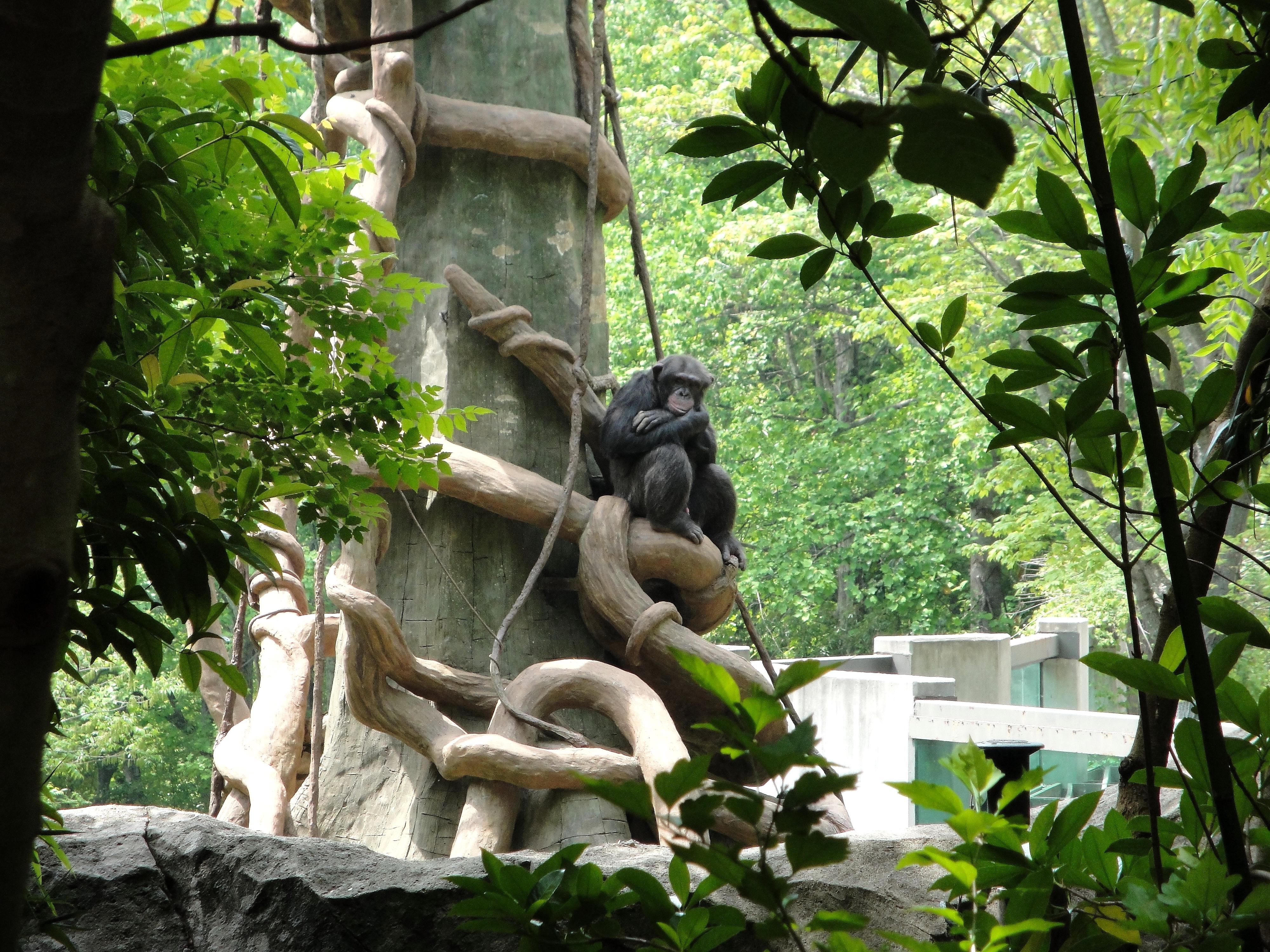
monkey


Somewhere in this process, you will come face-to-face with the shocking realization that you are completely crazy. Your mind is a shrieking, gibbering madhouse on wheels barreling pell-mell down the hill, utterly out of control and hopeless. No problem. You are not crazier than you were yesterday. It has always been this way and you never noticed. –Henepola Gunaratana, as quoted in “Wake up to Your Life” by Ken McLeod

May this help you sit calmly with all of your thoughts–without collusion, attachment, and reaction.

Gassho!

Heartbreak Wisdom Journal — Entry 4: Depression’s World

Heartbreak changes your entire experience. The world is literally different.

One of my favorite philosophers, Wittgenstein, said in his Tractatus (the following quote is my translation; I add the German original as a footnote to the post along with the original’s section number):

If good or bad willing changes the world, it can only change the limits of the world, not the facts; not that which can be expressed through language.
In short, the world must then through good or bad willing become an entirely different one. It must, so to speak, increase or decrease as a whole.
The world of the happy person is a different one than that of the unhappy person. [1]

Wittgenstein tells us here that the “world”–for him, the set of everything that is the case: the collection of all facts [2]–isn’t changed by a negative or positive perspective. Happiness doesn’t change the fact that 2+2=4, that water freezes at 32 degrees Fahrenheit, or that the shirt I’m wearing is blue. However, our experience of these facts as a whole, the world, changes in totality when we’re happy or sad–the limits of the world change. That same blue shirt is seen through two different sets of eyes, as it were.

This explication might beg the obvious question: “How could it be otherwise?” It may seem self-evident after the above discussion, but we regularly act as though those emotional states come from out there in the world rather than our own evaluation and reaction to it. We act as though emotions are just another fact amongst that totality of facts, not something that alters them as a particular perspective of the facts. Notice that I just pointed to the word “evaluation”. Wittgenstein would tell us that evaluation has nothing to do with the set of facts that is the world. Facts are facts. They can come in any order we want as the propositions that are the case. They don’t have any inherent value in themselves. There isn’t any inherent meaning or value to the fact that my shirt is blue. Evaluation stands outside the facts. [3]

This may seem an overly philosophical assertion for a post, so let’s put it differently with a quote from a Tibetan Buddhist:

The truth in this statement becomes clear when you pay attention to the inner processes that produce emotional states: you literally dream them up through a complex interaction of thoughts, images, bodily states, and sensations. Emotional reactivity does not originate “out there” in objects. It arises, is experienced, and ceases in you. [4]

This quote brings us back to a more grounded understanding of what has been said so far: the world out there is as it is, yet my reactions to it arise in myself–they are not part of the facts of all, no matter how much they feel to be, but they do change my experience of those facts. That blue shirt is neither hideous nor handsome in itself–those are evaluations, emotional reactions within me.

Now, to return to the emotion at hand: depression. Moods are the most pervasive of emotional filters which shape our experience of the world. They color not only one interaction or glance in the mirror of that blue shirt–they color everything. There’s wisdom to the saying: “seeing the world through rose-colored glasses”. This is what is really at stake with Wittgenstein’s final lines in the quote: The world of the happy person is different from that of an unhappy person. [5] Anyone who has undergone an experience of depression–and it is most definitely a going-under and something that is undergone without choice– will know that the world no longer is the same. Everything feels bereft of meaning, cold, foreign, lonely, empty, meaningless and/or pointless. In depression, all hopes have been dashed, and it appears both as though it was saccharine and naive to have ever hoped at all and that there is no reason to ever hope for anything again.

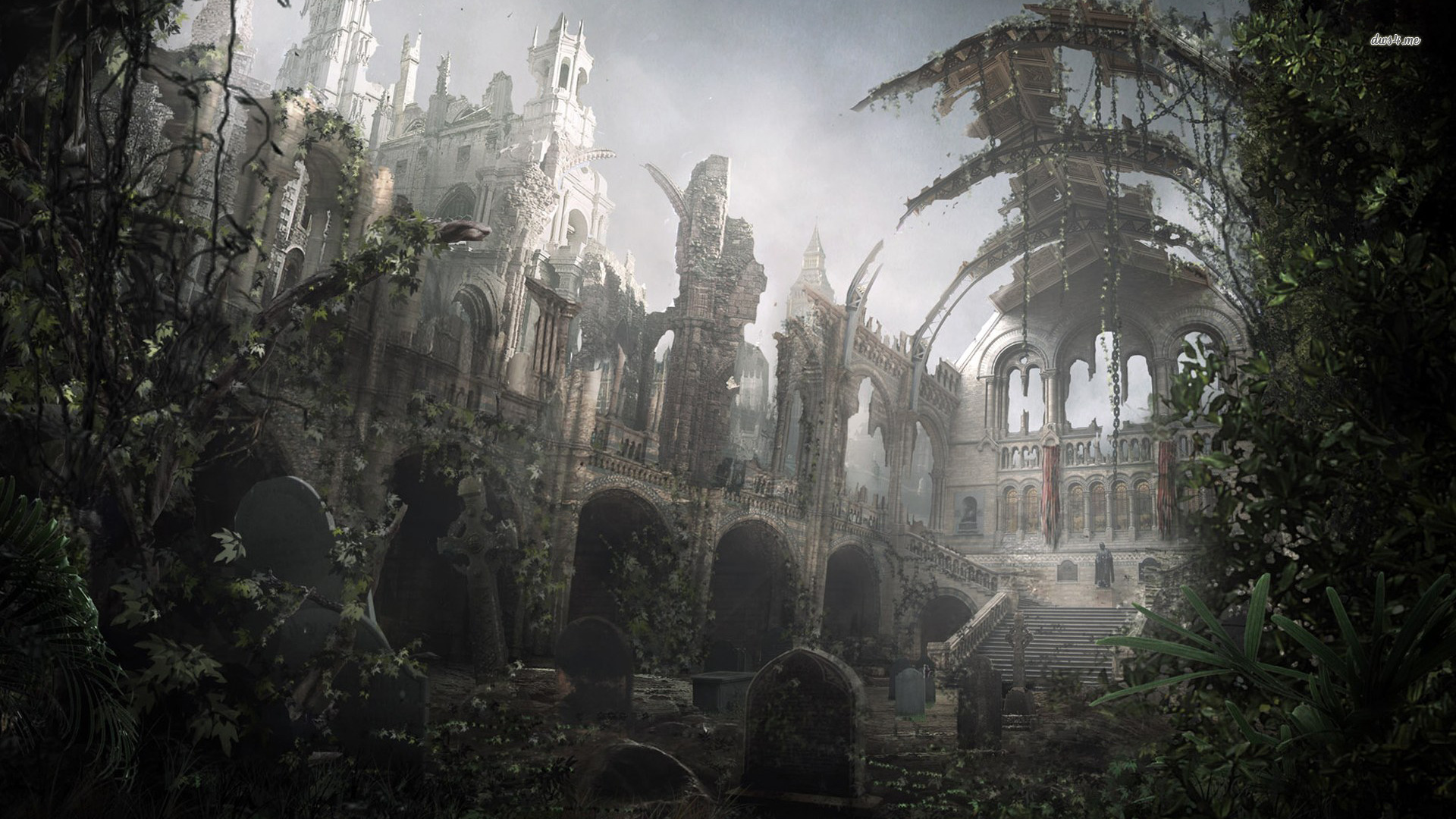
old-castle-ruins

Perhaps some would disagree with my description anchoring depression on the loss of hope, but I would describe the terrain of depression as a kingdom full of castles made of crushed hopes and dreams built upon the ground of hopelessness with a substrate of meaninglessness. Such a description fits well with both Beck’s cognitive triad–the depressed person’s view of self, world, and future become completely negative and hopeless of change–as well as the lived experience of time in depression–one of events coming forward and washing over you rather than actively moving towards your own goals and meanings. These are theories learned from my days as a psychology student, but the description and theories go along with my own personal experiences of depression as well.

The hopelessness of depression has a particular flavor in heartbreak. Not only does the world seem bleak, but in addition, there are constant points of comparison with another person, a life once had, a particular set of hopes and ideas lost. These comparisons can haunt entire days and wake you from deep sleep. Normal routines suddenly take on a dark glaze of loss that defies any attempt to ignore it or get around it. You might try to deny it through intensive storytelling or a rebound relationship or to distract yourself with booze or other means, or maybe, you won’t be able to try such coping behaviors at all and will instead spend night after night bawling your eyes out while watching movies on the couch. However, extreme measures are required to deny or ignore the loss of a person, the loss of a life–the world of one who is heartbroken is different than the world of one who is happy.

The heartbroken world is a dark and hopeless one, indeed, but the loss of hope offers the opportunity to approach life differently altogether. Hope and fear (they’re opposites and come together–two sides of the same coin. In hoping for something, I also carry fears of what the world will be like without that hope coming true) keep life in a game of ups and downs of samsara–a game of suffering through the attachment of desire and aversion. A broken heart allows the opportunity to develop a tender connection of compassion for the world outside of your own story of your hope and your fear. Put hope and fear aside and open yourself to the world just as it is rather than your evaluation of it. It’s truly a golden opportunity to realize authentic happiness rather than continuing to live in a world based on grasping for hopes and running from fears. This is the first steps of working with depression in practice and in stepping beyond its emotional terrain.


The word in Tibetan for hope is rewa; the word for fear is dopa. More commonly, the word re-dok is used, which combines the two. Hope and fear is a feeling with two sides. As long as there’s one, there’s always the other. This re-dok is the root of our pain. In the world of hope and fear, we always have to change the channel, change the temperature, change the music, because something is getting uneasy, something is getting restless, something is beginning to hurt, and we keep looking for alternatives.

In a nontheistic state of mind, abandoning hope is an affirmation, the beginning of the beginning. You could even put “Abandon hope” on your refrigerator door instead of more conventional aspirations like “Every day in every way I’m getting better and better.”

Hope and fear come from feeling that we lack something: they come from a sense of poverty. We can’t simply relax with ourselves. We hold on to hope, and hope robs us of the present moment. We feel that someone else knows what’s going on, but that there’s something missing in us, and therefore something is lacking in our world.

Rather than letting our negativity get the better of us, we could acknowledge that right now we feel like a piece of shit and not be squeamish about taking a good look. That’s the compassionate thing to do. That’s the brave thing to do. We could smell that piece of shit. We could feel it; what is its texture, color, and shape?

We can explore the nature of that piece of shit. We can know the nature of dislike, shame, and embarrassment and not believe there’s something wrong with that. We can drop the fundamental hope that there is a better “me” who one day will emerge. We can’t just jump over ourselves as if we were not there. It’s better to take a straight look at all our hopes and fears. Then some kind of confidence in our basic sanity arises.

This is where renunciation enters the picture–renunciation of the hope that our experience could be different, renunciation of the hope that we could be better. [6]

May this help others find their own empowerment and open possibilities in the barren lands of depression.
Gassho


Previous Heartbreak Wisdom Journal Entry: Entry 3: Wounds
Next Heartbreak Wisdom Journal Entry: Entry 5: Depression – Experience & Practice

1 §6.43 Wenn das gute oder böse Wollen die Welt ändert, so kann es nur die Grenzen der Welt ändern, nicht die Tatsachen; nicht das, was durch die Sprache ausgedrückt werden kann.
Kurz, die Welt muß dann dadurch überhaupt eine andere werden. Sie muß sozusagen als Ganzes abnehmen oder zunehmen.
Die Welt des Glücklichen ist eine andere als die des Unglücklichen.
2 Tractatus–§1 Die Welt ist alles was der Fall ist. §1.1 Die Welt ist die Gesamtheit der Tatsachen, nicht der Dinge. §1.11 Die Welt ist durch die Tatsachen bestimmt und dadurch, daß es alle Tatsachen sind. §1.12 Denn, die Gesamtheit der Tatsachen bestimmt, was der Fall ist und auch, was alles nicht der Fall ist. (My translation: §1The world is everything that is the case. §1.1 The world is the totality of facts, not the totality of things. §1.11 The world is made certain through the facts and due to them being all the facts. §1.12 Because: the entirety of facts makes certain what is the case and what is not the case.)
3 See §6.4 and §6.41 of the Tractatus. I feel they are a bit too heady to include here.
4 Tenzin Wangyal Rinpoche & Mark Dahlby, The Tibetan Yogas of Dream and Sleep, Kindle edition, loc. 1552.
5 For my fellow philosophers, compare all this with Heidegger’s discussions of Befindlichkeits–mood’s–impact on our understanding of the world in Being and Time.
6 Pema Chödrön, When Things Fall Apart, pp. 40-41.

Tao a Day – Verse 16: Emptiness

A couple weeks ago, I began a practice of reading one verse from the Tao Te Ching everyday. I will continue until I finish the whole book. I’ve read it before and consider it a masterpiece of both metaphysics and spirituality. There are few works as simple, inspiring, and profound. I will try to post a reading on a verse or a passage from a verse from time to time to share the beauty of this work. The following is Verse 16.

Become totally empty
Quiet the restlessness of the mind
Only then will you witness everything
unfolding from emptiness
See all things flourish and dance
in endless variations
And once again merge back into perfect emptiness-
Their true repose
Their true nature
Emerging, flourishing, dissolving back again
This is the eternal process of return

To know this process brings enlightenment
To miss this process brings disaster

Be still
Stillness reveals the secret of eternity
Eternity embraces the all-possible
The all-possible leads to a vision of oneness
A vision of oneness brings about universal love
Universal love supports the great truth of Nature
The great truth of Nature is Tao

Whoever knows this truth lives forever
The body may perish, deeds may be forgotten
But he who has Tao has all eternity
– Trans. Jonathan Star

Emptiness

Recently, I read some of Alan Watts’ book on Taoism (Tao: The Watercourse Way). In his chapter on wu wei, the well-known “doing without doing”, he contrasts Zen Buddhism and Taoism in that both aim at getting a deeper understanding of reality and then acting in accordance with it. He claims that the difference is that Taoism tries to get the student there through an intuitive understanding pulled out through poetic descriptions and paradoxical stories, whereas Zen approaches it through long and thorough meditation. I think this is accurate to an extent, but I think that Watts is a bit disparaging in his treatment of Zen in his discussion. Both approaches try to get us to see the way things are. The Buddhists guide us toward prajna (knowledge) in realization of Dharma (reality, the truth, the way things are, the law), and with the Tao Te Ching, Lao Tzu tries to get us to grasp the insight of Tao (the Way, the totality of all, the way things are and their source). The approach may differ, but the goal is roughly the same! I think this verse speaks to the parallels between these paths. Meditation is a way of realizing the emptiness and stillness that Lao Tzu emphasizes here–it is a way of getting an intuitive understanding beyond concepts. Both aim at getting past the duality of conceptual thought. The Taoist aim of transcending conceptual thought is stated very clearly in the following passage from Verse 1 as well as the already quoted Verse 16:

A mind free of thought,
     merged within itself,
     beholds the essence of Tao
A mind filled with thought,
     identified with its own perceptions,
     beholds the mere forms of this world.

The emptiness in 16 and “essence of Tao” in 1 are the metaphysical aspect of reality, of Tao, and I find the expression of it here and elsewhere in the Tao Te Ching quite inspirational. Tao is both the origin of the 10,000 things and those 10,000 things as well. In other words, Tao goes beyond the “mere forms of this world”, as their dynamic source of never-ending unfolding and change. Here’s an example in Verse 1:

Tao is both Named and Nameless
     As Nameless, it is the origin of all things
     As Named, it is the mother of all things

Here, we see that our concepts–our thoughts of forms and the words with which we name them–are not the source of the forms which we experience. The things we name are not that which creates those things, yet Tao is both the things named and that which cannot be named–that is, their source. This focus on origin or source and its distinction from the forms of the world leads us to philosophy’s most fundamental question (according to Heidegger’s take): “Why are there beings at all instead of nothing?” Lao Tzu answers without further explanation of why: “There is Tao.” Tao is both this mysterious, ungraspable origin that fluctuates all beings, pulsing with new forms–the ebb and flow of change–as well as those changing forms.

From a very different philosophical background, Wittgenstein delineates the world of forms in his Tractatus Logico-Philosophicus as all that can be said. That which cannot be said must be passed over in silence: it must be shown; moreover, this inexpressible dimension is the mystical (i.e. the metaphysical). [Please note that these quotes have numbers. It’s just a numbering system in that book. I keep it here for you to look them up on your own] ” 6.522 There is definitely something inexpressible. The inexpressible shows itself. It is the mystical” (Es gibt allerdings Unaussprechliches dies zeigt sich, es ist das Mystische.). Previous to this, Wittgenstein points out that the mystical (i.e. metaphysical) nature of the World is not in the how of it–the facts of it–rather in its existing at all: “6.44 The mystical is not how the world is, rather that it is. ” (Nicht wie die Welt ist, ist das Mystische, sondern dass sie ist.) The world–the set of forms that can be perceived and named, i.e. that which can be spoken–is not the mystical, the metaphysical. The metaphysical must be shown as it is beyond that which can be said; this is done through words, but the words themselves do not represent this aspect of reality–they merely indicate it, pointing towards it. Here, in the first verse of the Tao, the indicated mystical aspect of existence is the Nameless, TaoLao Tzu’s masterpiece tries to show us this metaphysical origin beyond the forms we perceive and can express, and much like the paradoxes of Zen koans, he stretches language’s expression to point the way to that intuitive understanding, showing it as a Sage–inviting us to empty our mind and experience the ever-unfolding emptiness of the eternal process of return.

Love, Rebounds, and Relationships: Part 2 – Love as a Word and as a Concept

Disclaimer: I wrote most of this section some time ago but have found it difficult to return to and post. It’s a continuation of the previous post with the same title Part 1. This post expands in a very philosophical direction – giving a terse analysis of our understanding of words and concepts and how these influence our experiences and understanding of them. In particular, this is about our concept/experience of Love. This will likely be my longest post thus far, and I plan to post more on the topic of Love in the near future. Please read through this post and write any comments or questions. Thank you, fellow negotiators of the Way. Deepest gratitude to you all!


In my discussion of Love, I’ve tried to emphasize the sense of “I”, ego or identity, that comes into play. Yet, I would argue that identity, who we “are“, if we really “are” anything (by this, I mean being something permanent. This is precisely what is at stake with much speak of “who I am” – being an entity: identity), is a conceptual core of what we understand of Love. It is hardly an open-ended experience; rather, in being involved in our own personal narratives and expression, it is a conceptually interpreted, filtered, and compiled experience. In fact, much of philosophy would question how it could be otherwise. We have a small conundrum here related to the philosophy of language. The concept of Love is hardly as clear or concrete as something like the concept of “chair”, so our understanding and usage of it allows for a lot of variance, slippage, and ambiguity. This may seem a contrived position, but with some observation and personal experience, such hesitation doesn’t hold. In recent times, I’ve read others’ writings about Love and its significance, but in trying to read into and understand what they were saying about life and Love from their statements, it was not clear at all beyond the initial knee-jerk of perceived understanding–of a preliminary, personal interpretation. Was it speaking of acceptance? Gratitude? Emotional support? Joy? Compassion? It really was unclear. All of these ideas and more can find their place in our concept of Love. However, in speaking with friends, it seems that one person to another varies in their understanding of what Love is based on their own experiences, upbringing, and likely, education. In a sense, we could all benefit from the investigations a The Symposium of our own. To return to the philosophy of language at this juncture, I take these immediately preceding comments and follow them with these snippets from Stanley Cavell’s The Claim of Reason. I quote them at length because of his deeper insight and mastery of this philosophical approach as well as the very human implications in his expression of these issues:

Consider an older child, one ignorant of, but ripe for a pumpkin (knows how to ask for a name, what a fruit is, etc.). When you say “That is a pumpkin,” we can comfortably say that this child learns what the word “pumpkin” means and what a pumpkin is. There may still be something different about the pumpkins in his world; they may, for example, have some unknown relation to pumps (the contrivances or the kind of shoe) and some intimate association with Mr. Popkin (who lives next door), since he obviously has the same name they do. But that probably won’t lead to trouble, and one day the person that was this child, may for some reason, remember that he believed these things had these associations when he was a child. (And does he then stop believing or having them?) And we can also say: When you say “I love my love” the child learns the meaning of the word “love” and what love is. That (what you do) will be love in the child’s world; and if it is mixed with resentment and intimidation, then love is a mixture of resentment and intimidation, and when love is sought that will be sought. … To summarize what has been said about this: In “learning language” you learn not merely what the names of things are, but what a name is; not merely what the form of expression is for expressing a wish, but what expressing a wish is; not merely what the word for “father” is, but what a father is; not merely the what the word for “love” is, but what love is. In learning language, you do not merely learn the pronunciation of sounds and their grammatical orders, but the “forms of life” which make those sounds the words they are, do what they do – e.g., name call, point, express a wish or affection, indicate a choice or an aversion, etc. And Wittgenstein sees the relations among these forms as “grammatical” also. Instead, then, of saying either that we tell beginners what words mean or that we teach them what objects are, I will say: We initiate them into the relevant forms of life held in language and gathered around the objects and persons of our world. pp. 176-178

This passage gives a clear background of what happens in learning a language–we learn the usage of words in a very particular way, a very human way that resonates in our lives. We learn not just the word for love, but what love is. In other words, our understanding of it as a part of the world is shaped and imprinted in us. It is a conceptual-experiential background to our engagement with our lives and world. With this in mind, compare these ideas about learning forms of life in learning language to the following passage about another imagined child’s difficulty in learning “kitty”:

But although I didn’t tell her, and she didn’t learn, either what the word “kitty” means or what a kitty is, if she keeps leaping and I keep looking and smiling, she will learn both. I have wanted to say: Kittens–what we call “kittens”–do not exist in her world yet, she has not acquired the forms of life which contain them. They do not exist in something like the way cities and mayors will not exist in her world until long after pumpkins and kittens do; or like the way God or love or responsibility or beauty do not exist in our world; we have not mastered, or we have forgotten, or we have distorted, or learned through fragmented models, the forms of life which could make utterances like “God exists” or “God is dead” or “I love you” or “I cannot do otherwise” or “Beauty is but the beginning of terror” bear all the weight they could carry, express all they could take from us. We do not know the meaning of the words. We look away and leap around. pp. 172-173

The most complicated concepts/experiences/forms of life will always be somewhat ineffable or at least overflow the limits of our expression. We speak of Love as a self-evident word, but with a moment of pause, it is clearly anything but. We can throw out a whole barrage of related concepts such as acceptance, support, desire, compassion, concern, care, deep want, reverence, adoration, nurturing, gratitude… None of these alone, nor all of them together, exhaust the myriad complexity of Love. They clearly point the way to some shared notes, some of the core intricacy of one of the most sought and expressed human experiences. However, Love remains so familiar and powerful yet so impossible to express; it is like using words to express the most profound piece of artwork you’ve ever experienced. No matter how elaborate the expression, our concepts come up short, fragmented, and ultimately, without that pause to see this slippage or difficulty of reference in our language, we can get too wrapped up in our very words. We fall into holding on to our expression as Truth with certainty that we know precisely the full weight of our expressions, unlike the profoundly eye-opening statements of Cavell above. If we can’t see the fundamental inexpressibility of our most human, complex, what I might even call “sacred” (in a very Buddhist sense of the dynamically profound unfolding of the absolutely real in this moment) experiences, then we cling to concepts as definitions–as forms of certainty rather than as placeholders, as forms of wonder.

Such a deep word…

In overlooking this inexpressibility, we fall into the fragmentary forms of life that Cavell describes in the first quote: love as tinted with resentment and indignation due to the learning of a Word, that is: of a concept as certain. It takes little pause to realize that Love is not nearly as certain, in the sense of clearly definable, as “chair”, “rock”, or “book”. We haven’t quite learned its form of life. If you think about it, this explains a lot about the apparent oddities in others behavior and moreover reasoning related to Love. Here then, in closing a chapter, a proposition: we want to understand Love, and as such, we’re quick to use this word without hesitation, but ultimately, these expressions don’t “express all they could take from us” (Cavell). This isn’t meant to say that these words are pointless or that they refer to nothing. Rather, they refer to something that defies a ready conceptual understanding, a form of life that overflows with meaning. As such, speak carefully, and to really understand these aspects of existence, open yourself to surprise, wonder, and uncertainty. Meditate rather than declare. In order to know, be ready to learn rather than thinking that you’ve already got it in saying that “Love is X” (in this I mean that you can’t pin it down simply as one thing). So, we have another challenge to our myth of completion and identity; here we have an embrace of the hyper-abundance that can’t quite be pinned down. In returning to the premise of identity from the beginning, a challenge: what do such musings about words, concepts, and forms of life bring to bear on “I am X” or “I”?

Next Newer Entries